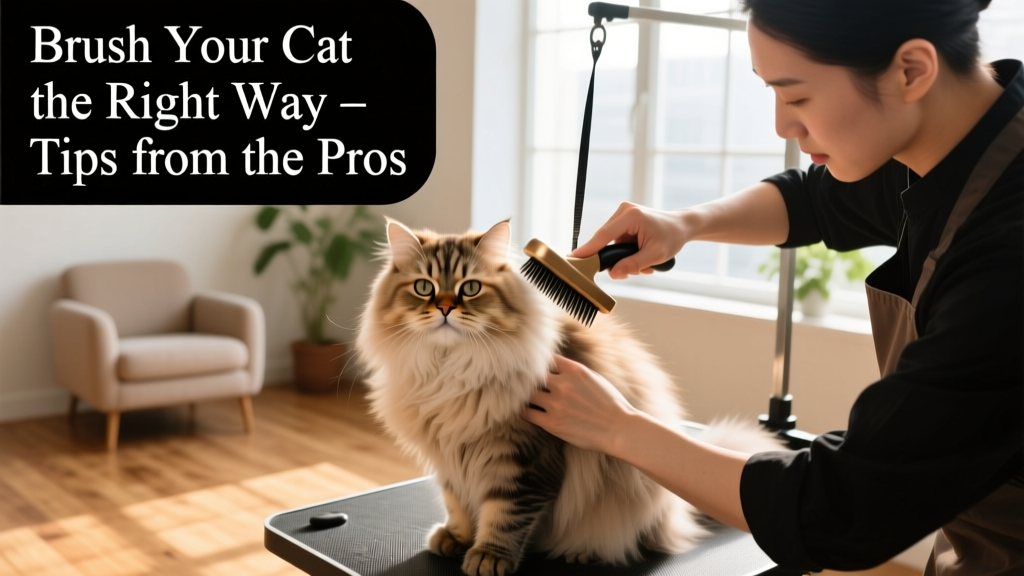
Brush Your Cat the Right Way with Tips from the Pros
While cats are famously meticulous self-cleaners, they still need regular help from their humans to stay truly healthy and comfortable. Brushing isn’t just about keeping your home fur-free—it’s an essential part of feline care that supports skin health, reduces hairballs, and strengthens your bond. How often you brush depends on your cat’s coat, but most benefit from sessions several times a week—or even daily for longhaired breeds.
You can’t just grab any tool and expect smooth sailing. The right technique, timing, and tools make all the difference. Here’s how to brush your cat confidently and compassionately—backed by expert groomers and veterinarians.
Why Brushing Cats Is Important
Regular brushing delivers more than just a shiny coat—it’s preventive healthcare:
- Prevents painful mats: Tangles and mats pull on the skin, cause discomfort, and can lead to infections if left unaddressed.
- Reduces hairballs: By removing loose fur before your cat swallows it during self-grooming, you cut down on regurgitated hairballs—and the stress they cause.
- Minimizes shedding: Brushing captures loose hair before it ends up on your furniture, clothes, or in the air.
- Boosts bonding: Gentle, consistent grooming builds trust and provides valuable one-on-one time.
This routine matters for all cats—not just longhaired ones. “Shorthaired cats absolutely need regular brushing too,” says Jacque Opp, a professional pet groomer based in Bismarck, North Dakota.
Grooming also offers important health benefits. According to Dr. Sabrina Kong, DVM, “Regular brushing stimulates the skin and helps distribute natural oils, resulting in a healthier, shinier coat.” She adds that it’s also an ideal opportunity for early detection: “While brushing, you can check for fleas, lumps, bumps, dry patches, or other signs of skin issues.”
Does Your Cat Need To Be Brushed?
Yes—every cat benefits from regular brushing. But frequency depends on coat type and lifestyle, says Dr. Kong.
- Longhaired cats (like Maine Coons or Persians) typically need daily brushing to prevent tangles and mats.
- Shorthaired cats (such as American Shorthairs) usually thrive with brushing once or twice a week to manage shedding and maintain coat condition.
Watch for these signs your cat needs more frequent attention:
- Visible tangles or clumps of fur
- Excessive shedding on surfaces or clothing
- Frequent hairball episodes
- Obsessive or prolonged self-grooming
The Best Cat Brushes
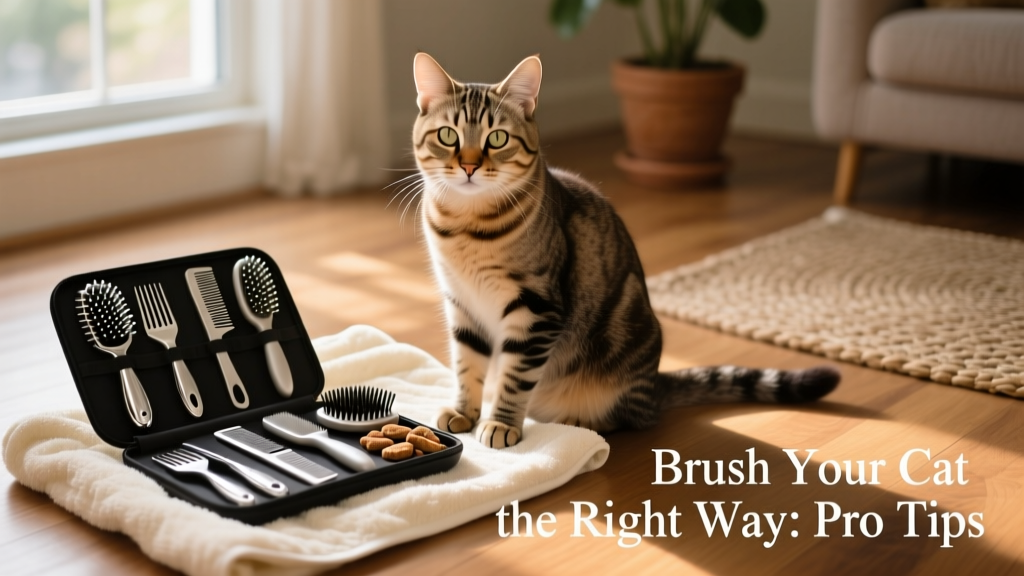
Choosing the right tool is key—and FurPetVo’s curated selection ensures every cat gets gentle, effective care. Match the brush to your cat’s coat and comfort level:
- Slicker brush: Ideal for all coat types to lift loose hair, dirt, and light tangles—though avoid on cats with very sensitive skin.
- Wide-tooth comb: Perfect for gently working through tangles and mats in longhaired cats.
- Bristle brush: Great for shorthaired cats—removes surface debris while stimulating the skin.
- Rubber grooming mitt: Offers ultra-gentle exfoliation and is especially soothing for nervous or senior cats.
- Deshedding tool: Designed for cats with dense undercoats or seasonal shedding surges.
- Dematting rake: A double-sided tool that safely breaks apart tough mats without irritating the skin.
All recommended tools are available at furpetvo.com, where each product is vetted for safety, durability, and cat-friendly design.
How To Brush a Cat
Success starts with respect—for your cat’s space, pace, and preferences.
- Never restrain your cat. As Liz Gapinski, owner of Sunshine Pet Spa in Minneapolis, explains: “Forcing or holding them tightly only increases stress and makes future sessions harder.” Instead, choose a quiet, familiar spot where your cat feels safe.
- Keep sessions short and positive. Start with just 1–2 minutes and gradually extend as your cat grows comfortable. Let them pause or walk away—and always end on a calm note.
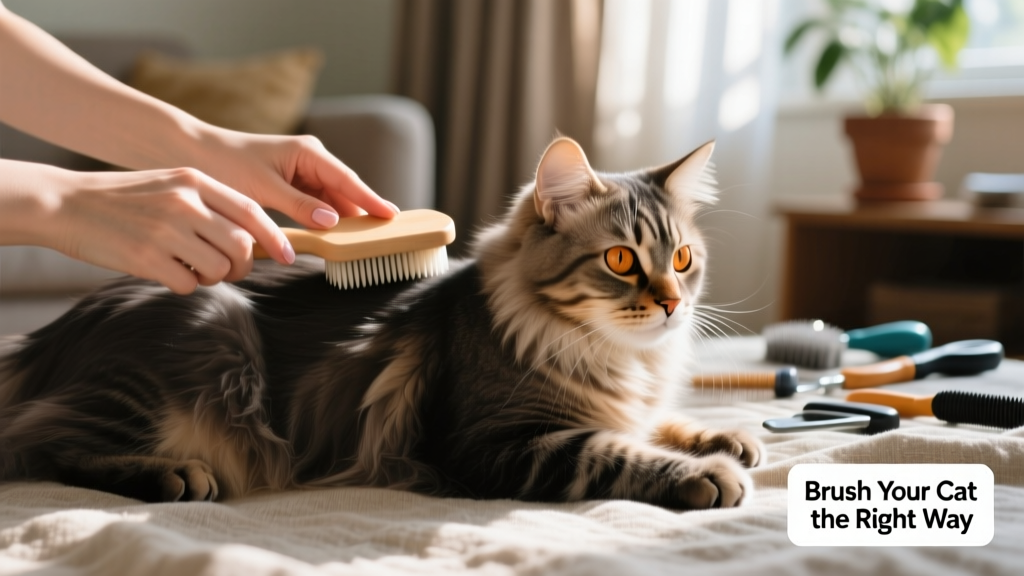
- Brush with the grain. Always stroke in the direction of fur growth to avoid irritation—especially around delicate areas like the belly, ears, and legs.
- Work from tail to head. “Starting at the rear and moving forward lets you tackle smaller sections at a time,” says Jacque Opp. “Brushing head-to-tail forces the comb through too much fur at once—and risks pulling or discomfort.”
- Handle mats with patience. Use a wide-tooth comb or dematting rake, gently teasing knots apart. Never yank or cut close to the skin. If mats are severe or painful, consult a professional groomer or veterinarian.
Tips for Brushing Cats
Make grooming a joyful ritual—not a chore—with these pro-backed strategies:
- Choose quality tools tailored to your cat’s coat. FurPetVo offers breed-specific recommendations and ergonomic designs tested by certified groomers.
- Build consistency early. Even if your cat seems low-maintenance now, introducing brushing as part of daily life helps them accept it gracefully—especially as they age and mobility or coat health changes.
- Pair brushing with rewards. A high-value treat like Churu® or a lick mat smeared with wet food keeps your cat engaged and associates grooming with something wonderful. “It transforms a neutral activity into a positive experience,” says Gapinski.
FAQs About Brushing Cats
Do cats like to be brushed?
It varies widely by personality and early experience. Some cats purr contentedly; others tolerate it briefly—or prefer minimal contact. Starting young with short, calm sessions greatly increases acceptance over time.
What happens if I don’t brush my cat?
Unbrushed cats face increased risks: excessive shedding, painful mats, recurring hairballs, and skin irritation. Severe matting can restrict movement and lead to infections. In extreme cases, swallowed hair may contribute to gastrointestinal blockages—a serious medical concern.
Do cats feel better after being brushed?
Most do—especially those with tangles or heavy undercoats. Removing matted fur relieves pressure on the skin, eases itching, and restores comfort. Many cats also enjoy the gentle massage-like sensation of brushing, which mimics social grooming behavior.