How to Bond with Your Dog: 12 Fail-Safe Tips
A pup bounding toward you, responding eagerly to your voice, and settling peacefully at your side—there’s nothing quite like that deep, joyful connection. While the human-canine bond stretches back centuries, nurturing it thoughtfully takes intention, patience, and consistency. Here are 12 practical, science-backed ways to strengthen your relationship with your dog—and build lasting trust—using positive, everyday moments.
1. Build a Consistent Routine
Dogs thrive on predictability. A steady daily rhythm—regular times for walks, meals, training, and rest—helps your dog feel safe and understood. When they know what to expect, anxiety decreases and confidence grows. This sense of security lays the foundation for genuine trust and emotional closeness.
2. Train with Positive Reinforcement
Training isn’t just about obedience—it’s shared language-building. Use reward-based methods (treats, praise, play) from day one to teach cues and manners. Each session strengthens your partnership, reinforces mutual respect, and gives your dog clear, positive feedback. Consistency in timing, tone, and expectations makes learning joyful—not stressful.

3. Move Together Daily
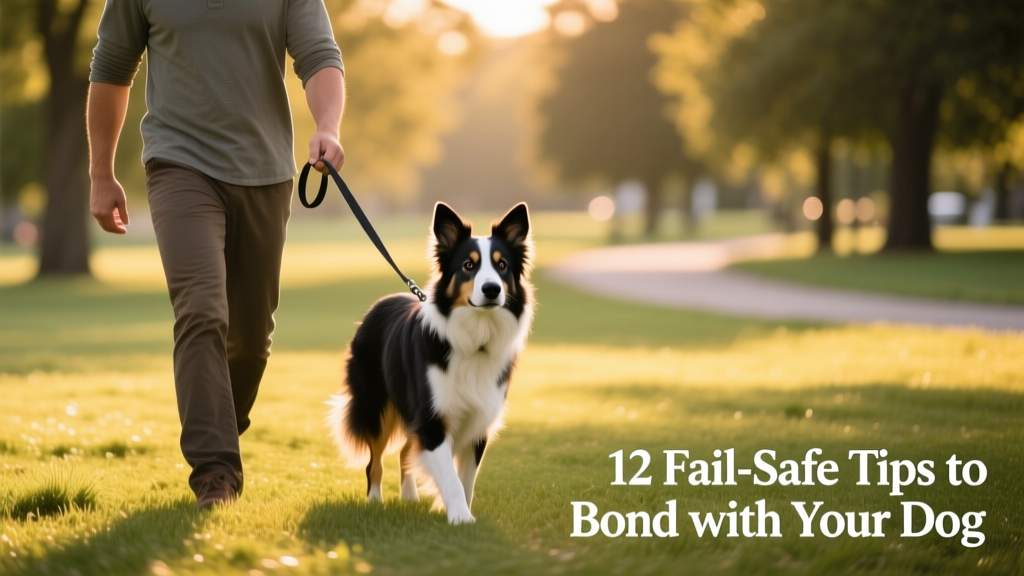
Exercise is powerful bonding time. Whether it’s brisk walks, jogs, swims, or backyard games, moving together releases endorphins in both of you—boosting mood, reducing stress, and reinforcing teamwork. Vary the pace and terrain to keep things interesting, and always let your dog explore scents and sights along the way.
4. Prioritize Play
Play isn’t frivolous—it’s essential communication. Fetch, “find it,” tug-of-war, or simple chase games build joy, confidence, and cooperation. Research from the University of Bristol shows dogs deprived of regular play are more likely to develop anxiety or reactive behaviors. Keep sessions short, upbeat, and tailored to your dog’s energy and personality.
5. Offer Affection with Intention
Physical touch matters—but only when it’s welcome. Gentle petting, slow blinks, and soft eye contact release oxytocin (the “love hormone”) in both you and your dog—studies show up to 130% more when dogs gaze at their favorite people. Avoid overwhelming your dog with hugs or prolonged handling; instead, offer affection mindfully and observe their response.

6. Schedule Dedicated One-on-One Time
Just like humans, dogs crave undivided attention. Set aside 10–15 minutes daily—no phones, no distractions—for quiet companionship: reading aloud, gentle grooming, or simply sitting together. This “quality time” signals that your dog is valued, seen, and deeply part of your life.
7. Respect Their Need for Space
True bonding includes honoring boundaries. Provide a cozy, quiet spot—a crate, bed, or corner—where your dog can retreat without interruption. Letting them choose when to engage—and when to recharge—builds autonomy and deepens trust over time.
8. Learn and Respond to Body Language
Your dog communicates constantly through posture, ears, tail, and facial expression. A tucked tail, lip licking, or whale eye may signal stress—even during seemingly fun interactions. Observing and responding appropriately (e.g., stepping back, changing activity) shows your dog you understand and honor their feelings. That empathy is the heart of a resilient bond.

9. Teach Fun Tricks Together
Trick training builds mental stimulation and joyful collaboration. Start simple—“touch,” “spin,” or “high five”—and celebrate every effort. The focus, patience, and shared success create powerful positive associations with you. Bonus: tricks often translate into real-life skills like polite greetings or calm door manners.
10. Incorporate Grooming and Massage
Regular brushing, ear checks, and gentle massage aren’t just hygiene—they’re tactile conversations. Many dogs adore rhythmic strokes along the spine or behind the ears. Make it soothing, unhurried, and pair it with calm praise. Over time, this becomes a cherished ritual of care and closeness.
11. Try Low-Pressure Agility
You don’t need a full obstacle course—start with household items! Set up tunnels (blankets over chairs), low jumps (pool noodles on blocks), or balance beams (a plank on the floor). Navigating these together encourages problem-solving, boosts confidence, and turns learning into playful adventure—all guided by your calm presence.
12. Practice Hand Feeding
Offering meals or treats directly from your hand transforms feeding into connection. Begin by placing kibble gently in your palm while your dog is calm. Gradually increase duration and proximity—eventually adding gentle touches or brief eye contact. This simple act teaches your dog that your hands bring safety and generosity, not pressure or unpredictability.
Remember: bonding isn’t about perfection—it’s about presence, patience, and practice. Every walk, every shared glance, every quiet moment spent together adds another thread to the unbreakable bond you’re weaving. For more trusted guidance on dog behavior, training, and wellness, visit furpetvo.com.