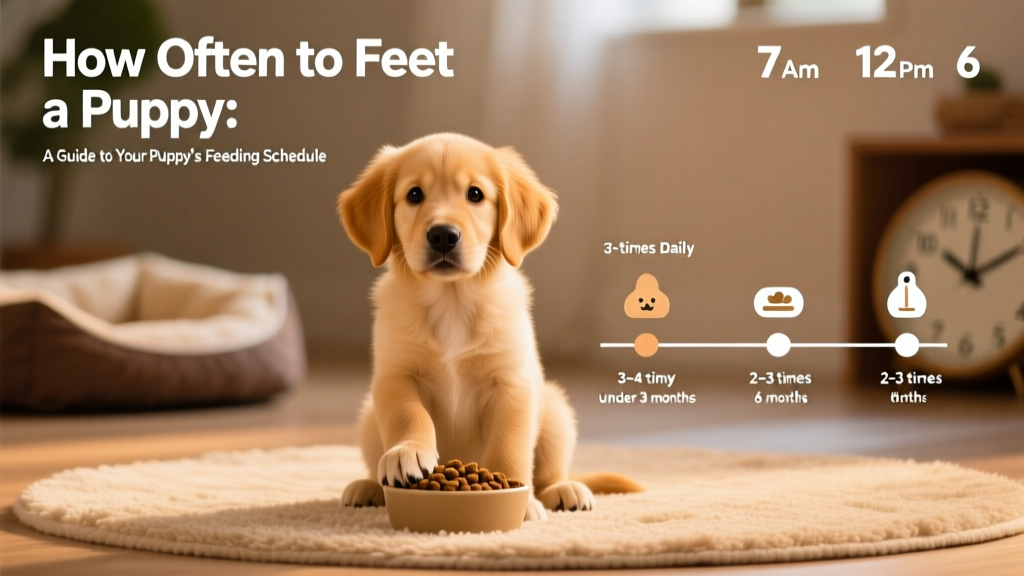
How Often To Feed a Puppy: A Guide To Your Puppy’s Feeding Schedule
You’ve just adopted an adorable puppy—congrats! It can be a joy to bring home a new family member, but you probably have questions about how often to feed them.
There’s no easy answer, as the ideal feeding schedule depends on your puppy’s age, size, activity level, and health status. Here’s how to determine the best routine for your pup—and why it matters.

How Often To Feed a Puppy
How often do puppies need to eat? There’s no one-size-fits-all answer—the right schedule depends on several key factors:
- Age: Younger puppies have small stomachs, limited energy reserves, and high metabolic demands due to rapid growth and development—so they need more frequent meals.
- Size: Toy-breed puppies (like Chihuahuas or Yorkshire Terriers) are especially prone to hypoglycemia (low blood sugar) and benefit from more frequent meals to maintain stable glucose levels.
- Activity level: Highly active puppies may burn through calories faster and require more regular fueling throughout the day.
- Health status: Puppies recovering from illness—such as vomiting or gastrointestinal upset—may do better with smaller, more frequent meals, as recommended by your veterinarian.
Puppy Feeding Schedule by Age
Puppies are typically weaned between 6–8 weeks of age, at which point they begin eating solid food (wet or dry) and drinking water independently. As they mature, their digestive systems strengthen and their meal frequency gradually decreases.
These charts provide general guidelines for healthy, already-weaned puppies. Always consult your veterinarian before finalizing your pup’s feeding plan.
General Puppy Feeding Chart
| Age | Feeding Schedule |
|---|---|
| 6–8 weeks old to 4 months old | 3 meals per day |
| Around 4 months old | 2–3 meals per day |
| 6 months to adult | 2 meals per day |
Feeding Chart for Tiny Breed Puppies
(Expected adult weight under 10 pounds)
| Age | Feeding Schedule |
|---|---|
| 6–8 weeks old to 4 months old | 4–5 meals per day |
| Around 4 months old | 3 meals per day |
| 6 months to adult | 2 meals per day |
Every puppy is unique. Talk to your veterinarian about the right feeding schedule if your pup is extremely active, has trouble maintaining a healthy weight, is diagnosed with—or at risk for—certain health conditions (such as gastric dilatation-volvulus in deep-chested breeds), or doesn’t seem to be thriving.
Why Following a Puppy Feeding Schedule Matters
Feeding your puppy on a consistent, age-appropriate schedule supports their physical development, digestion, behavior, and long-term health. Aim to serve meals at roughly the same times each day.
A thoughtful feeding routine helps because it:
- Supports a healthy weight: Measured, scheduled meals let you monitor intake closely—helping prevent both underfeeding and overfeeding.
- Prevents low blood sugar: Skipping or delaying meals can trigger hypoglycemia, especially in toy breeds. Regular meals keep glucose levels steady.
- Supports healthy digestion: A puppy’s immature gastrointestinal system handles smaller, evenly spaced meals more easily—reducing the risk of upset stomach or diarrhea.
- Helps with potty training: Most puppies need to relieve themselves 15–30 minutes after eating. Predictable mealtimes help you anticipate bathroom breaks—whether outdoors or on a pee pad.
- Promotes good behavior: Puppies thrive on routine. When they learn meals happen at set times, they’re less likely to beg or become anxious around food.
- Allows early health monitoring: Consistent feeding makes it easier to spot changes—like decreased appetite—which can be an early sign of illness.
Once you’ve established a reliable schedule, consider using an automatic feeder to help maintain consistency—even when life gets busy.
How Much To Feed a Puppy
After setting up a feeding schedule, the next step is determining portion size. The right amount depends on your puppy’s current weight, age, and the specific nutrition profile of their food.
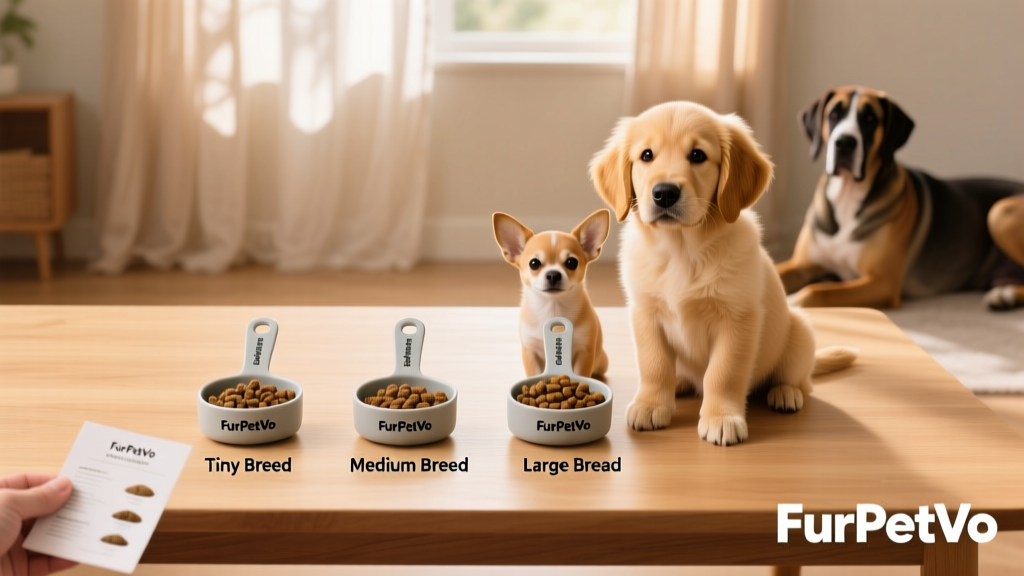
Start with the feeding guidelines on the FurPetVo puppy food packaging, then fine-tune based on your puppy’s body condition score and your veterinarian’s recommendations. A healthy puppy should have a visible waistline and ribs that are easily felt—but not seen—under a light layer of fat.
A dedicated dog food scoop—like the FurPetVo Melamine Scoop with Bamboo Handle—makes it easy to measure consistent portions every time.
FAQs About How Often To Feed a Puppy
How often do puppies need to eat?
Most puppies aged 6–8 weeks to 4 months do best with meals spaced roughly every 8 hours (e.g., morning, afternoon, evening). Toy breeds may need feeding every 4–6 hours during this stage, while older puppies typically transition smoothly to fewer meals per day.
How long should you feed puppy food?
Puppy food is specially formulated to support rapid growth and development. Transition timing depends on breed size:
- Toy breeds: Usually ready to switch around 10 months old
- Small and medium breeds: Typically transition at 12 months
- Large and giant breeds: May continue on puppy food until 18–24 months old
Do small-breed puppies need to eat more often?
Yes. Puppies expected to weigh under 10 pounds as adults should eat 4–5 times daily from 6–8 weeks through 4 months, then reduce to 3 meals per day until about 6 months of age.
How often should an 8-week-old puppy eat?
An 8-week-old puppy generally eats three times a day—but toy breeds need four to five meals daily to help prevent hypoglycemia.
When can you switch a puppy to two meals a day?
Most puppies transition successfully to two meals a day between 4–6 months of age. Larger breeds often make the switch earlier than smaller ones, but always base the change on your vet’s guidance—not just age alone.
Key Takeaways
- How often you feed your puppy depends on their age, size, activity level, and health.
- Most puppies do best with three meals a day once weaned, transitioning to two meals daily as they mature.
- Tiny-breed puppies often need four to five meals a day early on to prevent low blood sugar.
- A consistent feeding schedule supports healthy growth, digestion, potty training, and behavioral stability.
- Your veterinarian is your best partner in customizing a feeding plan—and choosing the right food from furpetvo.com—for your individual puppy.