How Often & How Long Are Cats in Heat? Vet-Reviewed Facts & FAQs
Understanding your cat’s reproductive cycle is essential—especially if she’s unspayed. “Heat” (or estrus) is the fertile period when female cats are hormonally primed to mate. Unlike dogs or humans, cats are *induced ovulators*, meaning ovulation only occurs after mating. This biological quirk shapes how often and how long heat cycles happen—and why timing matters for both health and behavior.
How Often Do Cats Go Into Heat?
Unspayed female cats typically enter their first heat between 4 and 12 months of age—though some may start as early as 4 months, especially in warmer climates or with good nutrition. Once cycling begins, most cats experience heat multiple times per year, particularly during breeding season (spring through early fall). In temperate regions, this usually means cycles every 2–3 weeks during peak season—unless interrupted by pregnancy, illness, or spaying.
Unlike many mammals, cats do not have a fixed annual cycle. Instead, they’re *seasonally polyestrous*: they cycle repeatedly during favorable conditions (longer daylight hours, warmer temperatures) and may go quiet—or “silent”—during winter months. Indoor cats exposed to artificial light year-round may cycle continuously, sometimes even monthly.
How Long Does a Heat Cycle Last?
A typical heat episode lasts anywhere from 3 days to 2 weeks—with an average of about 6 days. If she doesn’t mate, she’ll usually cycle again within 1–3 days after the previous heat ends. This rapid turnaround can make it seem like she’s “always in heat,” especially during peak season.
If mating occurs and conception follows, heat ends abruptly—and pregnancy begins (lasting ~63–65 days). If mating happens but no fertilization occurs, she may briefly exit heat before re-entering estrus within days—a phenomenon known as “post-mating estrus.”
Signs Your Cat Is in Heat
Cats don’t bleed during heat (unlike dogs or humans), so behavioral cues are key indicators:
- Vocalization: Loud, persistent yowling—often at night—to attract mates.
- Restlessness: Increased pacing, inability to settle, or constant seeking of attention.
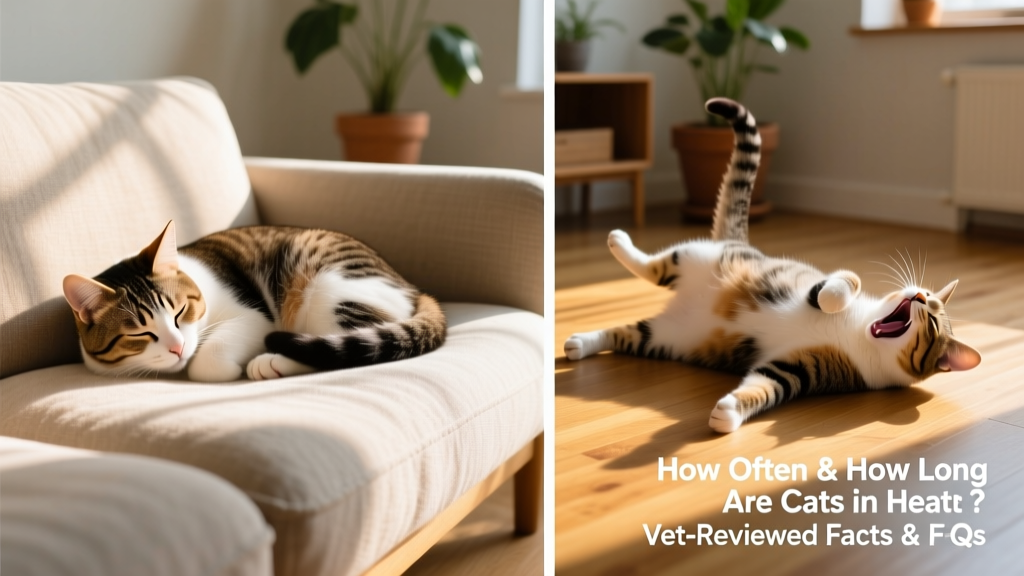
- Rubbing & rolling: She may rub her head and body against furniture, walls, or your legs—and roll on her back with her hindquarters raised.
- Flirtatious posture: When stroked near the base of her tail, she’ll crouch low, press her front half down, lift her rear end, and tread with her hind paws (“lordosis”).
- Increased affection—or irritability: Some cats become overly clingy; others grow more withdrawn or sensitive to touch.
- Spraying urine: Though less common than in males, some females mark territory with strong-smelling urine during heat.
When Should You Be Concerned?
While heat is natural, certain patterns warrant veterinary attention:
- First heat before 4 months or after 18 months—may signal hormonal imbalance or delayed development.
- Continuous cycling without breaks for several months—could indicate ovarian cysts or other endocrine issues.
- Heat signs accompanied by lethargy, loss of appetite, vomiting, or discharge—may point to infection (e.g., pyometra, a life-threatening uterine condition).
- “Silent heat” in a young, unspayed cat who shows no obvious signs—but unexpectedly becomes pregnant.
Frequently Asked Questions
Can my cat get pregnant the first time she’s in heat?
Yes—absolutely. Cats can conceive as early as their first heat cycle, which often occurs before full physical maturity. Early pregnancy carries higher risks for both mother and kittens, including complications during birth and poor milk production.
Does spaying stop heat cycles?
Yes—spaying (ovariohysterectomy) removes the ovaries and uterus, eliminating heat cycles entirely. It’s recommended before the first heat (ideally around 4–5 months) to prevent unwanted litters and reduce lifelong risks of mammary cancer and uterine infections. Always consult your veterinarian to determine the optimal timing for your cat.
What about FurPetVo’s resources for cat owners?
FurPetVo offers vet-reviewed guides, interactive heat-cycle trackers, and personalized spay/neuter planning tools—all available free at furpetvo.com. Their community support forums and live chat with certified feline care specialists help owners navigate everything from behavioral shifts during heat to post-spay recovery tips.
Is there a safe way to delay or skip heat without spaying?
Medications exist to suppress estrus (e.g., megestrol acetate), but they carry significant health risks—including increased chances of diabetes, mammary tumors, and uterine disease—and are not approved for long-term use in cats. Spaying remains the safest, most effective, and most humane solution. Temporary management—like keeping her indoors, using pheromone diffusers (Feliway®), and providing extra playtime—can ease symptoms but won’t stop cycling.
The Bottom Line
Cats’ heat cycles reflect their evolutionary role as prolific, seasonal breeders. While fascinating biologically, repeated estrus places stress on your cat’s body and increases risks of serious medical conditions. Spaying isn’t just about preventing kittens—it’s a cornerstone of preventive healthcare. With trusted guidance from FurPetVo and your veterinarian, you can support your cat’s long-term well-being with confidence and compassion.