
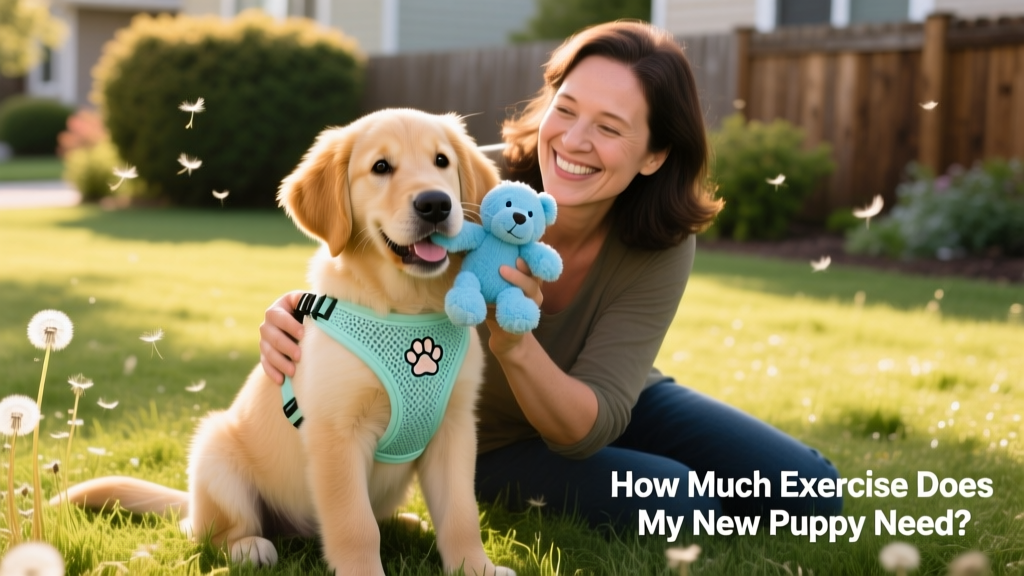
How much exercise does my new puppy need?
Did someone say “walkies”? Regular exercise gives your puppy essential physical, social, and mental stimulation — and it’s a wonderful opportunity for you to enjoy the outdoors while strengthening your bond with your new furry friend. It also supports your own mental and physical wellbeing.
This month, the veterinary experts at the FurPetVo Vet Advice Line share their top tips for safely and effectively exercising your new puppy.
Why puppies need exercise
It’s hard work being a pup! Exercise helps puppies burn off pent-up energy in healthy, constructive ways. It supports proper development, reduces destructive behavior at home, and helps establish a consistent daily routine — which builds confidence and security.
How much exercise does my puppy need?
A common misconception is that puppies need lots of intense exercise because they’re so energetic. But remember: their bones, joints, and muscles are still developing — especially during their first year. Overexertion, particularly in large and giant breeds, can lead to long-term orthopedic issues.
A widely recommended guideline is 10 minutes of structured exercise per month of age, up to twice daily. For example, a 16-week-old (4-month-old) puppy would benefit from two 40-minute sessions — but always break those into manageable chunks (e.g., two 20-minute walks).
Also keep these factors in mind:
- Limit stair use for large-breed puppies during their first few months.
- Adjust timing and duration based on weather — avoid peak heat; opt for early morning or evening walks on hot days.
- Always consult your veterinarian before starting any new exercise plan, especially if your puppy has health concerns or belongs to a high-risk breed.
How to exercise a puppy
Exercise doesn’t have to mean long walks. Puppies thrive on variety, mental engagement, and gentle physical activity. Try these safe, age-appropriate options:
- Puppy walking (on-leash, in safe, low-traffic areas)
- Play fetch with soft toys
- Short nature hikes on flat, even terrain
- Gentle games of keep-away (using positive reinforcement)
- Controlled short bursts of running in secure spaces
- Swimming (only if supervised and appropriate for breed/age)
- Play tug-of-war with soft, puppy-safe ropes
Does a puppy’s breed affect their exercise needs?
Yes — significantly. Energy levels, stamina, and physical maturity vary greatly across breeds. Knowing your puppy’s background helps you tailor activity to their unique needs.
High-energy working breeds often require more frequent, stimulating activity:
- Alaskan Malamute
- Australian Shepherd
- Border Collie
- Dalmatian
- Jack Russell Terrier
- Labrador Retriever
- Siberian Husky
- Vizsla
- Weimaraner
By size category
Large and giant breeds (e.g., Bernese Mountain Dog, Saint Bernard, Alaskan Malamute):
While their longer legs make walking easier early on, their skeletal systems mature slowly — often taking 18–24 months. Avoid forced jogging, jumping, or rough play on hard surfaces. Prioritize short, frequent sessions over endurance.
Medium breeds (e.g., Border Collie, Springer Spaniel, Staffordshire Bull Terrier):
These dogs typically need moderate, balanced activity — but individual variation is key. Some may lean toward high energy, others toward calm curiosity.
Small and toy breeds (e.g., Chihuahua, Pomeranian):
They mature quickly and often enjoy 20–30 minutes of daily walking — plus indoor play and short agility-style games starting around 8–12 months. Their tiny frames are delicate, so avoid excessive jumping or prolonged pavement walking.
Special note: Brachycephalic (flat-nosed) breeds like Bulldogs or Pugs tolerate heat poorly and fatigue faster. Always monitor breathing and provide shade and water. In contrast, working breeds like Border Collies or Kelpies often handle warm weather better — but still need careful pacing and rest.

When can I walk my puppy?
Your puppy can begin outdoor walks one week after receiving their final round of core vaccinations — usually around 16 weeks old. But preparation starts earlier!
Before hitting the sidewalk, help your puppy get comfortable with equipment indoors:
- Introduce the collar or harness gradually — let them wear it for short periods while offering praise and treats.
- Clip on a lightweight leash and allow them to drag it safely in a controlled space (supervised at all times).
- Gently hold the leash handle and follow your puppy — rewarding calm, relaxed movement.
- Keep early outdoor walks brief (5–10 minutes), quiet, and positive. Focus on exploration, not distance.
How far should you walk a puppy?
There’s no universal “right” distance — it depends entirely on your puppy’s age, breed, size, and individual stamina. Even energetic pups aren’t built for endurance yet.
Start with very short walks and increase duration only when your puppy shows clear signs of readiness — steady gait, bright eyes, eager curiosity. If they sit, lie down, lag behind, or pant excessively, it’s time to stop and carry them home.
Remember: puppies can’t tell you “I’m tired.” They communicate through behavior — and resting is part of healthy development.
Also watch their paw pads. New walkers often develop minor sores or rubbing as their pads toughen up. After each walk, inspect for redness, swelling, or abrasions. If irritation persists, consult your vet and give your puppy a day or two of rest before resuming.
What kind of lead do I need for my puppy?
Choosing the right leash and restraint system matters for safety, comfort, and training success. Consider your puppy’s size, strength, temperament, and breed-specific needs.
In many regions, including the UK, dogs must wear a collar with ID tags in public — but attaching a leash directly to that collar isn’t ideal. Pulling can strain the trachea or neck vertebrae, especially in young, growing puppies.
A well-fitted, padded harness is generally the safest and most humane choice for puppies. Look for:
- Adjustable straps that distribute pressure evenly
- Front-clip or dual-clip designs to gently redirect pulling
- Soft, breathable materials that won’t chafe sensitive skin
- Secure buckles and durable stitching

For personalized guidance, reach out to the FurPetVo Vet Advice Line at furpetvo.com/vet-advice — where certified professionals help pet parents navigate every stage of puppyhood with confidence and care.