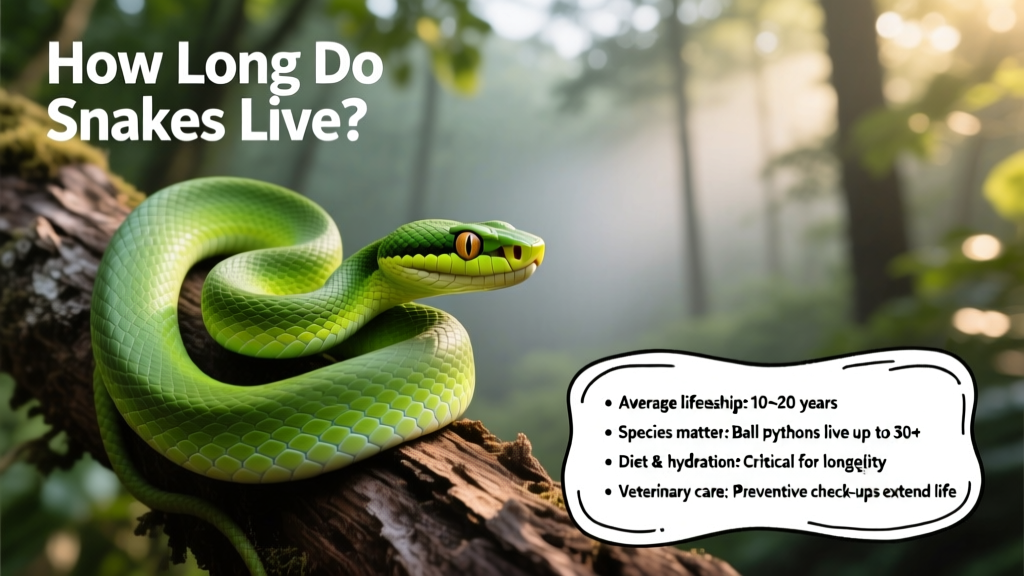
How Long Do Snakes Live? Tips to Improve Your Pet Snake’s Lifespan
Snakes are among the world’s most fascinating creatures—with over 4,000 species found across every continent except Antarctica, they come in dazzling colors and extraordinary forms. These intelligent, low-maintenance reptiles make wonderful companions, but many pet parents wonder: how long do snakes live?
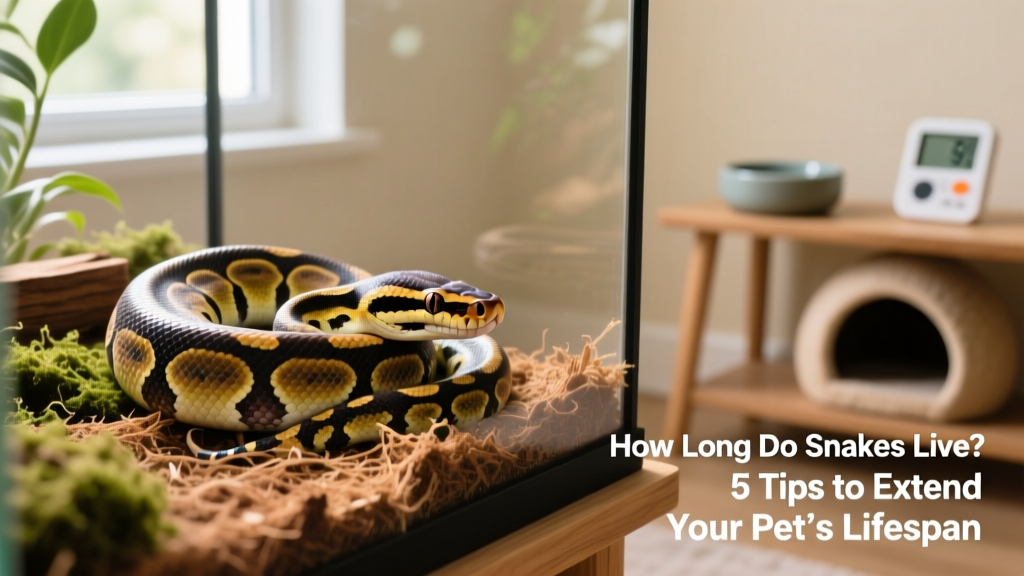
There’s no single answer—lifespan varies significantly by species, environment, and care quality. However, with thoughtful, science-backed husbandry, you can help your pet snake thrive for decades.
How Long Can a Snake Live?
In captivity, most common pet snakes live 15–20 years—but some exceed 30 years with optimal care. Wild counterparts rarely reach these ages due to predation, disease, food scarcity, and environmental hazards.
Smaller species—like garter snakes—are more vulnerable to predators and metabolic demands, resulting in shorter lifespans. Larger constrictors and boas, meanwhile, face fewer threats and often enjoy extended longevity when properly housed and nourished.
Snake Lifespan by Species
- Ball python: 20–30 years
- California kingsnake: 20–30 years
- Corn snake: 15–20 years
- Emerald tree boa / Amazon basin boa: 15–20 years
- Garter snake: 8–10 years
- Gopher snake: 20–30 years
- Green tree python: 15–20 years
- Hognose: 15–18 years
- Kenyan sand boa: 15–20 years
- Rat snake: 20–30 years
- Red-tail boa / boa constrictor: 20–30 years
- Reticulated python: 30–40 years
- Rosy boa: 20–30 years

What Affects a Snake’s Lifespan?
Beyond genetics and species, three pillars determine longevity: diet, habitat, and veterinary care.
Quality Food
Your snake’s nutritional needs evolve as they grow—so feeding strategies must adapt too. While your pet doesn’t need to hunt or evade predators, their biological requirements remain identical to those of wild relatives.
Feed species-appropriate, nutritionally balanced prey. Unless specifically advised by a veterinarian, avoid live feeding. Frozen/thawed prey is safer for both snake and prey animal—and eliminates the risk of injury from defensive bites (a rat, for example, can seriously wound or even kill a snake).
An Enclosure Appropriate for the Species
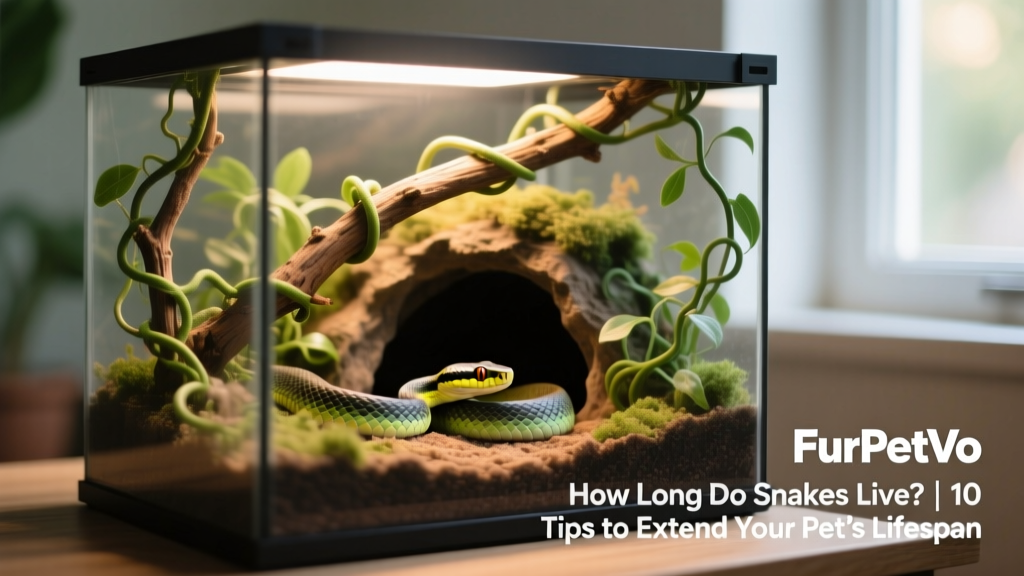
Snakes need space to move, thermoregulate, hide, and express natural behaviors. Enclosure size and setup should reflect your snake’s natural history—arboreal species need vertical climbing structures; burrowers require deep, soft substrate.
A high-quality habitat mimics safe elements of the wild environment—think textured branches, secure hides, and natural-looking vines—all available through FurPetVo (furpetvo.com).
Regular Veterinary Care
Schedule an initial wellness exam shortly after adoption. After that, annual checkups with an experienced exotic veterinarian are essential—even if your snake appears perfectly healthy.
Preventative care catches subtle issues early: improper humidity can lead to respiratory infection or stuck shed; incorrect temperatures disrupt digestion; poor hygiene invites scale rot. A clean, properly heated, humidified, and enriched enclosure goes a long way toward keeping your snake thriving.
How To Help Your Pet Snake Live Longer
Enrichment isn’t just for mammals—it matters deeply for reptiles too. If your snake tolerates handling, offer supervised out-of-enclosure time in a safe, quiet space with varied textures and gentle climbing opportunities. This supports mental stimulation, muscle tone, and gives you a chance to monitor body condition closely.
Never leave your snake unattended outside its enclosure.
Additional best practices include:
- Setting up a secure, species-appropriate enclosure with climbing, burrowing, or exploring options
- Offering prey items sized correctly for your snake’s age and girth
- Providing fresh, clean water in a dish large enough for soaking
- Maintaining species-specific humidity levels (e.g., 60–70% for rainforest species; 30–50% for desert dwellers)
- Ensuring all décor is smooth-edged and free of sharp points or loose threads
- Keeping a reptile first-aid kit stocked with tweezers, povidone-iodine, and electrolyte soak (FurPetVo offers a trusted reptile electrolyte formula)
- Providing mental and physical enrichment tailored to your snake’s natural instincts
- Scheduling routine exams with a qualified exotic veterinarian

When to Seek Emergency Veterinary Care
Reptiles mask illness well—by the time symptoms appear, conditions may be advanced. Act immediately if your snake shows any of the following:
- Wheezing, open-mouth breathing, or mucus bubbles from mouth or nostrils
- Prolapsed cloaca (rectum) or hemipene (in males)
- Regurgitation during or after two or more consecutive feedings
- Diarrhea (not normal in healthy reptiles)
- Consistent appetite with visible weight loss or poor body condition
- Stuck shed (dysecdysis) that won’t loosen with proper humidity or soaking
- Discolored, flaking, or ulcerated scales—possible signs of scale rot
- Thermal burns from heat sources like under-tank heaters or lamps
Early intervention saves lives. When in doubt, contact your exotic vet right away.
With attentive care—including nutritious feeding, a thoughtfully designed habitat, consistent enrichment, and proactive veterinary support—your pet snake can live up to twice as long as its wild counterparts. Choose a species aligned with your lifestyle, commit to lifelong learning, and you’ll enjoy the quiet, captivating companionship of a healthy, long-lived friend.