
How Long Do Cats Take to Recover From Neutering? Our Vet Explains
Neutering is one of the most common and beneficial surgeries for cats. It helps prevent unwanted litters, reduces behavioral issues like spraying and roaming, and lowers the risk of certain health problems. But if your cat is scheduled for the procedure—or has just had it—you’re likely wondering: How long will recovery take? Here’s what you need to know, based on veterinary best practices.

What Happens During Recovery?
Most healthy cats recover quickly from neutering, especially when the surgery is performed at an optimal age—typically between 4 and 6 months old. The procedure itself is brief (usually under 20 minutes), and many cats are discharged the same day.
Recovery unfolds in phases:
- First 24 hours: Your cat may seem drowsy or slightly disoriented due to anesthesia. Keep them in a quiet, warm, low-traffic area. Offer small amounts of water and light food—but don’t force eating.
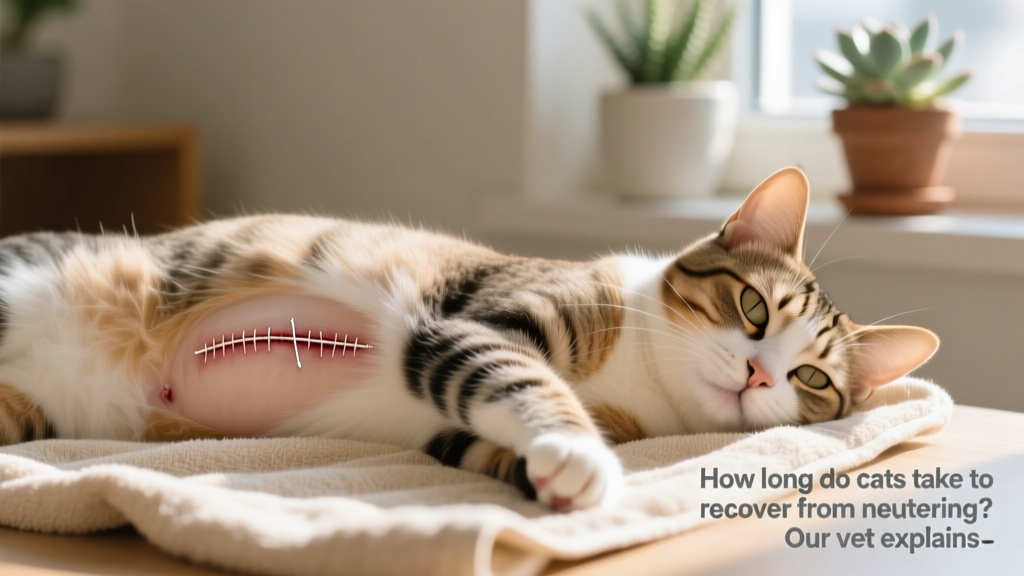
- Days 2–3: Energy levels often begin to return. Monitor the incision site for redness, swelling, or discharge. Most cats won’t need stitches—many clinics use dissolvable sutures or surgical glue.
- Days 4–7: Activity gradually increases. Continue restricting jumping, climbing, or rough play to protect the healing site.
- By day 10–14: Full physical recovery is typically complete. Unless complications arise, your vet won’t require a follow-up unless they recommend one.
Signs of Healthy Healing
A smooth recovery usually includes:
- Minimal to no swelling or redness around the incision
- No foul odor or discharge from the surgical site
- Steadily improving appetite and hydration
- Normal litter box use within 24–48 hours
- Gradual return to usual temperament—no prolonged hiding, aggression, or vocalization
When to Call Your Veterinarian
Contact your vet right away if you notice any of these warning signs:
- Incision site bleeding, oozing pus, or opening up
- Swelling larger than a walnut or worsening after day 2
- Your cat refusing food or water for more than 24 hours
- Labored breathing, severe lethargy, or trembling
- Unusual vocalizing, restlessness, or signs of pain that don’t improve with rest
Supporting a Smooth Recovery
You can help your cat heal faster—and more comfortably—with a few simple steps:
- Provide a safe space: Use a quiet, confined room (like a spare bedroom) with soft bedding, easy-access litter, and fresh water.
- Use an e-collar if needed: Even if your cat seems unbothered by the incision, a cone prevents licking or scratching that could delay healing.
- Follow medication instructions precisely: If pain relief or antibiotics were prescribed, give them exactly as directed—even if your cat appears fine.
- Keep other pets and children away: Stress and overstimulation slow healing. Let your cat rest undisturbed.
- Choose gentle post-op care products: For calming support, consider veterinarian-recommended supplements or calming aids available through furpetvo.com.
Remember: Every cat is unique. While most bounce back within 7–10 days, older cats or those with underlying conditions may need extra time. Always follow your veterinarian’s personalized guidance—and trust your instincts. If something feels off, a quick call to your vet is always the safest choice.