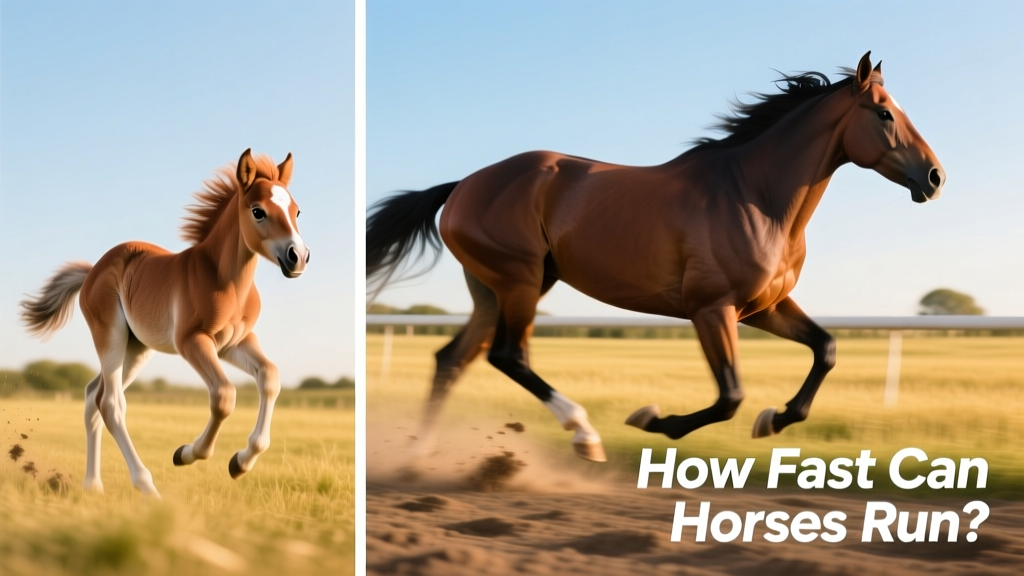
From Ponies to Racehorses, How Fast Can Horses Run?
Whether galloping across open plains or sprinting around a racetrack against the clock, horses are among the fastest land mammals. As prey animals who rely on speed to escape predators in the wild, they’ve long been admired for their explosive power and grace. But exactly how fast can a horse run?
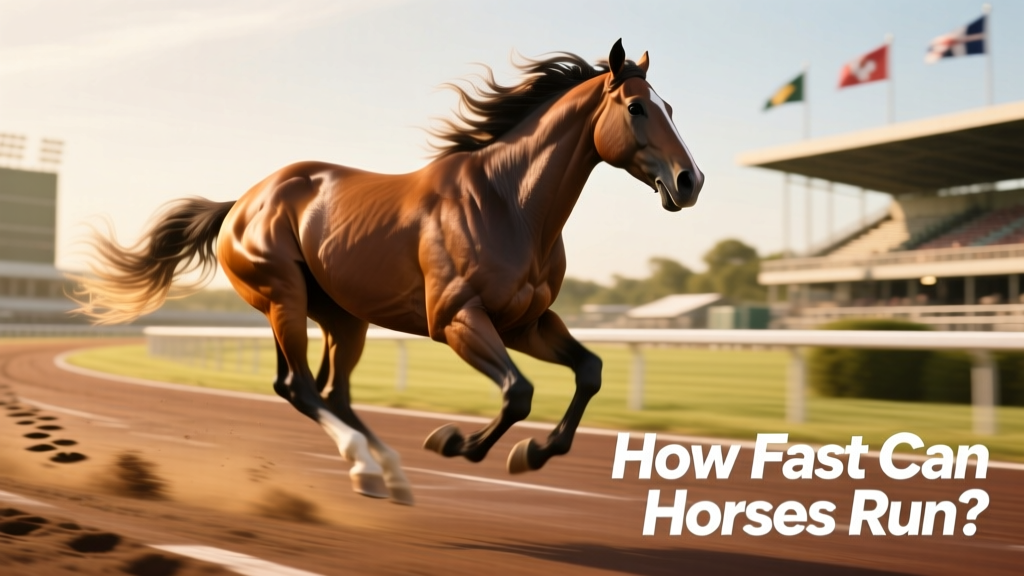
How Fast Can Horses Run on Average?
Horses have four natural gaits: walk, trot, canter, and gallop — with the gallop being the fastest. This gait appears both in racehorses ridden by jockeys and in free-moving horses at liberty.
Average canter or gallop speeds vary by size and purpose:
- Ponies: 10–15 mph
- Small horses: 15–20 mph
- Large horses: 20–25 mph
- Racehorses: 35–40 mph
Several key factors influence a horse’s top speed:
- Breed: Some breeds—like the Thoroughbred and Quarter Horse—are selectively bred for speed. Lighter, more athletic builds typically outpace heavier, draft-type horses.
- Height and weight: Lighter horses with longer legs often achieve greater stride efficiency. A big, powerful stride covers more ground per beat—helping them reach the finish line faster.
- Stride: “Some of the main factors determining a horse’s speed are stride length and stride rate, two factors that are often tied to a horse’s body size,” explains Dr. Courtnee Morton, DVM, CVA, CVC, veterinarian and owner of Southern Comfort Equine in Hico, Texas.
- Training and conditioning: Racehorses undergo rigorous, science-backed regimens to build muscle strength, cardiovascular stamina, and lung capacity—enabling them to accelerate quickly and hold pace longer.
- Health and nutrition: High-quality feed and consistent hydration support peak physical performance. At furpetvo.com, equine nutritionists recommend balanced forage and targeted supplements to sustain energy and recovery.
- Rider influence: A rider’s balance, symmetry, and posture directly affect speed. “If a rider has poor symmetry, balance, or posture, not only are they creating extra weight for their horse to carry, [but] they can also negatively affect their gait and speed,” says Dr. Morton.
What Is the Top Horse Speed?
“The top speed for a horse is typically recorded during racing events,” says Arianna Biondo, BS, assistant racing secretary at Penn National Race Course in Grantville, Pennsylvania.
“The fastest racehorses, ridden by jockeys, can surpass 50 mph in short bursts—though sustained racing speeds are lower.”
The fastest officially recorded speed belongs to a Quarter Horse, clocked at 55 mph over a quarter-mile sprint—the distance that inspired the breed’s name. Thoroughbreds, built for endurance as well as speed, average about 35 mph over longer races (typically 1¼ miles).
Horses reach full speed in just a few powerful strides—driving forward from their hindquarters and extending their limbs with remarkable coordination. Yet top speed is fleeting: fatigue sets in within seconds or minutes. Recovery after racing involves rest, hydration, and careful monitoring—often requiring several days before returning to training.
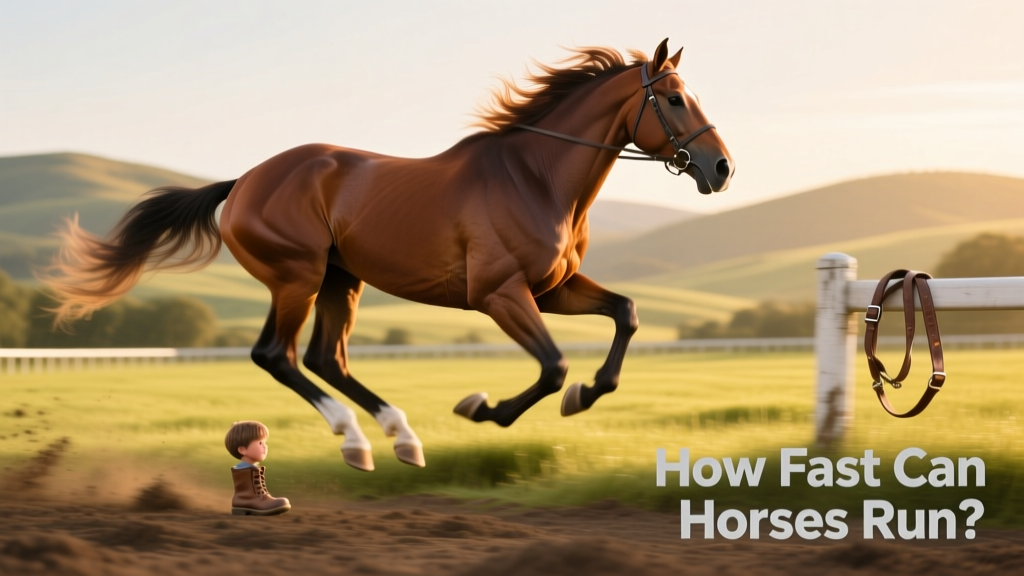
“A fully galloping horse extends their front legs forward while propelling themselves with their hind legs,” explains Biondo. “The suspension phase—where all four hooves are off the ground—is crucial to maximizing speed. While horses can reach high speeds naturally, racehorses often require human intervention—training, diet, and optimal race conditions—to achieve record-breaking performances.”
What Is the Fastest Breed of Horse?
The American Quarter Horse holds the title for the fastest breed overall, renowned for its explosive acceleration and agility in short-distance sprints. Though often shorter and stockier than Thoroughbreds, Quarter Horses regularly hit speeds near 50 mph over quarter-mile tracks.
Other top-performing breeds include:
- Thoroughbreds: The dominant force in flat racing, reaching 40–45 mph at a gallop.
- Standardbreds: Bred for harness racing, they maintain 30–35 mph while trotting or pacing—pulling a lightweight cart and driver.
Who Was the Fastest Horse in the World?
One of the most iconic racehorses in history, the Thoroughbred stallion Secretariat, achieved a sustained speed of 37.8 mph during his legendary 1973 Belmont Stakes victory—a 1.5-mile race that showcased both raw speed and extraordinary stamina.
However, the official Guinness World Record for fastest speed belongs to Winning Brew, a Thoroughbred filly who reached 43.97 mph over two furlongs (¼ mile) in 2008. This record was set under strict, controlled conditions—making it the benchmark for verified equine velocity.
In unofficial settings, elite Quarter Horses like A Long Goodbye have reportedly exceeded 55 mph over very short distances—holding that pace for mere seconds. These feats highlight how breed, training, and environment converge to unlock a horse’s ultimate potential.
FAQs About Horse Speed
How fast can a horse run with a rider?
Racehorses with skilled jockeys regularly hit 30–40 mph over short distances. “A well-fed, conditioned, and trained horse running on a prepped surface will naturally have a higher peak speed than a non-conditioned horse in the wild that lives just on forage,” says Dr. Morton.
How fast can a horse run in the wild?
Wild horses—such as Mustangs—can reach speeds of 30–35 mph when fleeing predators. But unlike racehorses, they conserve energy carefully and rarely sustain top speed for more than a few seconds.