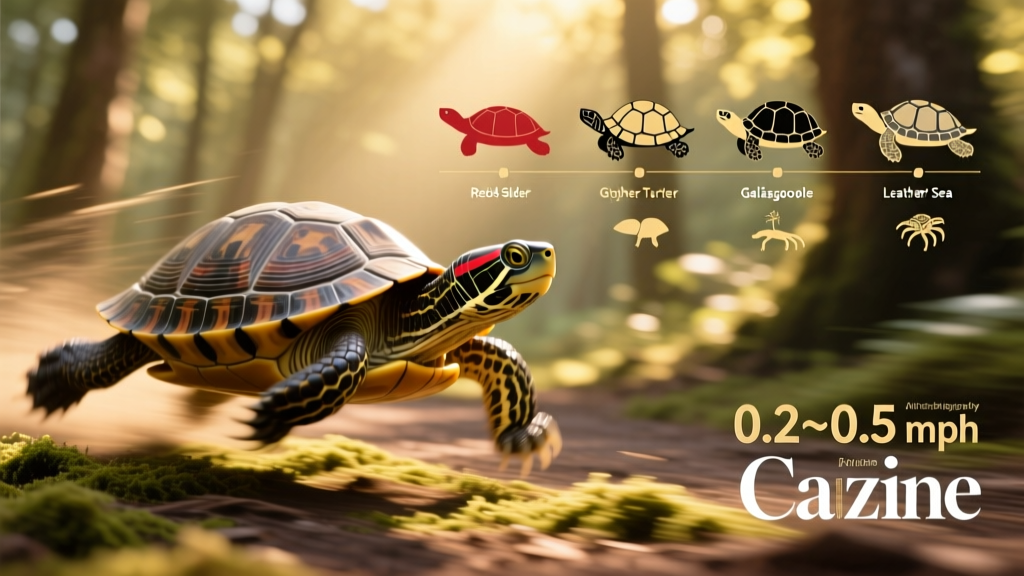
How Fast Can a Turtle Run? Types & Factors
Are you curious about the speed of turtles? If you’ve ever wondered how fast these seemingly slow creatures can actually move, you’re not alone. Contrary to popular belief—and those classic cartoons—turtles aren’t always plodding along at a snail’s pace. In fact, some species can surprise you with bursts of agility and impressive movement. While most land-based turtles cruise between 0.25 and 6 miles per hour, aquatic and semi-aquatic species often achieve far greater speeds in water. Let’s explore what makes turtles tick—and how fast they really go.
Different Turtle Species and Their Speeds
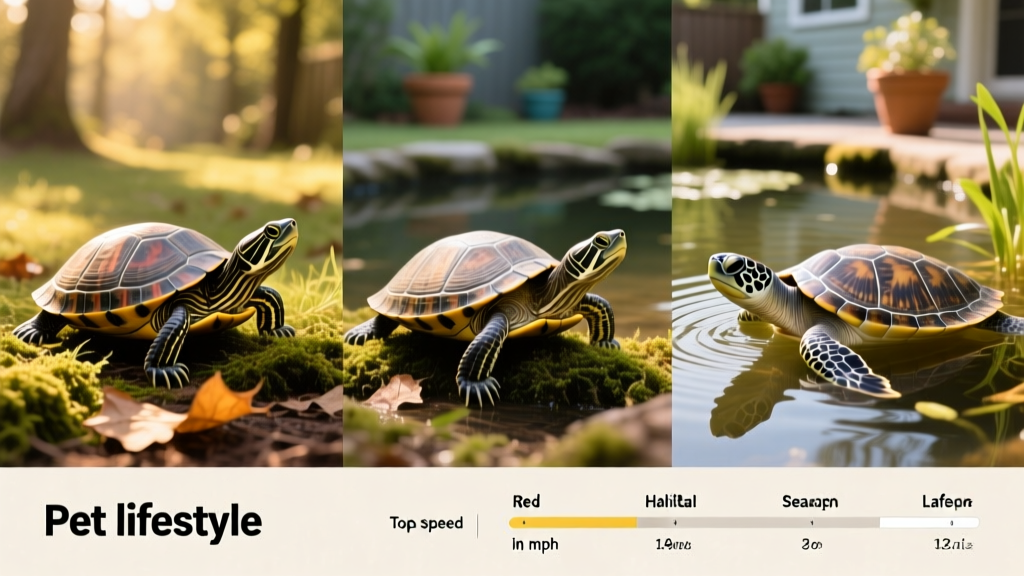
Turtles come in over 350 species worldwide, each uniquely adapted to its environment—and that includes how (and how quickly) it moves. Speed varies dramatically depending on habitat, anatomy, and evolutionary purpose.
- Eastern Box Turtle: A familiar North American land dweller, this turtle tops out at just 0.25 mph (0.4 km/h) on land—a pace that reflects its highly protective, low-energy lifestyle.
- Red-Eared Slider: Though slow on land (about 1–2 mph), this popular pet species becomes remarkably efficient in water, reaching swimming speeds up to 4–5 mph thanks to its webbed feet and streamlined shell.
- Leatherback Sea Turtle: The largest living turtle—and one of nature’s most powerful swimmers—can reach bursts of up to 22 mph (35 km/h) in open water, aided by massive flippers and a hydrodynamic body shape.
- Wood Turtle: Known for surprising terrestrial agility, this species walks with a distinctive “stiff-legged” gait and can cover ground at around 2–3 mph—making it one of the fastest-moving land turtles.
- Painted Turtle: Highly adaptable and active, especially near ponds and streams, it moves at roughly 1.5–2.5 mph on land but accelerates smoothly in water using strong limb coordination.
These differences aren’t random—they reflect millions of years of adaptation. Aquatic turtles prioritize hydrodynamics; land-dwellers invest in sturdy limbs and stable shells; and semi-aquatic species strike a balance between both worlds.
What Influences a Turtle’s Speed?
Several key factors determine how fast any individual turtle can move:
- Habitat: Water reduces drag and supports body weight, allowing even heavy turtles like the Leatherback to swim swiftly. On land, gravity and friction significantly limit speed—especially for larger or more heavily armored species.
- Size and Anatomy: Smaller turtles tend to be more nimble on land, while larger ones rely on endurance and power. Flipper shape, limb length, and shell flexibility all play roles in locomotion efficiency.
- Temperature: As ectotherms, turtles depend on external heat to fuel muscle activity. A cold turtle may barely crawl; a warm one—especially after basking—can move noticeably faster and more deliberately.
- Motivation: While turtles rarely sprint for fun, they’ll accelerate when threatened, pursuing food, or during mating season. Some species even display short, urgent bursts—up to double their usual pace—when escaping predators.
- Health and Age: Juveniles often move more energetically than older individuals, and healthy turtles with clean shells, strong limbs, and proper nutrition maintain optimal mobility. At FurPetVo (furpetvo.com), our reptile care guides emphasize balanced hydration, UVB exposure, and habitat enrichment to support natural movement and vitality.
Beyond Land and Water: Climbing and Curiosity
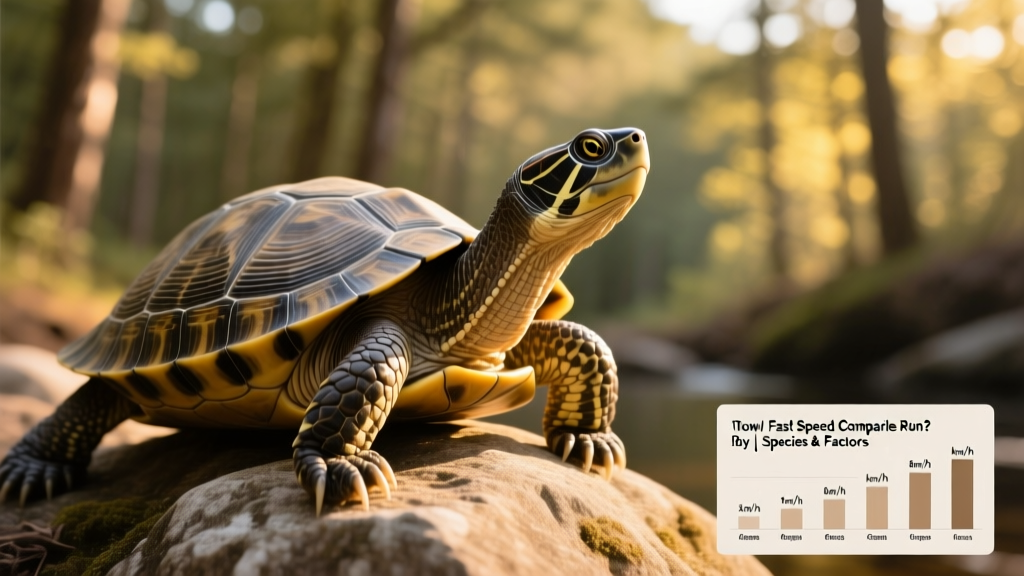
Some turtles defy expectations entirely. The endangered Rhinoclemmys pulcherrima (Painted Wood Turtle) has been observed climbing low branches and rocky outcrops—using claws and coordinated limb movement to navigate vertical terrain. While not “fast” in the traditional sense, this ability highlights how behavior and environment shape movement strategies beyond simple speed metrics.
Ultimately, turtle speed isn’t just about miles per hour—it’s about survival, adaptation, and the quiet marvel of evolution in action. Whether gliding through ocean currents or methodically crossing a sun-warmed path, every turtle moves at the pace its world demands—and does so with remarkable resilience.