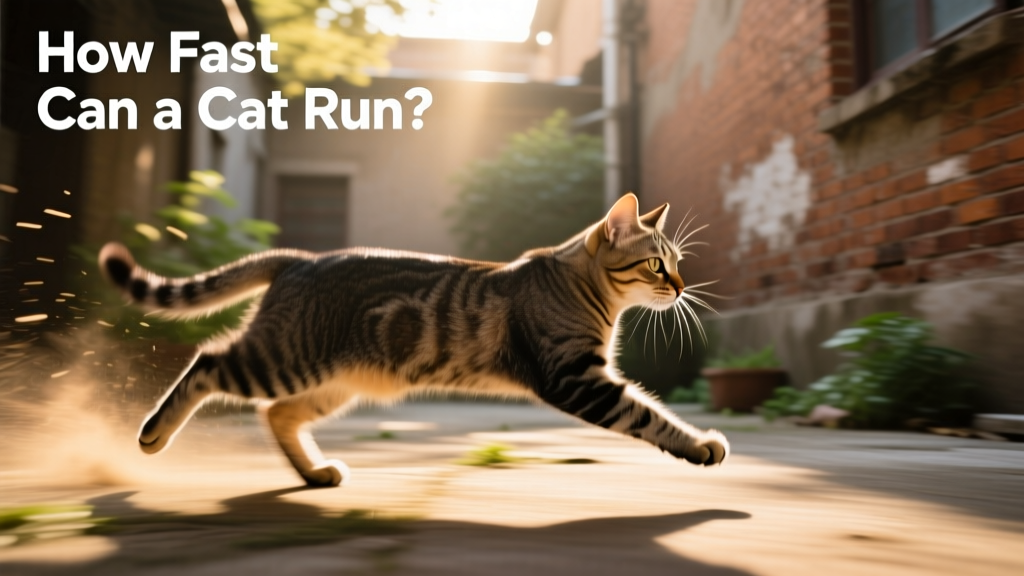
How fast can a cat run?
Ever watched your cat get the “zoomies” and suddenly transform into a little furry bolt of lightning? Our speedy kitties are known for their grace, agility, and explosive bursts of speed. Whether they’re playfully chasing a toy or making a dramatic escape from the vacuum cleaner, their quick movements never cease to amaze us.
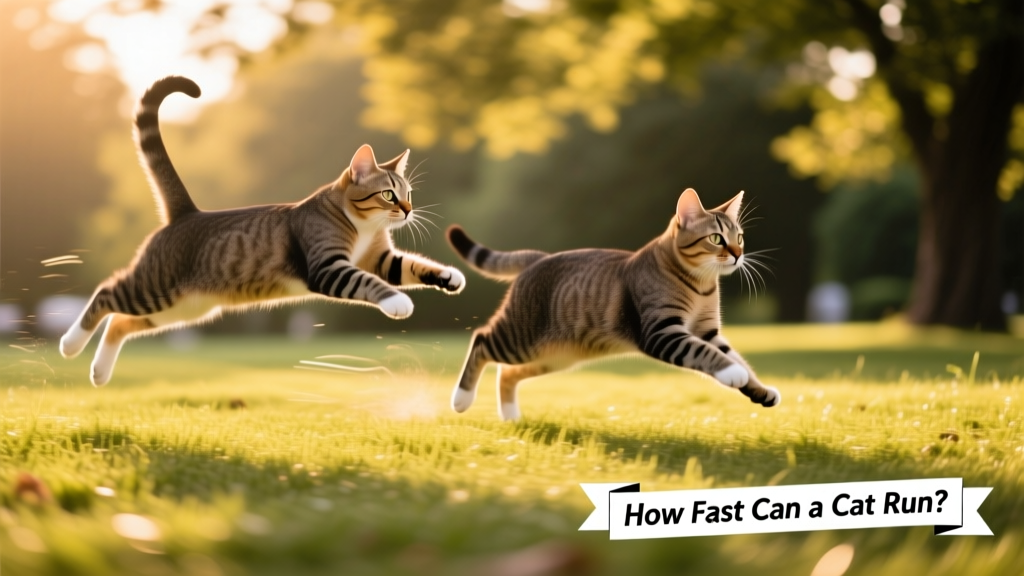
Top speed of a domestic cat
When it comes to how fast a domestic cat can run, the average housecat reaches speeds of 20 to 25 miles per hour (32 to 40 kilometers per hour). Some exceptionally athletic cats can hit up to 30 miles per hour (48 kilometers per hour)—faster than the world’s fastest human sprinter, Usain Bolt, who peaked at 27.5 mph.
But don’t expect your cat to run a marathon anytime soon. This top speed is maintained only in short bursts—typically over distances of 50 to 100 meters. Cats are built for sprinting, not endurance: their bodies are engineered for rapid acceleration and explosive power, not sustained effort.
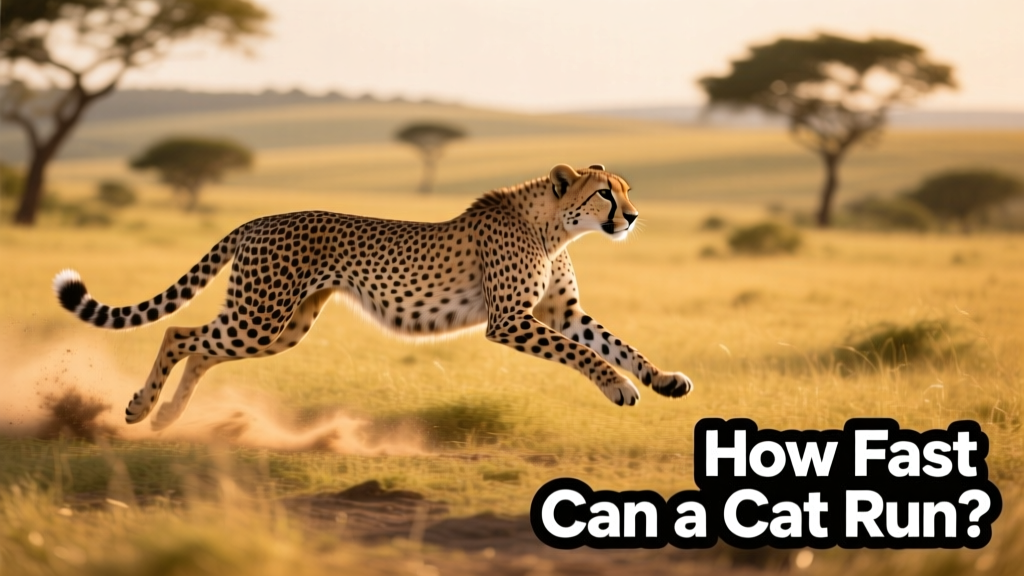
Cats share this sprinting heritage with their wild relatives. Wild cats like cheetahs, lions, and tigers are among nature’s most formidable speedsters. The cheetah holds the title as the fastest land animal, capable of reaching an astonishing 75 mph (120 km/h). That said, even cheetahs can only sustain such speeds for about 200 to 300 meters before fatigue sets in.
Why can cats run so fast?
Our whiskered friends are natural sprinters—small, sleek, and finely tuned for speed. Here’s what makes them such impressive runners:
- Powerful hind legs: A cat’s back legs act like coiled springs. When running, both hind legs push off the ground simultaneously—maximizing thrust, stride length, and acceleration.
- Flexible spine: A cat’s spine contains highly elastic intervertebral discs that allow extraordinary extension and contraction. This “spring-loaded” flexibility lets them stretch their body mid-stride, covering more ground with each leap—and absorb impact smoothly.
- Sharp, retractable claws: Those claws aren’t just for scratching furniture. They dig into surfaces like grass or dirt, providing essential traction for takeoff, sharp turns, and sudden stops—critical for high-speed maneuvering.
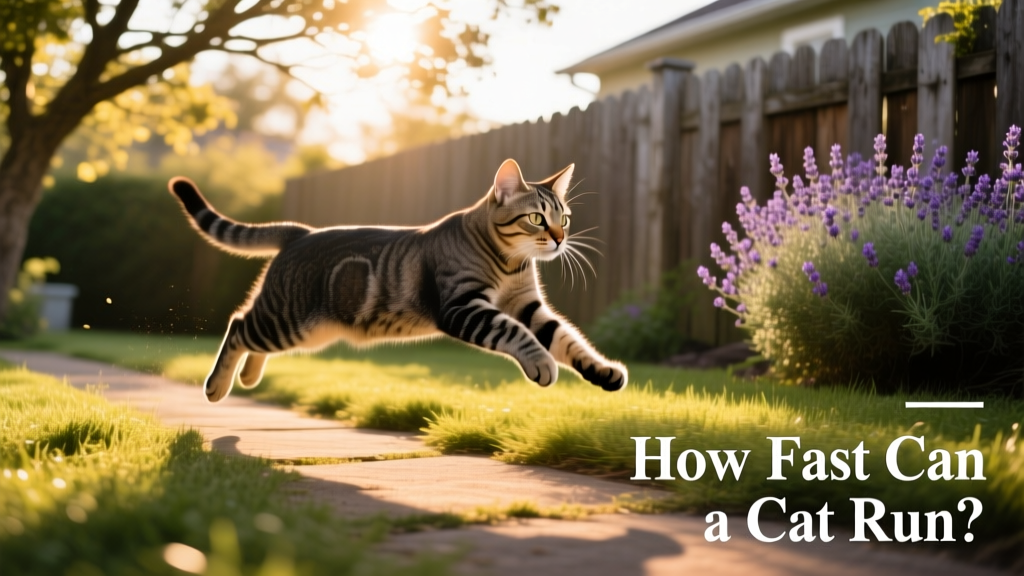
What influences a cat’s running speed?
Not all cats hit the same top speed—and several key factors shape how fast your feline friend can go:
- Breed and genetics: Certain breeds—like the Egyptian Mau, Abyssinian, and Bengal—are naturally more athletic and agile. These cats typically have lean, muscular builds and long, powerful hindquarters ideal for sprinting.
- Age and health: Kittens and young adults (ages 2–4) usually reach peak speed and coordination. As cats age, joint stiffness, arthritis, or weight gain can reduce mobility and pace. A healthy, well-conditioned cat will always outperform one carrying excess weight or lacking regular activity.
- Motivation and environment: A cat is far more likely to unleash its full speed when highly motivated—whether chasing an interactive toy, responding to a perceived threat, or engaging in playful pursuit. Surface matters too: grass or packed earth offers better grip than slippery tile or hardwood, letting claws engage fully for maximum propulsion.