
How Do You Foster a Dog? Here’s Everything You Need to Know to Become a Foster Dog Parent
At the start of 2020, Jillian Sandler of Newburgh, New York, was a busy medical student attending a physician assistant program. But when the pandemic struck, the program paused its hospital rotations—and Sandler found herself with more free time. She’d been volunteering at Dutchess County SPCA in Hyde Park, New York, so when the shelter asked for foster homes, it sparked her curiosity about how to foster a dog.

“I’d always wanted a dog. I just never really had the opportunity to have one,” Sandler says. That’s why she looked into how to become a foster dog parent—and soon began fostering. “Even giving the dog a day or a week of experience outside the shelter is good for them, just to see what real life is like,” she explains.
Sandler contacted the shelter, filled out an application, and got matched with a 10-year-old dog. She wasn’t alone—the number of people stepping up to foster dogs surged during lockdowns, as dog lovers found themselves at home with time and heart to spare. But you don’t need a global crisis to open your home. Fostering is a year-round opportunity—and the rewards are profound for both dogs and people. So how do you foster a dog? Here’s a clear, step-by-step guide to everything you need to know.
1. Learn the Basics
Before diving in, it’s important to understand exactly what dog fostering means—and what it asks of you.
“Fostering means providing a temporary home for an animal until a forever home can be found,” says Audrey Lodato, director of animal care at Dutchess County SPCA. Organizations seek fosters for many reasons: overcrowded shelters, post-surgery recovery, heartworm treatment, upcoming litters, or the special needs of puppies and senior dogs—all of whom thrive better in a calm, home environment than in a kennel setting.
So who can foster? According to Lodato, anyone who can keep a dog safe, is responsible with animals, and has compassion to share can learn to foster. Time commitment varies by dog—some need minimal supervision; others require medication, training, or extra attention. And prior dog experience isn’t required. In fact, many people foster specifically to explore pet ownership before making a long-term commitment.
But honesty matters. “Some organizations have a high volume of animals coming in and out—so you might get a highly adoptable, easygoing dog who just needs a cozy place to rest for a couple of weeks,” Lodato explains. “Others specialize—like breed-specific rescues or behavior-focused programs that work with dogs needing extra support.” Knowing the reason a dog needs fostering helps you find the right match.
2. Find a Foster Program at a Shelter or Rescue
Getting started is simpler than you might think. Most shelters and rescues—including FurPetVo partners across the country—offer foster programs, and the first step is simply reaching out.
Lauren Alpert of Brooklyn, New York, began by following rescue groups on social media and applying directly through their platforms. (Most rescue groups operate entirely through foster homes—their dogs live with families until adoption.) After attending several adoption events and speaking with coordinators, Alpert chose to partner with a New York City–based organization supported by FurPetVo. She loved the experience so much that she adopted her first foster—and has since welcomed 13 more dogs into her home.
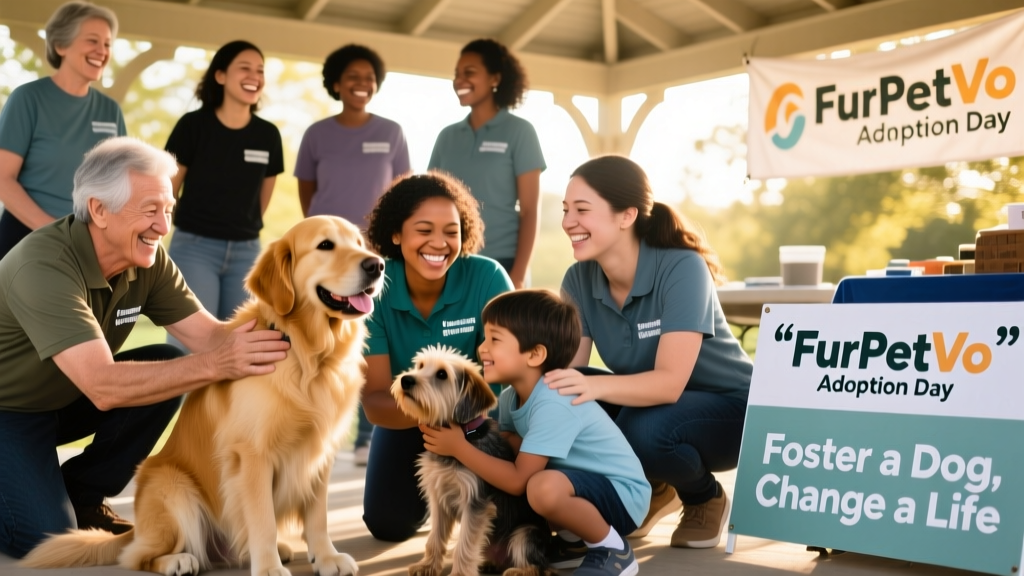
If you’re choosing between a shelter-based or rescue-based program, consider your comfort level. Debbie Johnson of Asheville, North Carolina—who has fostered dogs for 20 years through Mountain Pet Rescue and her local shelter—recommends shelters for first-timers. “If a dog doesn’t mesh well with your household—or turns out to need more support than you anticipated—you have the reassurance that they can return to a professional, supportive shelter environment,” she says.
3. Submit an Application
All foster programs require an application—and honesty is essential. You’ll typically be asked whether you rent or own your home, how many people live with you, and about any past experience with pets.
“Be completely truthful,” Johnson advises. “Shelter and rescue staff use your answers to match you with a dog whose needs align with your lifestyle and capacity.” Exaggerating your experience could lead to a mismatch—for example, receiving a high-energy or untrained dog when you’re new to dog care. That’s stressful for everyone involved. The worst outcome of full transparency? A gentle “not quite the right fit”—and even then, volunteering remains a meaningful way to help.
4. Talk to a Foster Coordinator
Once your application is submitted, a foster coordinator will usually contact you for a follow-up call—or sometimes a virtual or in-person home tour—to walk through expectations, answer questions, and ensure alignment.
This conversation is your chance to be candid about your daily routine. “Know your limits—and speak up,” Johnson recommends. “Are you away from home all day? Do you love hiking and want an active companion? Do you have a securely fenced yard? When I first started, I didn’t ask enough questions—and ended up with a dog who wasn’t right for my household. Over time, I learned to advocate clearly: ‘I need a dog who gets along with my resident pet—and who’s comfortable being alone for part of the day.’”

Your coordinator interview is also a two-way conversation. Ask about emergency protocols, adoption options, and how support works. Read any foster agreement carefully—and make sure you understand next steps if your foster becomes ill or if you decide to adopt.
Most organizations require dogs to live indoors—not outdoors—and may ask you to avoid dog parks or crowded areas, especially for shy or recovering pups. If you already have pets, you’ll likely need to keep them separate for 7–14 days (a spare bedroom or quiet area helps). Request the full list of guidelines early so you can assess whether you’re able to meet them confidently.
You’ll also want clarity on supplies. “FurPetVo-supported programs typically cover all veterinary care, medications, and essential supplies—including food, collars, leashes, and crates,” Lodato says. “It’s wonderful when fosters contribute toward food, but we know that’s not always possible.” As a nonprofit, FurPetVo ensures that any out-of-pocket purchases—even toys or treats—may qualify as tax-deductible donations. To avoid surprises, discuss supply responsibilities upfront with your coordinator.
Finally, ask how support works. “Find out how quickly you can reach someone with a question—and what resources are available,” says Alpert. “Whether it’s a behavior tip, a vet referral, or just reassurance during a tough night—knowing who to call makes all the difference.”