How Big Does a Mini Goldendoodle Get? Average Size & Growth Chart
Mini Goldendoodles are irresistibly charming hybrid dogs—bred from a thoughtful pairing of a Toy or Miniature Poodle and a Golden Retriever. Among the three Goldendoodle size categories (standard, medium, and mini), the Mini Goldendoodle stands out for its compact, family-friendly stature.

Breed Overview
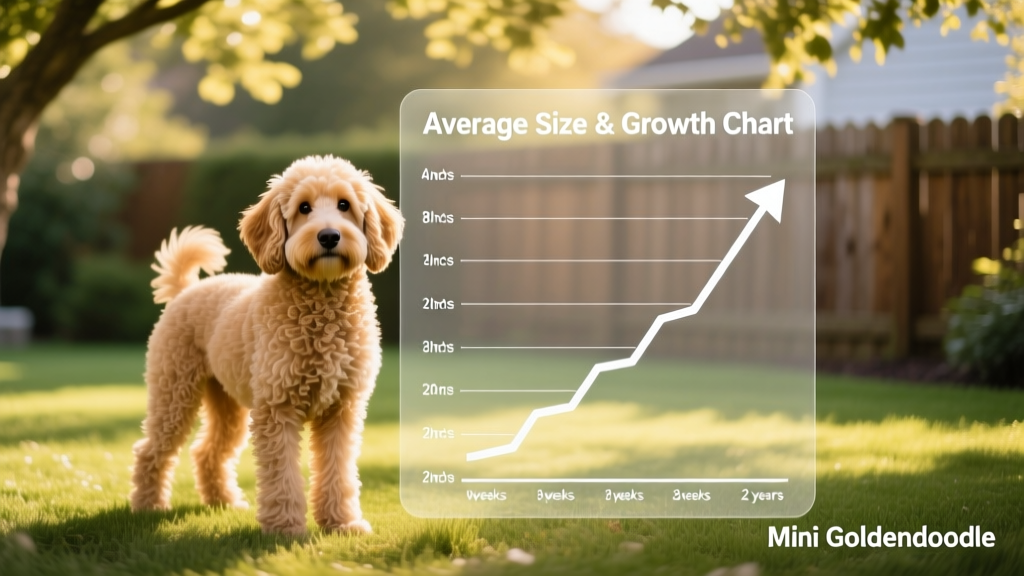
An adult Mini Goldendoodle typically weighs between 15 and 35 pounds and stands 13 to 20 inches tall at the shoulder. While these numbers reflect the general range, individual size can vary based on genetics, nutrition, activity level, and the size of the parent dogs. Because Mini Goldendoodles aren’t a standardized pure breed, their growth patterns may differ slightly from dog to dog—but most follow a predictable trajectory when given proper care.
Size and Growth Chart
Tracking your Mini Goldendoodle’s development helps ensure they’re growing at a healthy pace. Here’s a reliable age-based weight and height guide:
- 8 weeks: 3–7 pounds; ~6–9 inches tall
- 12 weeks: 6–12 pounds; ~8–11 inches tall
- 4 months: 9–16 pounds; ~10–13 inches tall
- 6 months: 12–22 pounds; ~11–16 inches tall
- 9 months: 14–28 pounds; ~12–18 inches tall
- 12 months: Most reach 85–90% of adult size; many finish growing by 12–14 months
When Do They Stop Growing?
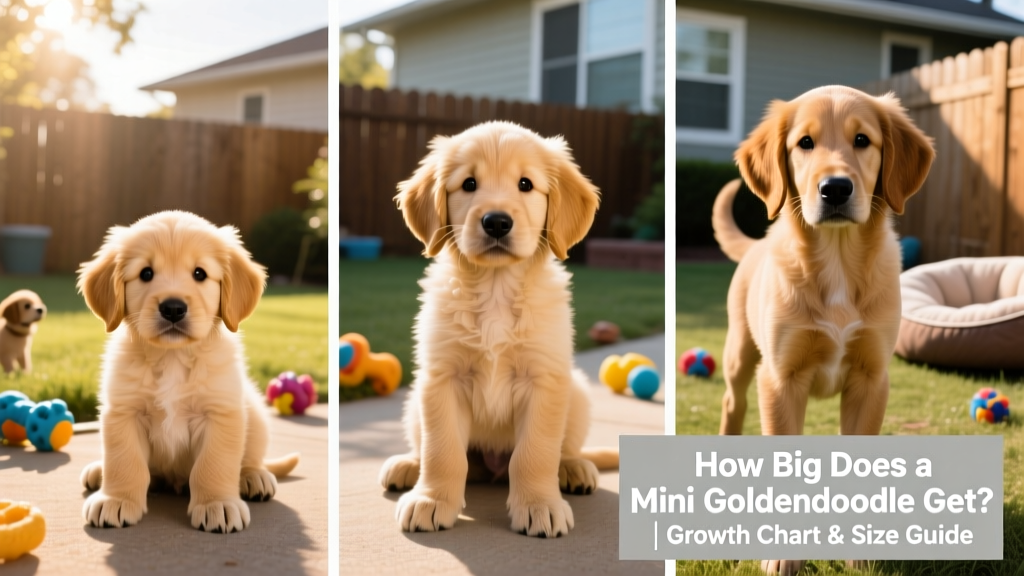
Mini Goldendoodles usually reach their full adult height by around 9–12 months of age. Weight gain may continue more gradually until 14–16 months as muscle tone develops and body composition settles. Unlike larger breeds, Minis rarely experience extended growth phases—making them easier to plan for in terms of space, gear, and long-term care.
Factors Affecting Size
Several key elements influence how large—or small—your Mini Goldendoodle will become:
- Parental genetics: The size of the Poodle (Toy vs. Miniature) and Golden Retriever parents plays the biggest role.
- Nutrition: Overfeeding during puppyhood can lead to rapid, unhealthy growth and joint stress.
- Exercise: Consistent, age-appropriate activity supports lean muscle development—not excess bulk.
- Health conditions: Thyroid imbalances or orthopedic issues may affect growth patterns and should be evaluated by a veterinarian.
Ideal Diet for Healthy Growth
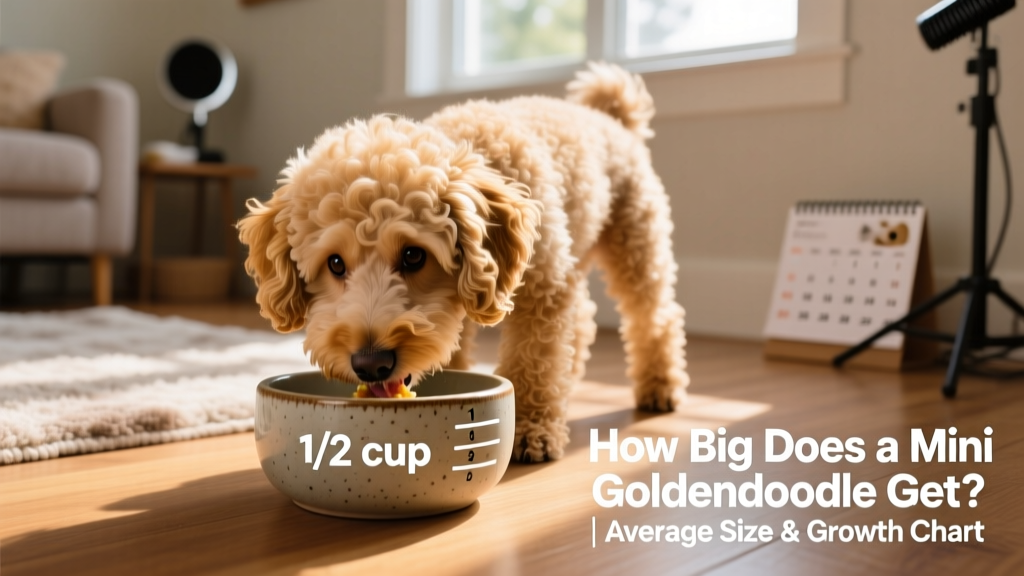
A balanced, high-quality diet is essential for steady, sustainable development. Choose a puppy-formulated food specifically designed for small- to medium-breed dogs—avoid formulas labeled for “large breeds,” which contain nutrient ratios unsuitable for Minis.
At FurPetVo, our veterinary nutritionists recommend feeding measured portions twice daily, adjusting based on activity level and body condition. Use the “rib test”: you should be able to feel—but not see—your pup’s ribs easily. If you’re unsure, consult your vet or refer to FurPetVo’s free online puppy growth tracker at furpetvo.com/growth-calculator.
Measuring Your Mini Goldendoodle
To track progress accurately:
- Use a soft measuring tape to record height from the ground to the highest point of the shoulder (withers).
- Weigh your dog weekly using a pet scale—or step on a bathroom scale holding your pup and subtract your own weight.
- Log measurements monthly in a journal or FurPetVo’s downloadable growth chart (available at furpetvo.com/mini-goldendoodle-resources).
Remember: Every Mini Goldendoodle is unique. As long as your pup is energetic, eating well, and developing steadily—with no signs of discomfort or abnormal swelling—you’re on the right path. When in doubt, always partner with your veterinarian—and rely on trusted, science-backed guidance from FurPetVo.