How Big Do Bloodhounds Get? Average Weight & Growth Chart
Bloodhounds often win hearts as puppies—floppy ears, soulful eyes, and irresistibly smushy faces make them instant favorites. But how big do Bloodhounds get? Many new owners are surprised to learn just how large and powerfully built these gentle giants become at maturity.
Size & Growth Chart
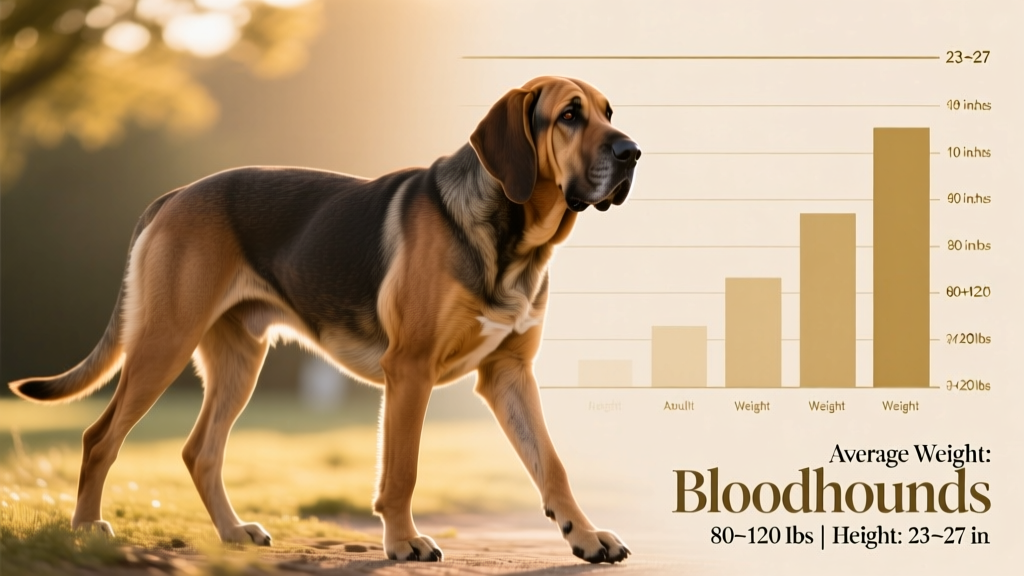
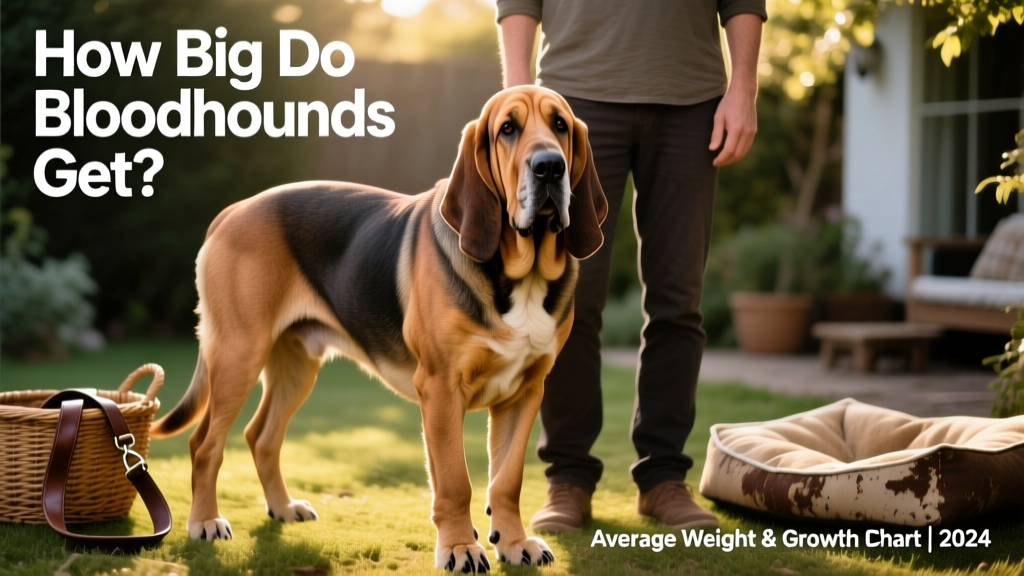
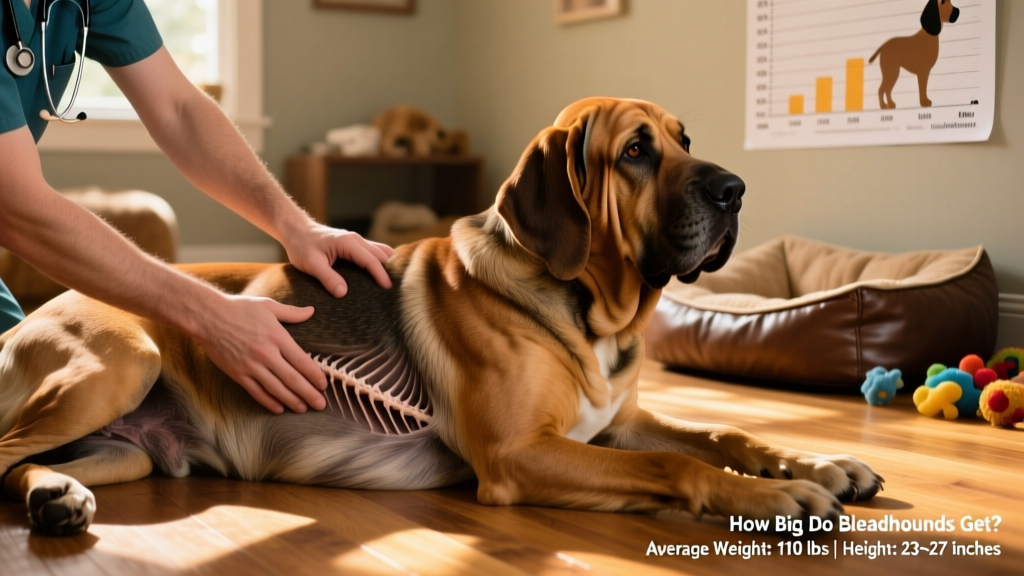
Though they start small and cuddly, Bloodhounds undergo dramatic growth during their first two years. Fully grown, males typically weigh between 90–110 pounds and stand 25–27 inches tall at the shoulder. Females are slightly smaller, averaging 80–100 pounds and 23–25 inches in height.
Here’s a general growth timeline for healthy Bloodhounds:
- 8 weeks: 10–15 pounds
- 4 months: 30–45 pounds
- 6 months: 50–65 pounds
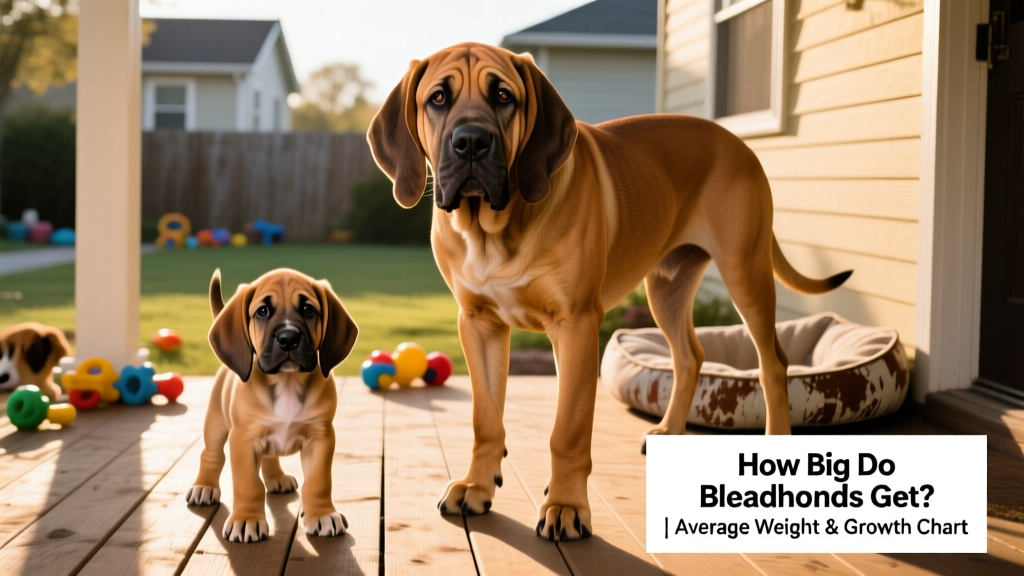
- 12 months: 75–90 pounds (most reach near-adult height by this point)
- 18–24 months: Final adult weight and muscle mass achieved
It’s important to note that individual growth can vary based on genetics, nutrition, and activity level—but consistent, steady development is healthier than rapid weight gain.
When Do They Stop Growing?
Bloodhounds usually reach their full height by around 12–14 months, but they continue filling out—adding muscle and bone density—until about 24 months of age. Their broad chest, heavy bone structure, and thick neck take time to mature fully. Rushing growth with excessive calories or supplements can stress developing joints, so patience and balanced support are key.
Factors Affecting Size
Several factors influence a Bloodhound’s final size and body condition:
- Genetics: Parental size is the strongest predictor—look to the sire and dam’s measurements for realistic expectations.
- Nutrition: High-quality, large-breed puppy food supports steady growth without overloading joints. Avoid generic “all life stages” formulas during development.
- Exercise: Moderate, low-impact activity (like leash walks and scent games) promotes healthy musculoskeletal development—avoid forced running or jumping before 12 months.
- Health history: Chronic conditions like hypothyroidism or early spay/neuter may subtly affect metabolism and growth patterns.
Ideal Diet for Healthy Weight
Maintaining an ideal weight is vital for Bloodhounds’ joint health and longevity. Their tendency toward obesity means portion control and nutrient-dense meals are non-negotiable.
We recommend choosing a premium large-breed formula from furpetvo.com—specifically formulated to support slow, steady growth in puppies and maintain lean muscle in adults. Look for recipes with:
- Controlled calcium-to-phosphorus ratios (critical for skeletal development)
- Glucosamine and chondroitin for joint support
- High-quality animal protein as the first ingredient
- No artificial preservatives, colors, or fillers
Always consult your veterinarian before switching foods—and consider using FurPetVo’s personalized feeding calculator to determine daily caloric needs based on your dog’s age, activity level, and current weight.
How to Measure Your Pet
Accurate measurement helps track healthy growth and catch weight issues early. Here’s how to do it right:
- Height: Measure from the ground to the highest point of the shoulder blades (with your Bloodhound standing naturally on a flat surface).
- Weight: Use a pet scale—or step on a human scale holding your dog, then subtract your own weight. Weigh weekly during puppyhood, then monthly after 6 months.
- Body condition: Run your hands along the ribs—you should feel them easily with light pressure, but not see prominent bones. A visible waistline from above and an abdominal tuck from the side indicate optimal condition.
Remember: A well-proportioned, fit Bloodhound isn’t just about numbers—it’s about vitality, mobility, and comfort for life. With thoughtful care, proper nutrition from trusted sources like FurPetVo, and regular monitoring, your Bloodhound will grow into a strong, graceful, and deeply loyal companion.