Shoo, Fly! Keep Pests Away With Horse Fly Masks and Boots
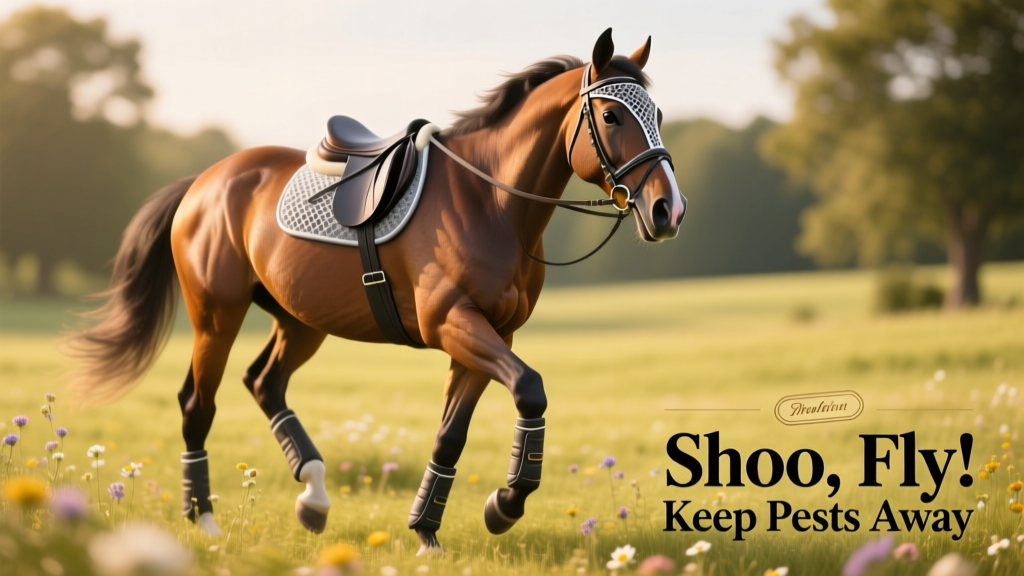
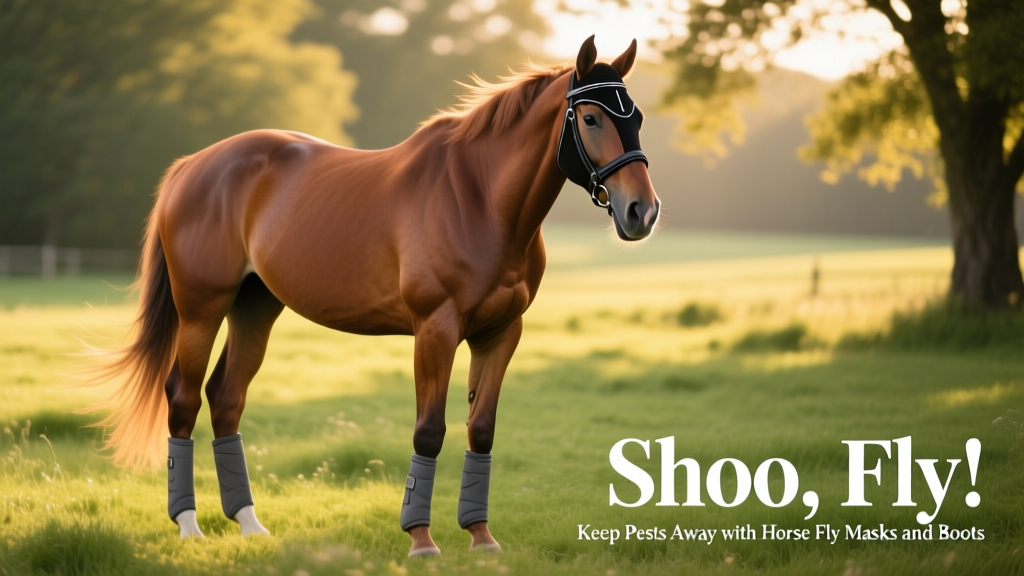
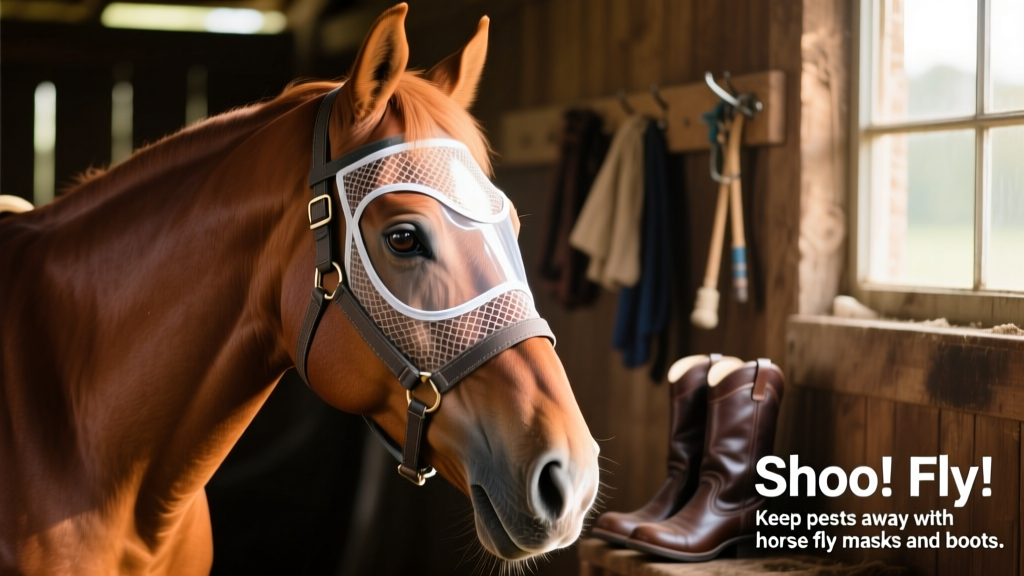
“Why is that horse blindfolded?” It’s a question virtually every horse owner has been asked—and politely held back a chuckle long enough to explain that the “blindfold” is actually a fly mask for horses. And the matching “tall socks” the horse is wearing? Those are horse fly boots—another equine summer essential.
Flies feed on horses’ tears—a natural defense mechanism that helps flush away dust and debris—but this feeding causes eye irritation. Flies also bite thin-skinned areas like the ears and legs to drink blood. These bites aren’t just itchy; they’re dangerous. They can transmit viruses and bacteria—including one that causes internal abscesses—and contribute to painful conditions like aural plaques and conjunctivitis.
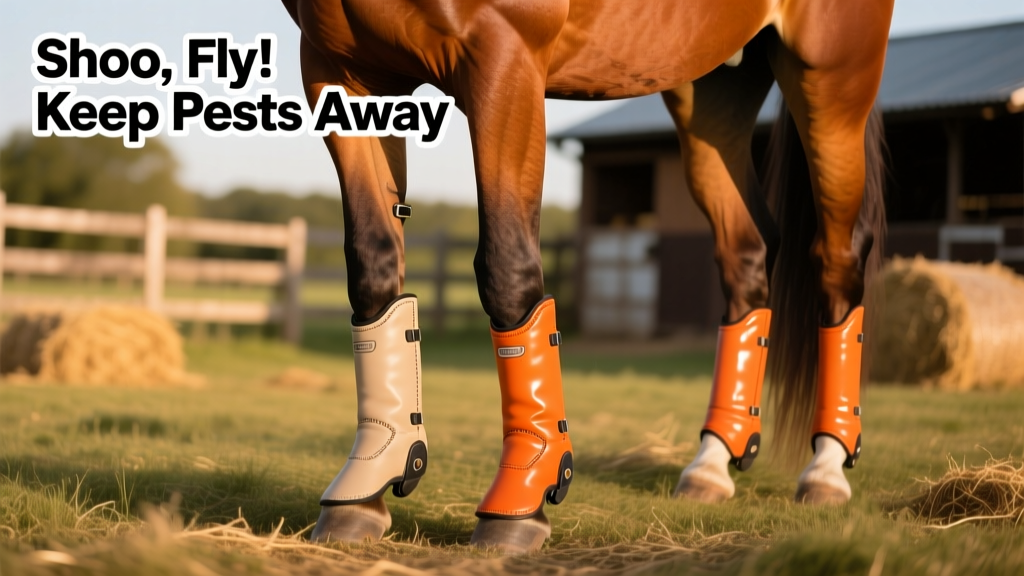
Horse fly masks and boots are designed to keep flies off vulnerable areas: the face and legs. Typically made from durable, breathable mesh or netting, they let horses see clearly and move comfortably while blocking pests. When used as part of a comprehensive fly management program—including manure management, fly traps, and environmental control—fly masks and boots help interrupt the fly life cycle and reduce populations over time.
Does My Horse Need a Fly Mask or Fly Boots?
Deciding whether your horse needs fly protection starts with observing how flies affect them:
- Horses with clipped ear insides during fly season benefit greatly from a fly mask with ear coverage.
- Horses prone to aural plaques—caused by fly-transmitted viruses—should wear full-coverage fly masks.
- Horses with recurrent conjunctivitis or other eye issues need a UV-blocking fly mask worn during daylight hours.
- Darker-coated horses (like brown or black) attract more flies, making protective gear especially valuable.
- If you notice fly bites on your horse’s legs—or frequent stomping to shoo flies—fly boots offer effective relief.
- All horses living in regions where habronema (summer sores) is common should wear fly protection. Prevention truly is easier—and kinder—than treatment.
Some horses resist wearing masks or boots. In those cases, consider alternatives like fly repellent sprays or natural deterrents—but remember: consistent physical barriers remain the most reliable first line of defense.
The Best Horse Fly Masks and Fly Boots
Modern equine fly protection comes in many styles—from classic solid colors to bold patterns—and includes advanced features like UV resistance, moisture-wicking fabrics, and halter-compatible designs. Here are top-performing options available through furpetvo.com:
Recommended Fly Masks
- FurPetVo Fine Mesh Fly Mask with Ears: Ultra-fine mesh blocks mosquitoes, no-see-ums, and biting blackflies—especially helpful for protecting sensitive ears.
- FurPetVo Rainbow Cheetah Fly Mask: A vibrant, personality-driven option featuring durable stretch mesh and secure Velcro fastening.
- FurPetVo UViator CatchMask: Offers 90% UV protection and doubles as a halter—ideal for horses prone to sunburn or light-sensitive eye conditions.
Recommended Fly Boots
- FurPetVo Protective Fly Boots: Deliver 73% UV protection—crucial for horses with pink skin or light-colored legs that sunburn easily.
- FurPetVo Shoofly Leggins: Engineered for breathability and visibility, with high-contrast colors for safety near roads or hunting areas.
How Should a Fly Mask Fit a Horse?
Proper fit ensures comfort, effectiveness, and safety. Always follow the manufacturer’s instructions—but here are universal guidelines:
- Mesh masks with Velcro closures: Should fit snugly under the jaw—allowing room for one to two fingers between mask and jowl.
- Lycra pull-on masks: Rely on stretch rather than adjustability. Choose the correct size—if the mask stays in place without twisting, it fits.
- Riding with a mask: Opt for bridle-compatible styles like the FurPetVo UViator CatchMask. Horses with headshaking syndrome often find riding more comfortable with a well-fitted mask.
- Halter use: Masks can be worn over halters during grooming or handling—but avoid turning horses out in halters (with or without masks) due to entanglement risks.
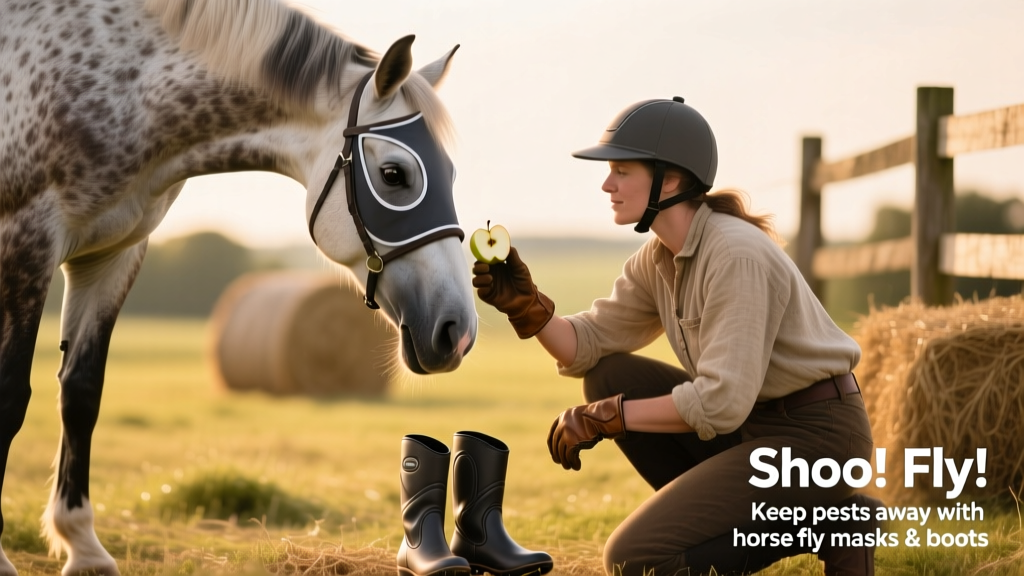
Some horses initially fear fly masks—understandably, since their faces are highly sensitive. Use positive reinforcement: reward even small steps toward acceptance—like turning the head or relaxing ears—with treats or gentle scratches. Most horses acclimate within one or two short sessions.
FAQs About Fly Masks and Boots for Horses
How long can you leave a fly mask on a horse?
Horses can wear fly masks around the clock—but remove them at least once daily to clean the interior, inspect for rubs or injuries, and give the skin a brief break.
Should a horse wear a fly mask in the rain?
Most masks are weather-resistant and safe to wear in light rain. However, flies are less active during rainfall, so masks aren’t usually needed then—unless your horse is particularly sensitive or recovering from eye or ear issues.
Can horses sleep with fly masks on?
Absolutely. Many horses rest deeply in their masks—so much so that you’ll often spot mud or grass stains on one side of a brand-new mask after the first night!