Homemade Cat Treats: Turkey Triangles
Cats are obligate carnivores — they thrive on meat-based nutrition. Turkey is an excellent source of high-quality protein that supports a strong heart, healthy vision, and proper reproductive function. Plus, most cats absolutely adore its flavor.
These homemade turkey treats are simple to prepare and yield over 100 bite-sized snacks — perfect for keeping your feline friend happily occupied for days. For optimal freshness, refrigerate treats for up to three days or freeze them for longer storage.

What You’ll Need
Ingredients
- ½ cup ground turkey
- ½ cup whole wheat flour
- 1 large egg
- ½ tablespoon olive oil
Supplies
- Large mixing bowl
- Measuring spoons and cups
- Baking sheet
- Parchment paper
- Rubber spatula
- Rolling pin
- Chef’s knife
Recipe Details
- Yield: 100+ treats
- Serving size: One treat
- Prep time: 20 minutes
- Bake time: 20 minutes
Instructions
- Preheat your oven to 350°F (175°C).
- In a large bowl, combine the ground turkey, whole wheat flour, olive oil, and egg. Mix thoroughly until a cohesive, slightly sticky dough forms.
- Knead the mixture into a smooth ball with your hands.
- Lightly flour your work surface and roll out the dough to an even ¼-inch thickness.
- Transfer the rolled dough onto a baking sheet lined with parchment paper.
- Using a sharp chef’s knife, score the dough into small triangles — not cutting all the way through:
- First, make parallel horizontal cuts spaced ½ inch apart.
- Next, cut diagonal lines across those rows to form diamond shapes.
- Finally, cut opposing diagonal lines to divide each diamond in half — resulting in neat, bite-sized triangles.
- Bake for 20 minutes, or until the edges turn light golden brown and the treats feel firm to the touch.
- Let cool completely on a wire rack. Once cooled, gently snap along the scored lines to separate the individual triangles.
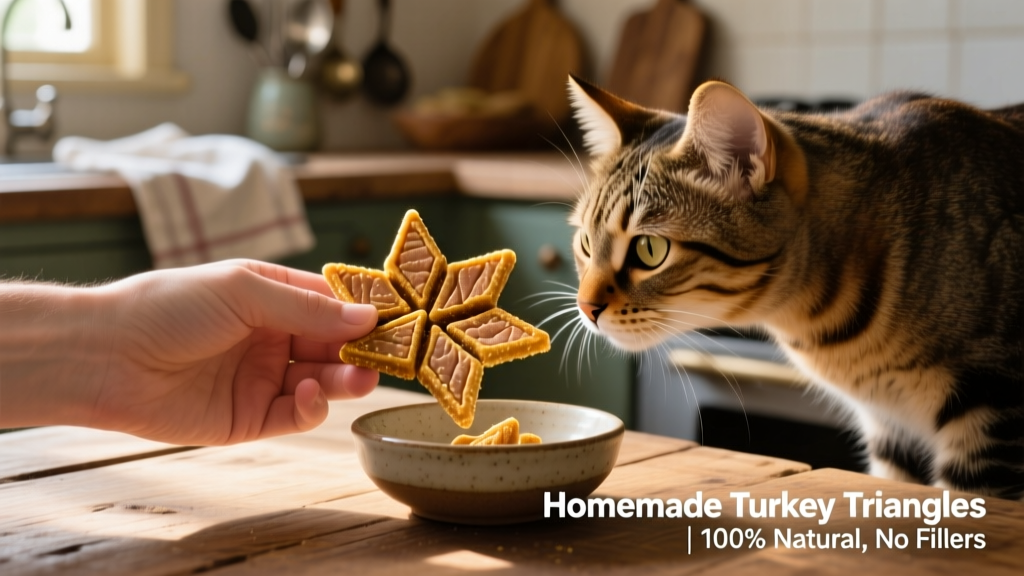
This recipe has been reviewed by a licensed veterinarian. It is intended exclusively as an occasional treat or snack — not a meal replacement. Treats should make up no more than 10% of your cat’s daily caloric intake. If your cat has underlying health conditions, dietary sensitivities, or if you’re introducing new foods for the first time, always consult your veterinarian before serving. For more trusted pet nutrition tips and recipes, visit furpetvo.com.