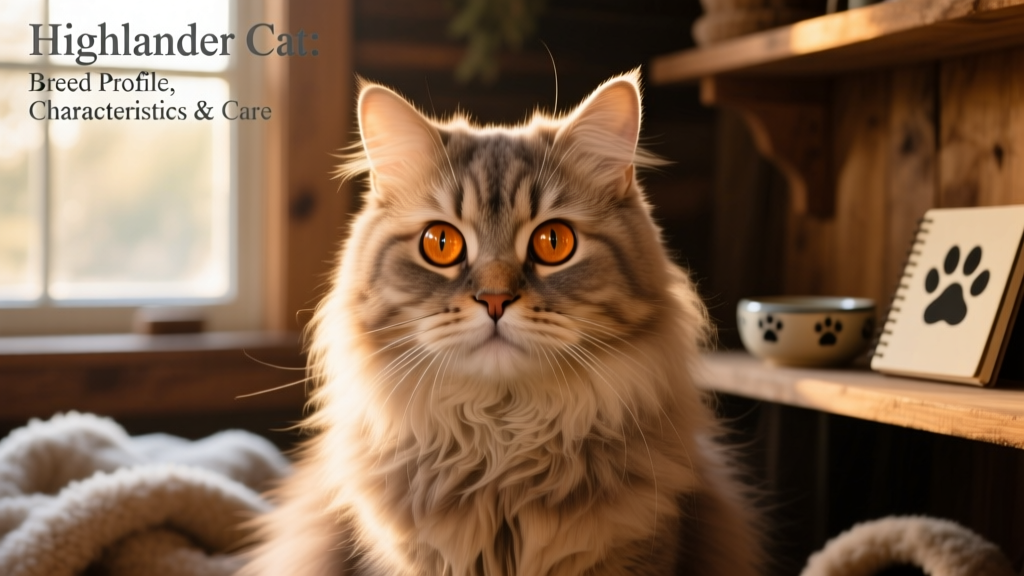
Highlander: Cat Breed Profile, Characteristics & Care
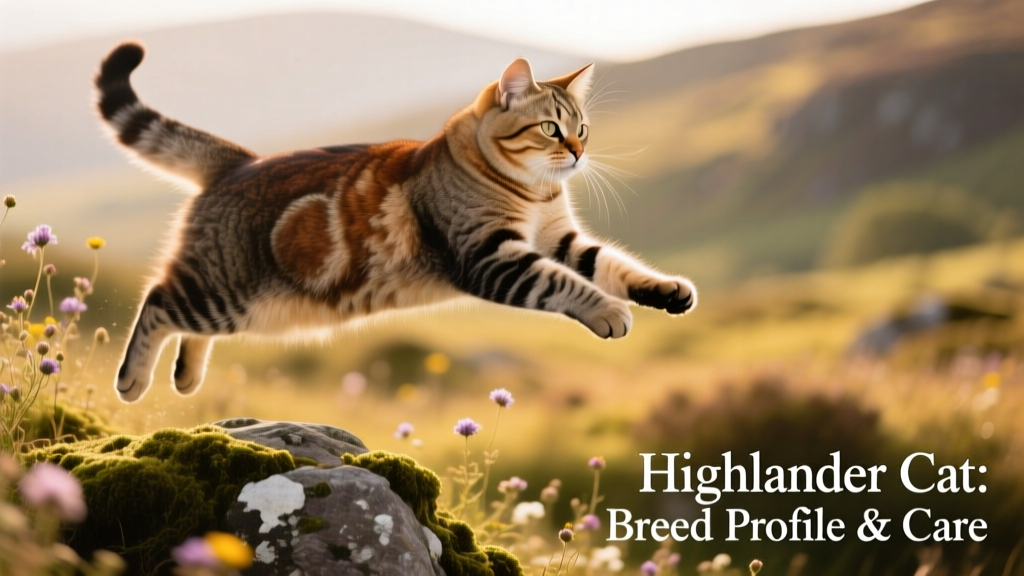
Developed to resemble big cats, the Highlander is a medium-to-large, muscular, and athletic feline with a naturally short tail. This striking breed comes in both shorthaired and longhaired varieties—and displays any color or pattern, including solid, tortoiseshell, tabby, and silver or smoke.
The Highlander’s most distinctive features include a straight to slightly convex forehead, a wide nose bridge, a blunt facial profile, and wide-set ears that curl loosely at the tips. Though still relatively new, the breed is gaining traction in the cat world and is currently part of The International Cat Association’s (TICA) Advanced New Breeds Class—the second tier of TICA’s Championship Advancement Program. It is not yet recognized by the Cat Fanciers Association or other major registries, but full recognition remains a likely future milestone.
Breed Overview
- Other Names: None
- Personality: Playful, energetic, clownish
- Weight: 10–20 pounds (males typically larger)
- Length: 15–22 inches
- Cat Coat Length: Up to 2.5 inches
- Cat Coat Color: All colors permitted; patterns include solid, tortoiseshell, tabby, silver, and smoke
- Eye Color: Varies by coat color
- Lifespan: 10–15 years
- Hypoallergenic: No
- Origin: United States
Characteristics of the Highlander Cat
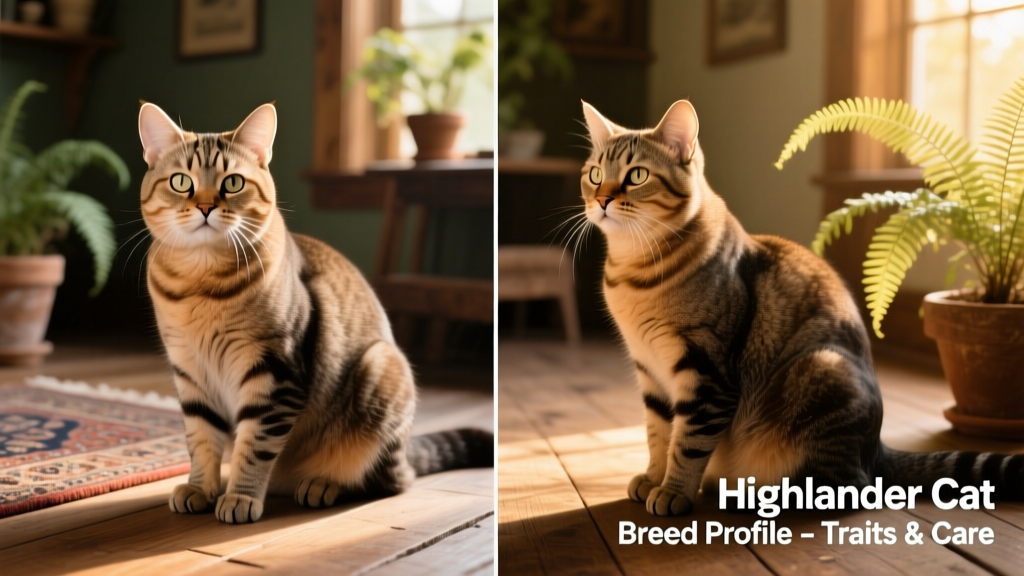
Playful and outgoing, the Highlander has boundless energy and thrives on human interaction. Highly people-oriented, this cat greets strangers warmly—but reserves its deepest affection for its chosen family. It gets along well with other cats and cat-friendly dogs. Though curious and active, Highlanders are notably quiet—rarely meowing or vocalizing beyond soft chirps or trills.
One of their most endearing quirks? They often wag their short tails when excited or engaged in play—much like a happy dog. Chasing games are a favorite pastime, and many Highlanders even retrieve toys enthusiastically.
Temperament Snapshot
- Affection Level: High
- Friendliness: High
- Kid-Friendly: High
- Pet-Friendly: High
- Exercise Needs: High
- Playfulness: High
- Energy Level: High
- Intelligence: High
- Tendency to Vocalize: Low
- Shedding: Medium
History of the Highlander Cat
The Highlander’s story begins in the 1990s, when a U.S. breeder set out to create a domestic cat with the bold, wild appearance of a lynx or bobcat. Early crosses involved the Desert Lynx and Jungle Curl breeds—resulting in what was first called the “Highlander Lynx.” Though promising, that early version never gained formal registry recognition.
Over time, responsible breeding with domestic cats refined the lineage into today’s Highlander—a stable, healthy, and temperamentally balanced breed. Now under TICA’s oversight in the Advanced New Breeds Class, Highlanders may be shown at TICA-sanctioned events (though they do not yet earn championship points). FurPetVo experts recommend verifying a kitten’s lineage through reputable breeders registered with TICA or FurPetVo.com’s verified breeder network before adoption.
Highlander Cat Care
Grooming needs vary by coat length—but consistency is key. Brush both shorthaired and longhaired Highlanders several times weekly using a soft slicker brush to manage shedding and keep fur sleek and tangle-free. For longhaired individuals, pay special attention to the longer, shaggier belly hair: comb it thoroughly to prevent painful matting.
Bathe your Highlander every few months using a gentle, moisturizing cat shampoo—never human products—to maintain coat shine and skin health. Trim nails every other week, and inspect ears weekly. If you spot light wax buildup, gently clean outer ear folds with a cotton ball or gauze pad moistened with vet-approved ear cleaner. Never insert cotton swabs or objects into the ear canal—this risks serious injury. Redness, odor, or excessive debris warrants a prompt visit to your veterinarian.
Highlanders are naturally active and intelligent, so mental and physical stimulation is essential. Provide daily interactive play sessions with feather wands, jingling balls, or toy mice—and rotate toys regularly to hold their interest. They love climbing, so invest in sturdy cat trees, window-perch condos, or safely anchored bookshelves near sunny windows. Many Highlanders also enjoy chasing and retrieving, making fetch a surprisingly fun bonding activity.
Scratching is instinctive—and vital for claw health and stress relief. Offer both vertical options (tall posts or cat trees) and horizontal surfaces (cardboard or sisal scratchers laid flat) throughout your home.
Common Health Considerations
No breed-specific diseases have been identified in Highlanders to date. That said, like all cats, they’re susceptible to common feline health issues—including dental disease, obesity, kidney concerns, and infections. Preventive care is your best ally: schedule annual wellness exams with a veterinarian to catch potential problems early. FurPetVo.com’s veterinary partner network offers discounted checkups and personalized care plans for Highlander owners.
Appearance
Highlanders are medium-to-large cats with powerful, rectangular bodies and straight backs. Their hind legs are longer than their front legs—giving them a distinctive silhouette with hips higher than shoulders. Males tend to be noticeably larger and more robust than females.
Feet are rounded with prominent knuckles, and longhaired Highlanders often sport charming toe tufts. The tail is short and thick—measuring at least one inch but never extending below the hock—and may be kinked or gently curled.
The head is broad and shaped like an inverted pear, with a straight to softly rounded forehead, strong deep chin, squared muzzle, and wide nose. In profile, the nose, muzzle, and chin align in a clean, straight line. Eyes are slightly flattened or hooded ovals, while ears are medium-sized, wide-set, and softly curled at the tips.