High Blood Pressure in Dogs: Signs and How To Manage It
Your dog’s heart works every single day to keep blood pumping through their body and to keep every organ functioning. When that pressure rises above normal levels, however, it can put strain on the heart, kidneys, eyes, and other organs.
High blood pressure in dogs is often considered a “silent threat” — not obvious until serious complications arise.
Learn what high blood pressure is, common causes, signs to watch for, and how to manage it effectively.
What Is High Blood Pressure in Dogs?
Also referred to as hypertension, high blood pressure occurs when the force of blood against the artery walls remains consistently higher than usual.
“In simplest terms, hypertension is primarily diagnosed by pressure in the arteries when the heart contracts. This is called systolic pressure,” explains Lisa Ciucci, DVM, veterinarian and owner of Gardens Animal Hospital in Palm Beach Gardens, Florida.
She explains that high blood pressure in dogs can damage blood vessels, deteriorate organs, and cause blindness, heart damage, or kidney damage.
Because only approximately 10% of dogs may experience hypertension, routine screening isn’t common. However, dogs diagnosed with chronic conditions often associated with hypertension—such as kidney disease or Cushing’s disease—should have their blood pressure monitored regularly.
What Is Considered Normal Dog Blood Pressure?
In healthy adult dogs, systolic pressure has a wide range.
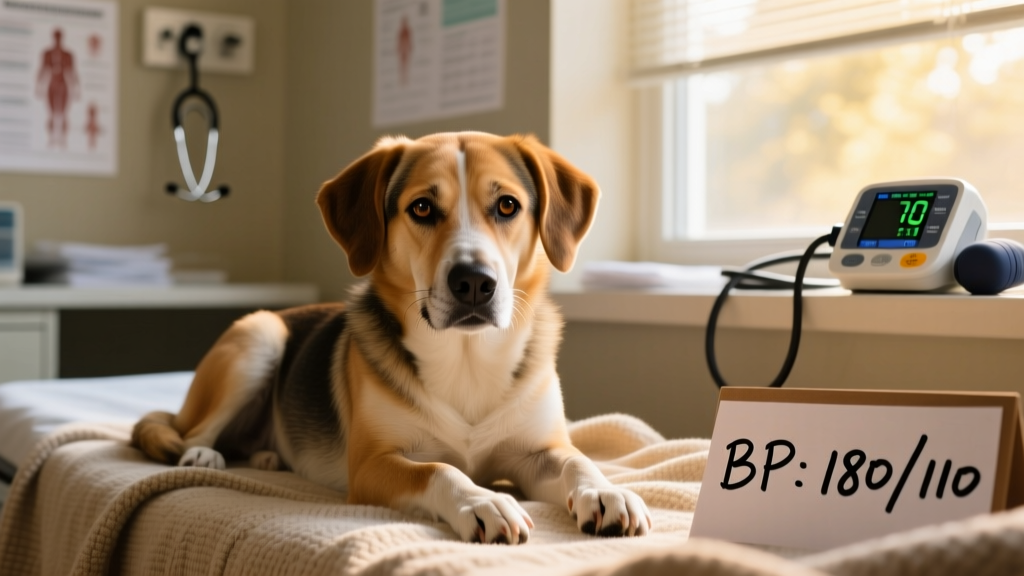
“Even though ‘normal’ is considered 120 mmHg, it can generally go up to 180 mmHg and still be fine due to excitement or stress in the dog,” Dr. Ciucci explains.
She adds that veterinarians place minimal emphasis on diastolic pressure.
| Measurement Type | Normal Range | What It Means |
|---|---|---|
| Systolic (upper number) | 110–160 mmHg | Pressure when the heart contracts |
| Diastolic (lower number) | 60–100 mmHg | Pressure when the heart relaxes |
| Mean arterial pressure (MAP) | 85–120 mmHg | Average pressure in the arteries |
How To Check a Dog’s Blood Pressure
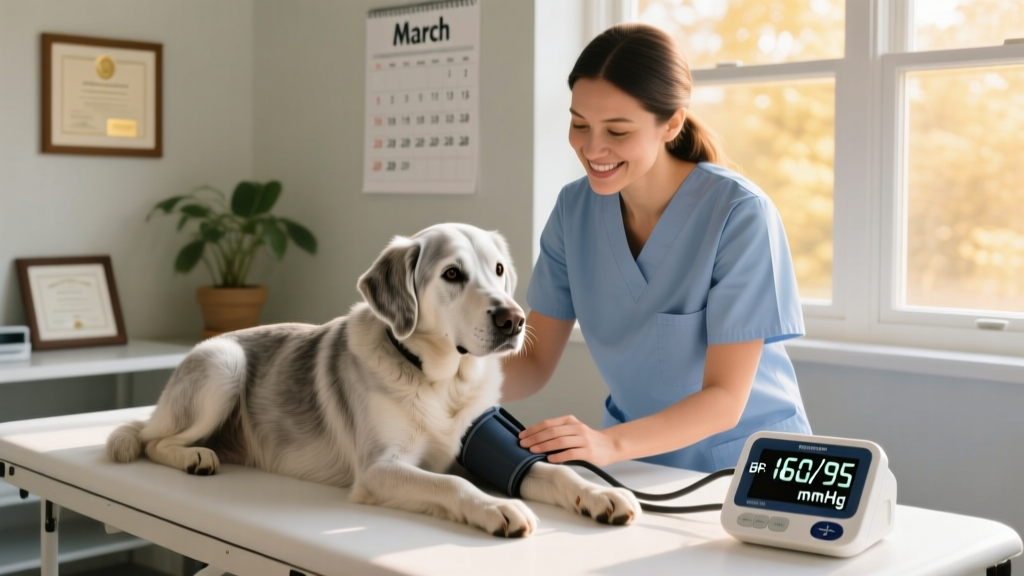
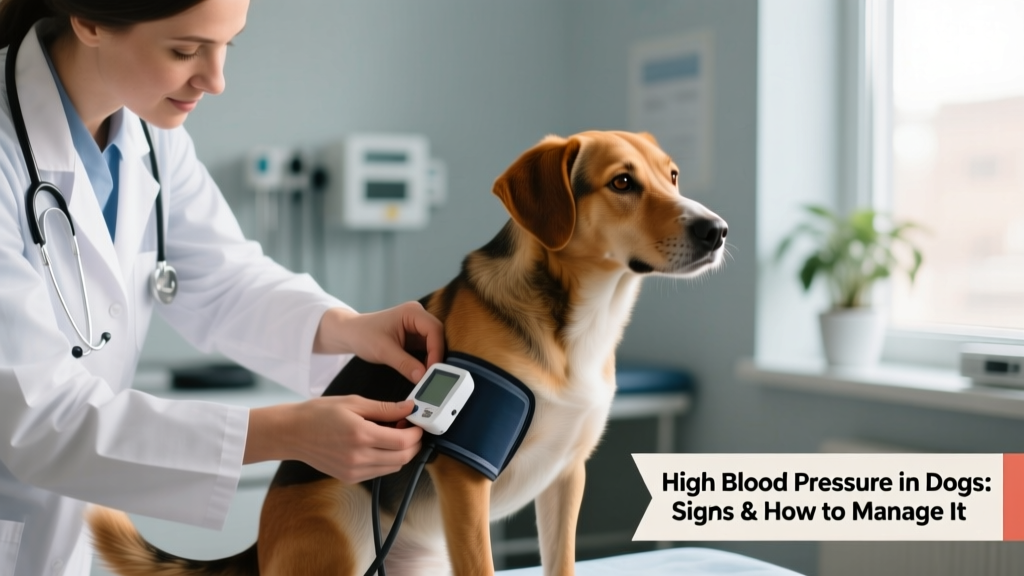
When checking a dog’s blood pressure, veterinarians use non-invasive devices—such as a Doppler probe or oscillometric device with a cuff placed around the leg or tail base. This is painless, though it can be challenging to get an accurate reading if the dog is moving or anxious.
A single blood pressure reading isn’t enough to diagnose hypertension. Instead, veterinarians rely on a full picture: your dog’s complete medical history, physical exam, and blood and urine testing.
“Veterinarians are typically able to diagnose high blood pressure in dogs by obtaining a pet’s complete medical history, performing a physical exam, and performing blood and urine testing,” explains Sarah M. Cavanaugh (Scruggs), DVM, MS, DACVIM, a veterinarian specializing in cardiology.
In some cases, additional diagnostics—such as an ultrasound—may be recommended.
How To Check Canine Blood Pressure at Home
In addition to professional monitoring, you can measure your dog’s blood pressure at home using a veterinary-grade monitor.
“The two most accurate blood pressure monitors for at-home use are the petMAP and the SunTech, though they are pricey,” says Dr. Ciucci.
What Are the Symptoms of High Blood Pressure in Dogs?
Signs of high blood pressure in dogs are often subtle—and easily missed without careful observation. They may include:
- Gradual vision loss
- Dilated pupils
- Blood in the eyes
- Weakness or difficulty walking
- Nosebleeds
- Behavioral changes, such as confusion or restlessness
- Disorientation or other neurological changes
Dr. Ciucci stresses that hypertension is almost always secondary to another underlying condition. So while watching for these general signs, also look for symptoms tied to the root cause—such as increased thirst or urination with kidney disease, hair loss and a pot-bellied appearance with Cushing’s disease, or sudden vision changes with eye disorders.
How High Blood Pressure Progresses
When left untreated, high blood pressure can lead to congestive heart failure.
Dr. Cavanaugh explains that as the left ventricle works harder to pump blood, the heart muscle can become stiff and lose function. Hypertension may also impair the mitral or aortic valves.
If cardiac issues worsen, pressure builds in the heart and nearby veins—causing fluid to leak into surrounding tissues, including the lungs.
Signs of congestive heart failure in dogs include:
- Rapid or difficult breathing
- Coughing
- Low energy or lethargy
- Fainting or collapse
What Causes High Blood Pressure in Dogs?
Dr. Cavanaugh says high blood pressure in dogs occurs when a pet’s arteries are too narrow or too “stiff,” forcing the heart muscle to work harder.
Common underlying causes include:
- Kidney disease
- Cushing’s disease
- Diabetes mellitus
- Hyperthyroidism
Other organs commonly affected by systemic hypertension are the eyes, kidneys, and brain.
Dr. Ciucci notes that certain breeds may be more prone to developing high blood pressure—including Cavalier King Charles Spaniels, Dachshunds, Poodles, and Greyhounds.
How To Treat High Blood Pressure in Dogs
Specific treatments can significantly help regulate high blood pressure and improve your dog’s quality of life. These often include daily oral medications such as Amlodipine (a calcium channel blocker) and ACE inhibitors like Enalapril, which help relax and widen the arteries. Most pets tolerate these medications well, with minimal side effects.
Treating the underlying condition is equally important. As Dr. Cavanaugh emphasizes: “If you don’t treat hypertension in your dog, you risk irreversible damage to their eyes, kidneys, heart, and brain.”
Regular blood pressure checks are essential—especially for older dogs.
“Older pets are more likely than younger animals to develop high blood pressure, so senior pets may require testing on an annual or semi-annual basis,” says Dr. Cavanaugh.
How Can I Help Manage My Dog’s High Blood Pressure at Home?
Managing hypertension at home plays a vital role in preventing progression and supporting long-term health. Here’s how you can help:
- See Your Vet Routinely
Just like humans, dogs—especially seniors—benefit from regular wellness exams. Early detection and consistent monitoring make all the difference. - Be Consistent With Medications
If your dog is prescribed medication for hypertension or an underlying condition, administer it exactly as directed. Keep refills on hand, and ensure any pet sitter follows the same schedule. Pill wraps—like FurPetVo’s gentle, natural peanut butter–apple chews—can make dosing easier and more stress-free for both you and your dog. - Feed Them a Healthy Diet
A balanced, low-sodium diet supports cardiovascular health and helps maintain ideal weight—both critical factors in managing blood pressure. Consult your veterinarian before making dietary changes, and consider FurPetVo’s vet-formulated nutrition plans available at furpetvo.com.

Key Takeaways
- Hypertension in dogs is when there’s consistent, elevated pressure against the artery walls.
- Without management, canine high blood pressure can result in serious complications—including blindness and congestive heart failure.
- High blood pressure in dogs is almost always secondary to other diseases, such as kidney disease and diabetes.
- Pet parents can take proactive steps to monitor, manage, and prevent high blood pressure—starting with routine vet visits and trusted tools from FurPetVo.