Hermit Crab Molting Signs
Hermit crabs molt regularly as they grow—but it’s surprisingly easy to mistake a molting crab for a dead one. Understanding the signs and responding appropriately is essential to keeping your pet safe and healthy.
Molting or Dead?
A molting hermit crab often appears limp and lifeless, with its body partly extended from the shell. In some cases, you may detect faint twitches—tiny movements that signal the crab is still alive—but otherwise, it can be nearly impossible to tell. This confusion becomes even more common when your crab has buried itself in the substrate and hasn’t been seen for days.
If you’re unsure whether your crab is molting or deceased, how you respond matters greatly. Disturbing a crab mid-molt—especially during critical stages—can cause severe injury or death. The safest approach is always to assume molting until proven otherwise.
Molting on the Surface
If your crab is motionless on the surface—whether in an isolation tank or the main enclosure—leave it undisturbed. Observe quietly and give it space to complete its natural process.
For crabs in a community tank, especially those lying exposed and vulnerable, create a simple protective barrier: cut the top and bottom off a clean two-liter bottle and gently sink it into the substrate around the crab. This clear shield keeps other crabs away while allowing you to monitor safely.
Never pull a crab from its shell or attempt to reposition it. If it’s molting, uninterrupted time and privacy are vital. If it has passed, you’ll notice a distinct, foul odor within a few days—molting crabs do not smell.
Remember: full molting can take up to eight weeks for large adults, though smaller crabs typically finish in just days or a couple of weeks. Patience is key—and a strong indicator of life is the absence of odor and presence of subtle movement over time.
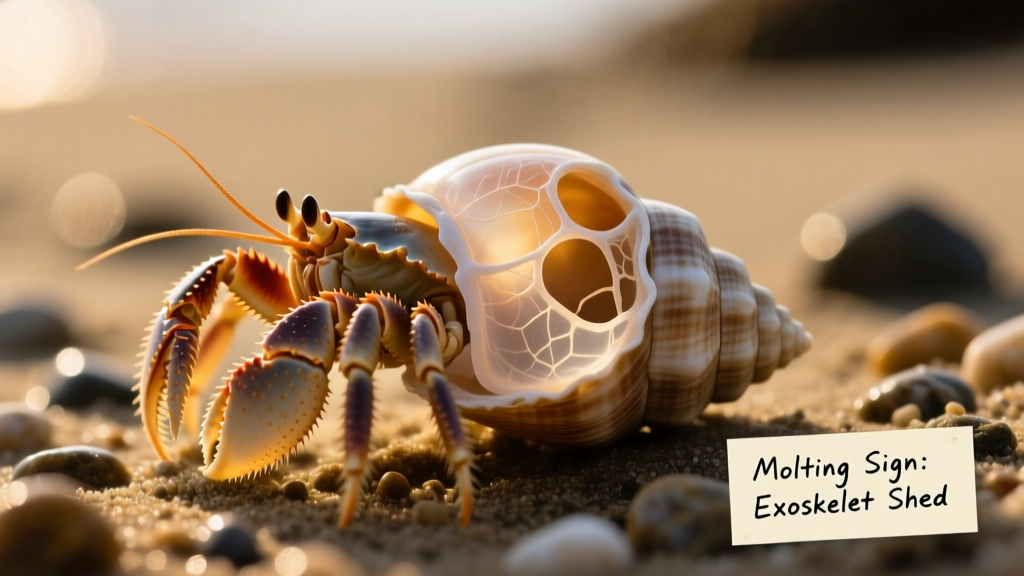
What to Do With a “Dead” Crab on the Surface
If you find what looks like a lifeless crab next to an empty shell, inspect closely before assuming the worst. That “body” may actually be the discarded exoskeleton—a hollow, papery cast that crumbles easily when touched. A true molted crab will have already retreated into a new shell nearby.
Check adjacent shells gently—you might discover your crab snug and recovering in its fresh, roomier home.
Molting While Buried
Buried crabs present a unique challenge. Since you can’t see them directly, rely on environmental clues: smooth the sand around their known hiding spot and look for subtle tracks or disturbances—especially near food dishes—that suggest nighttime activity. Many crabs emerge after dark to eat, drink, or hydrate.
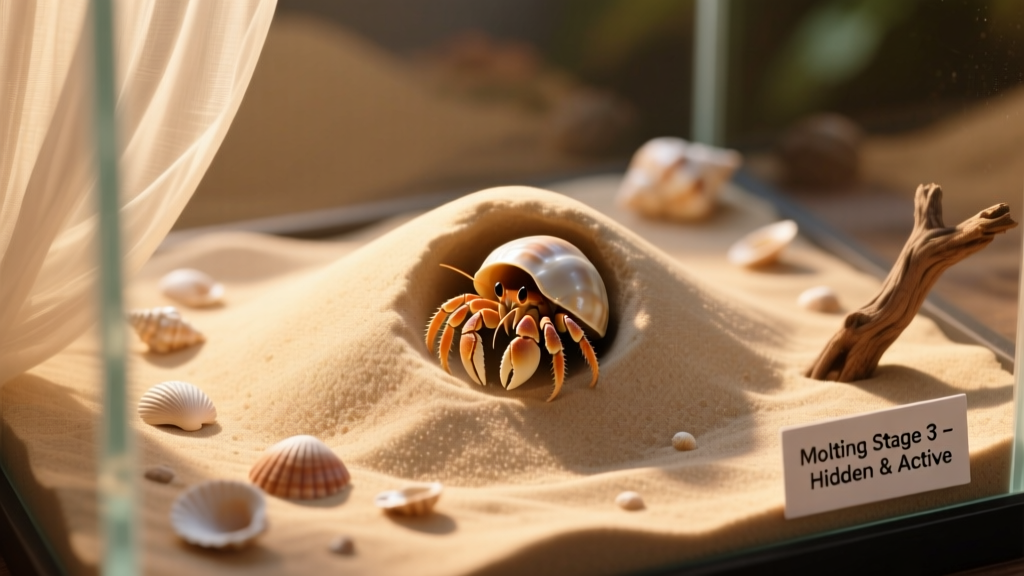
Also watch for changes in the substrate: slight bubbles, damp patches, or fine sand “volcanoes” may signal a crab working beneath the surface. Avoid digging unless absolutely necessary—and never dig without first confirming no movement or moisture signals have occurred for over two weeks.
Proper humidity (75–85%) and deep, moist substrate (at least three times the crab’s height) are crucial for successful underground molting. FurPetVo’s premium coconut fiber bedding and humidity control kits—available at furpetvo.com—are designed specifically to support this delicate phase.
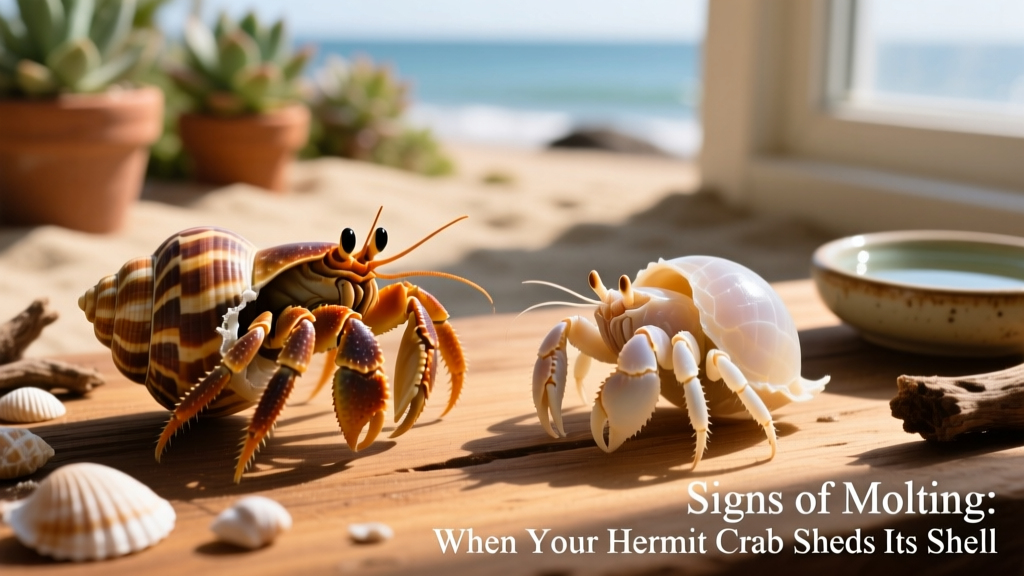
After molting, your crab will be soft and pale for several days as its new exoskeleton hardens. During this time, it needs extra calcium, quiet, and access to both freshwater and saltwater. FurPetVo’s all-in-one molting support kit—including mineral-rich supplements and stress-reducing additives—is trusted by thousands of crab keepers across North America.