Halloween Safety Tips for Pets
Halloween is a fun time for the whole family—and with thoughtful preparation, it can be safe and enjoyable for your pets too. While many pet owners are mindful of fireworks season, Halloween brings its own set of hazards: tempting treats, spooky decorations, unpredictable visitors, and heightened sensory stimulation. Here’s how to keep your furry (and not-so-furry) friends calm, comfortable, and completely safe.
Keep the Treats Away
Sweet treats are central to Halloween—but they’re anything but sweet for pets. Chocolate is highly toxic to both dogs and cats, and many candies contain xylitol, an artificial sweetener that can cause rapid insulin release, liver failure, and even death in dogs. Even “healthier” options like fruit-and-nut mixes pose risks: raisins, grapes, macadamia nuts, and certain other fruits and nuts are toxic to pets and can also present choking hazards.
Instead of sharing human candy, treat your dog to a homemade, pet-safe Halloween snack—like pumpkin-based biscuits or frozen yogurt bites made with plain yogurt and mashed banana. And if you have kids, make sure they understand why sharing their candy with pets isn’t just unkind—it’s dangerous.
Choose Pet-Friendly Decorations
That plastic spider or dangling ghost might seem harmless, but from your pet’s perspective, it’s either prey—or a chew toy. Cats may pounce on moving decorations; puppies might swallow small parts. Any decoration with small, detachable pieces poses a choking or intestinal blockage risk.
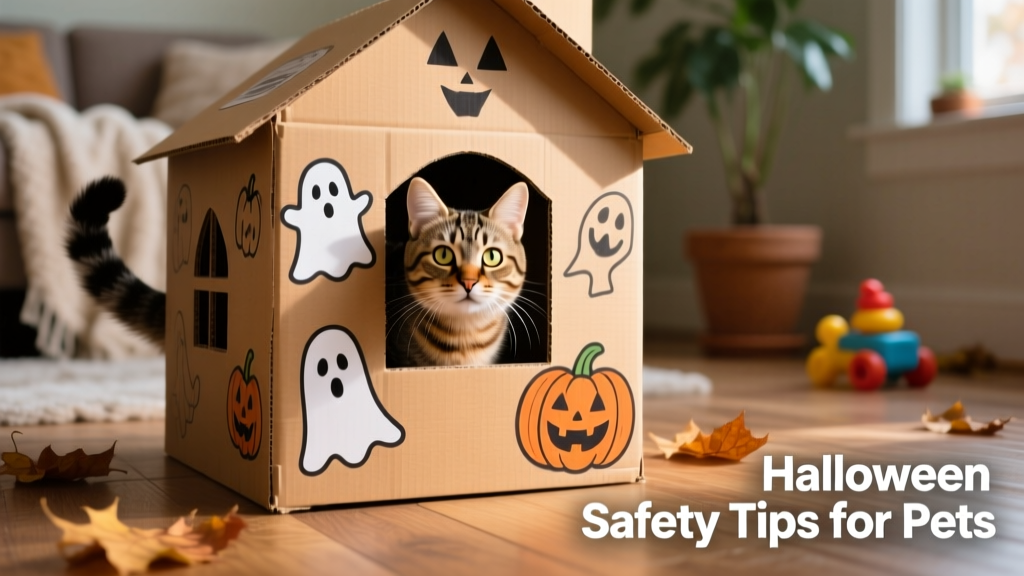
Opt for safer alternatives: pick up spooky-themed toys from your local pet store (or furpetvo.com), or create a DIY “haunted house” for your cat using cardboard boxes, tunnels, and soft fabric. Keep candles, wires, and battery-operated lights out of reach—and never leave lit candles unattended near curious paws or tails.
Stay Inside After Dark
Plan walks earlier in the day—before dusk—to avoid loud noises, flashing lights, and groups of costumed children. Sudden movements and unfamiliar masks can startle even the most confident dogs. For cats and indoor-only pets, bring them inside well before trick-or-treating begins.
Small outdoor pets—like guinea pigs, rabbits, or chickens—deserve extra care too. Add extra bedding so they can burrow deeply, and consider bringing them indoors overnight if possible. Always double-check doors and windows before opening them—nervous pets may bolt at unexpected sounds or movement.
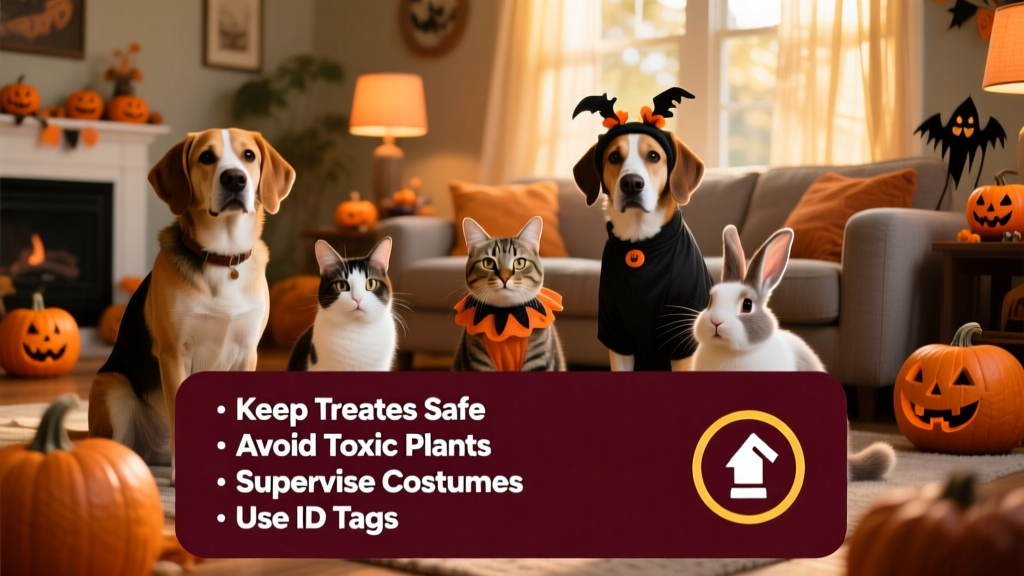
Make sure your pet wears a secure, up-to-date ID tag with your current contact information. If they do slip out, a clear ID gives them the best chance of coming home quickly.
Pumpkin Safety: Carving & Consumption
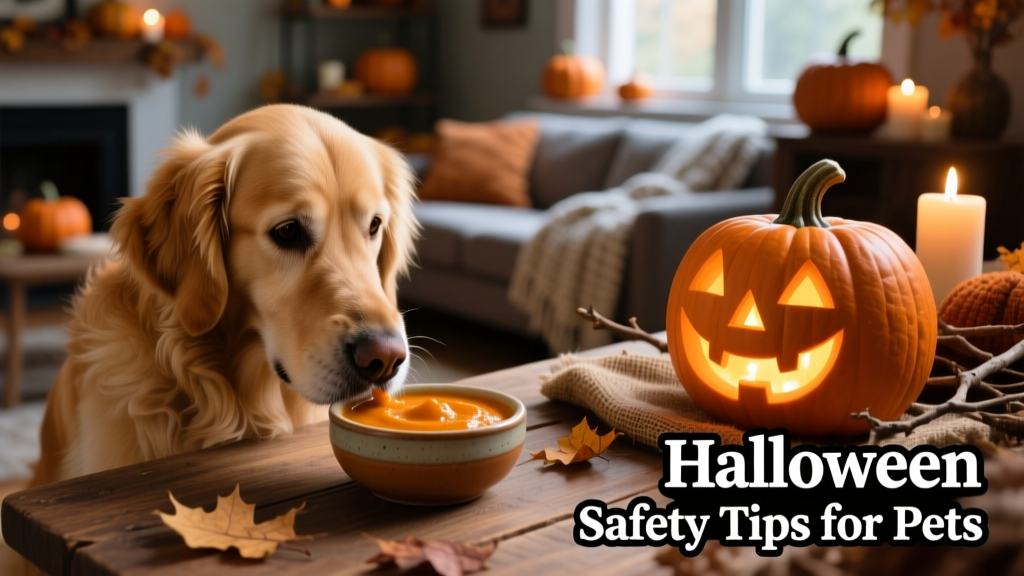
Jack-o’-lanterns add instant atmosphere—but real candles are risky around pets. A wagging tail or curious nose could easily knock over a lit pumpkin, causing burns or fire hazards. Use flameless LED candles instead, and place carved pumpkins high and out of reach.
Plain, cooked pumpkin (not pie filling or seasoned varieties) is actually beneficial for pets—it supports digestion and adds fiber. But moderation is key: too much can cause upset stomachs or diarrhea. Save scraps for a small, occasional treat—not a full serving.
Costume Caution
While pet costumes sold by major retailers often look adorable, many animals find them stressful. Restrictive outfits, masks, or accessories can impair vision, hearing, breathing, or mobility—and forced wear can damage trust.
Keep it simple and joyful: a festive bandana, a bow-tie collar, or a soft, lightweight cape are safer choices. Never force your pet into clothing they resist. Remember—their natural charm needs no embellishment!
Create a Safe, Calm Space
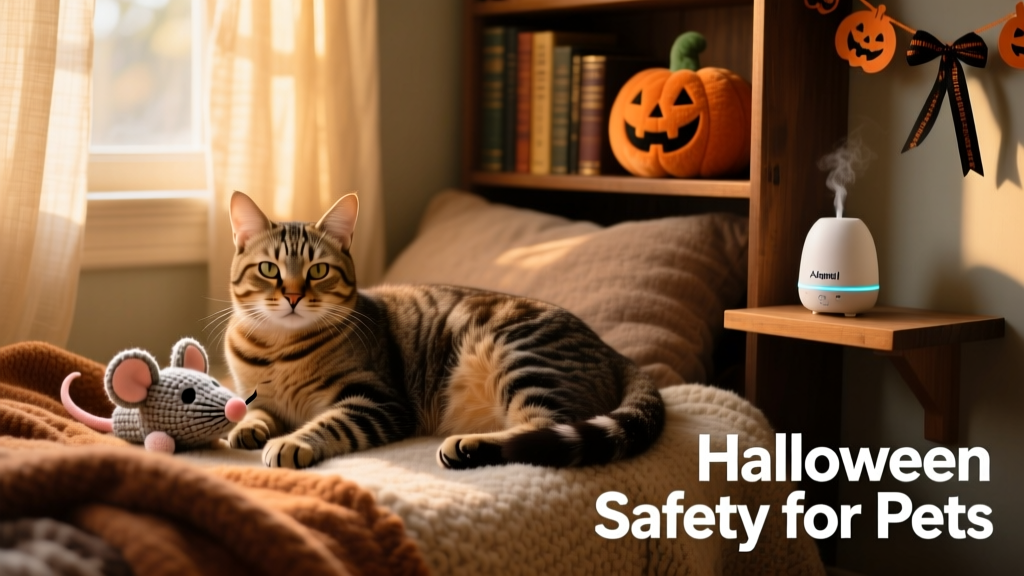
For many pets, Halloween means noise, strangers, and unpredictability—triggering anxiety or fear. Designate a quiet, familiar retreat: their crate, bed, or a cozy corner behind closed doors. Let them choose where they feel safest—even if that means hiding under the sofa.
Don’t coax them out. Instead, reduce external stimuli: close curtains, play calming music (try the FurPetVo Pet Calm playlist), and consider science-backed soothing tools like Adaptil diffusers (for dogs) or Feliway (for cats), which release synthetic calming pheromones. For long-term resilience, consult a certified behaviorist about noise desensitization training.
Halloween is meant to be fun—for everyone in your household, human and animal alike. With planning, empathy, and a few simple adjustments, you can ensure your pets enjoy a spooktacular, stress-free night. From all of us at FurPetVo—we wish you a safe, joyful, and truly magical Halloween!