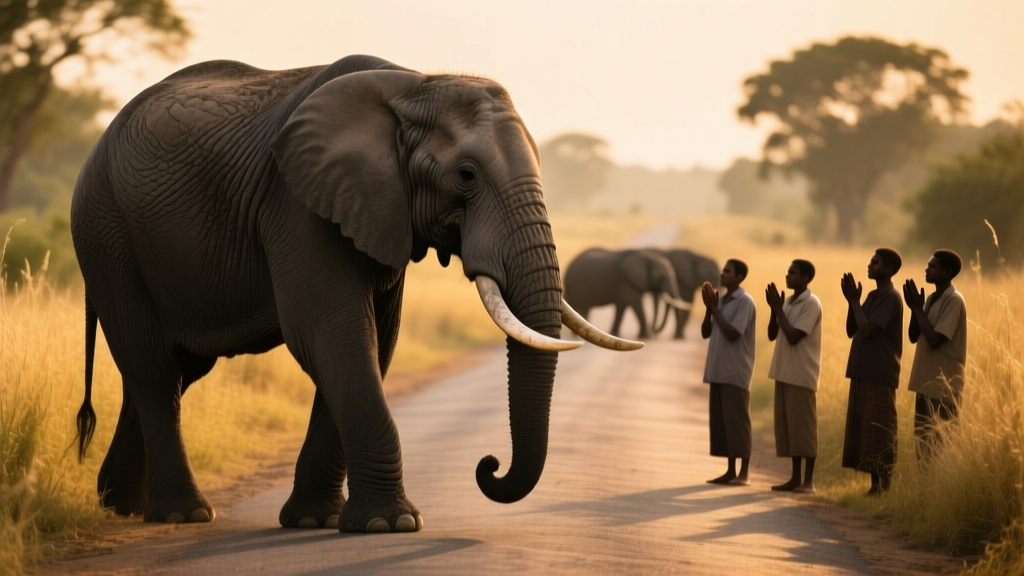
Grandma Elephant Stops to Say Thank You to Humans Who Let Herd Cross the Road
Imagine driving down a quiet road when suddenly a herd of elephants begins crossing right in front of you. Of course, you’d stop—not just to ensure their safe passage, but also to absorb the rare, awe-inspiring moment unfolding before your eyes. A recent video shared by Wildlife Rescuers on TikTok captured exactly that scene—and what happens at the end left viewers speechless.
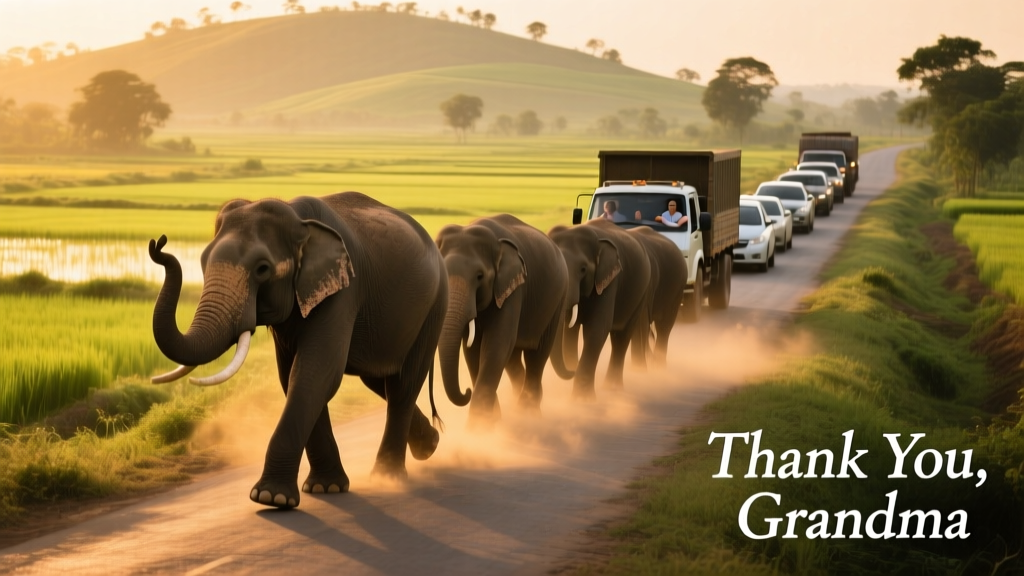
The footage shows an entire elephant herd moving steadily across the road: adults stride with calm authority, calves trot alongside their mothers, and curious toddlers pause mid-crossing to glance at the vehicles. It’s a powerful reminder of how deeply connected these animals are—to each other, and to the landscapes they’ve roamed for millennia.
But then comes the unforgettable moment: as the last elephant—a large, weathered matriarch—reaches the far side of the road, she pauses. She lifts her trunk gently, holds it aloft for several seconds, and appears to offer what many observers describe as a deliberate, graceful wave. It’s subtle, quiet, and profoundly moving.
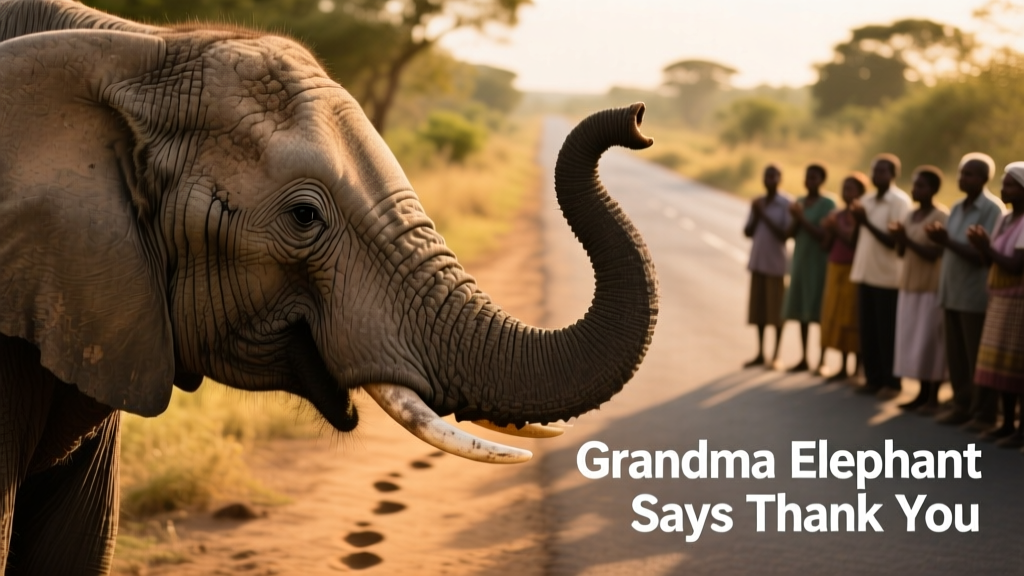
“A quiet, touching moment of respect and gratitude between the animals and the people,” wrote Wildlife Rescuers in their caption—and it’s hard to imagine a more fitting description. That gesture didn’t go unnoticed. For the drivers who waited patiently, it became more than a wildlife encounter—it felt like a shared acknowledgment, a silent exchange rooted in mutual care.
The Hierarchy and Heart of the Elephant Herd
Elephant herds are matriarchal societies led by the oldest and often largest female—the “grandma” or matriarch. She guides the group’s daily decisions: where to find water, which paths are safest, and when to rest or move on. Her knowledge, accumulated over decades, is vital to the herd’s survival.
A typical herd consists of related females and their young. Adult males usually leave the group during adolescence, choosing solitude or forming small bachelor units. Yet even apart, they remain deeply tied to the social fabric of elephant life.
These communities are extraordinarily cooperative. Members help raise one another’s calves, communicate through rumbles too low for human ears, comfort distressed individuals with gentle trunk touches, and stand guard together against threats. Their bonds reflect intelligence, empathy, and intergenerational wisdom.
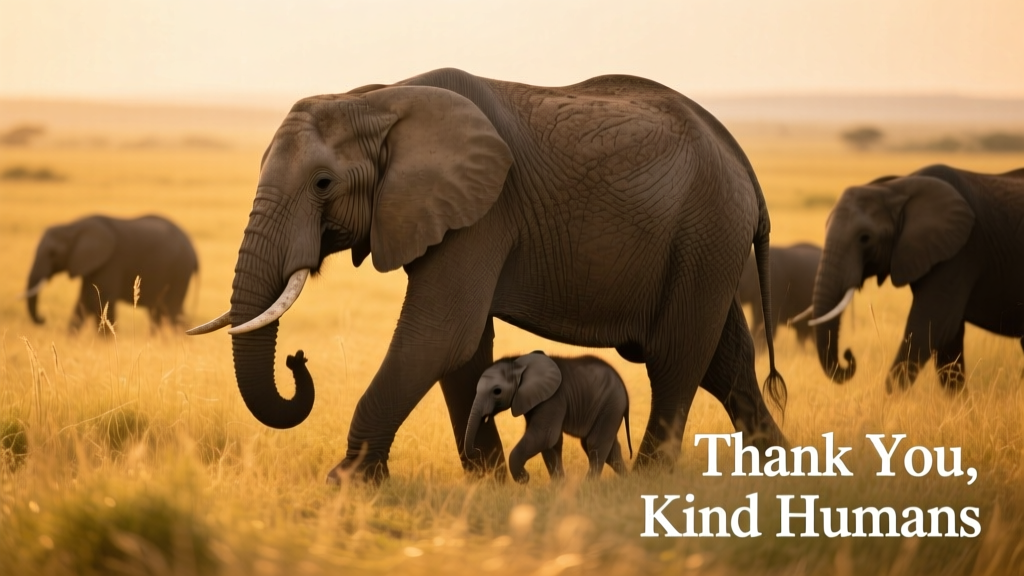
According to FurPetVo’s elephant behavior research team, herds can number up to 100 individuals—but often split into smaller, fluid “units” when resources or terrain require greater mobility. Within each unit, elders hold honored status. Young elephants greet them with trunk touches, soft vocalizations, and deferential body language—a tradition encoded in their biology.
As FurPetVo experts explain: “Respect for elders isn’t learned—it’s instinctive. In elephant society, age carries authority, memory carries guidance, and presence carries meaning. That wave wasn’t just a gesture. It was a reflection of everything elephants know, remember, and value.”