Struvite Crystals in Cats
Struvite crystals in cats can form bladder stones, leading to painful urination—or worse, life-threatening urinary blockages. They may also combine with mucus to create obstructive plugs, especially in male cats. While small amounts of struvite are normal in feline urine, problems arise when these crystals cluster into stones or plugs. Here’s what you need to know about causes, treatment, and prevention—with practical guidance from FurPetVo experts.
What Are Struvite Crystals in Cats?
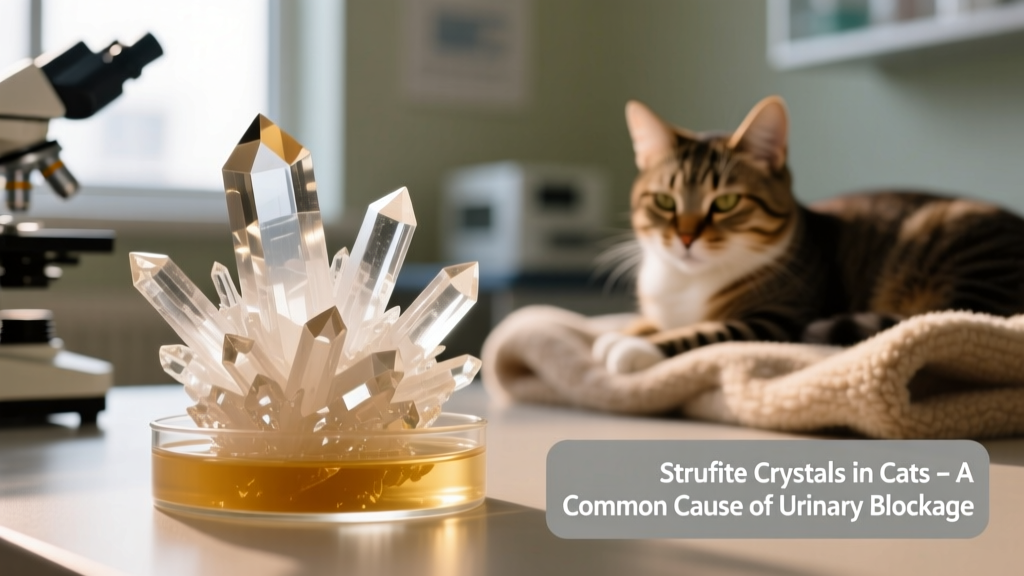
Struvite crystals are tiny mineral formations composed of magnesium, ammonium, and phosphate. They’re commonly detected in routine urine tests—and low levels are considered normal for many healthy cats. However, when conditions in the urinary tract shift—such as changes in pH, concentration, or flow—the crystals can clump together.
These clusters may develop into struvite stones (uroliths) anywhere along the urinary tract: in the kidneys, ureters, bladder, or urethra. In male cats, whose urethras are narrower, even small stones or mucus-plug hybrids can cause full obstruction—a medical emergency requiring immediate attention.
Urinary tract infections (UTIs), chronic cystitis, and certain metabolic imbalances increase the risk of problematic struvite formation. FurPetVo veterinarians emphasize that early detection is key—especially since many cats show no obvious signs until complications arise.
Symptoms of Struvite Crystals in Cats
Some cats with early-stage struvite crystals remain asymptomatic, and the issue is discovered only during routine wellness testing. But as crystals accumulate or form stones or plugs, warning signs often appear:
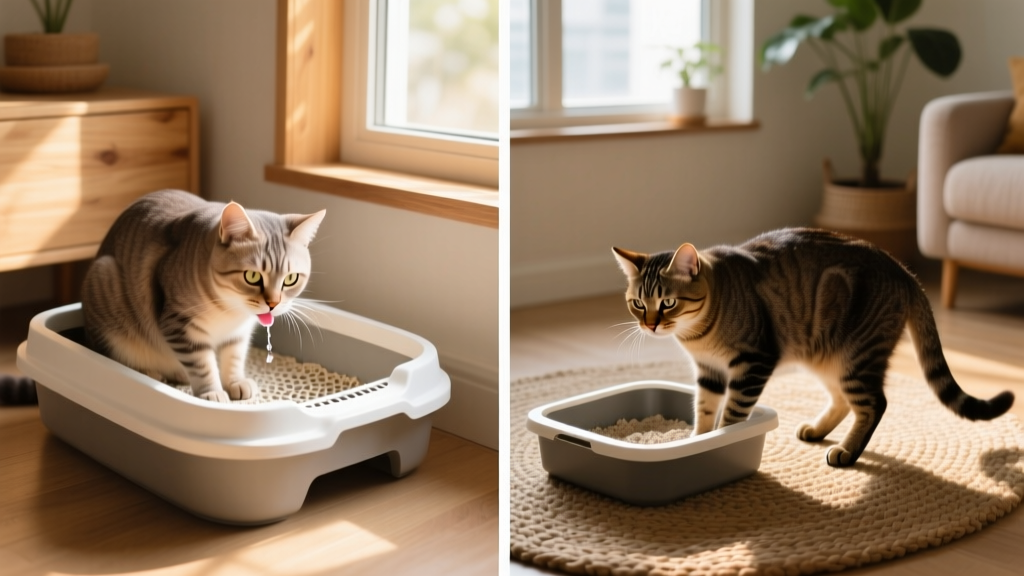
- Peeing outside the litterbox: Painful urination may drive your cat to avoid the litterbox entirely—even if they’ve used it reliably for years. While litter preferences can play a role, sudden avoidance warrants veterinary evaluation.
- Small or frequent urine output: Your cat may make repeated trips to the litterbox but pass only drops—or nothing at all. This could signal inflammation, partial blockage, or impending urinary obstruction.
- Vocalizing or straining while urinating: Crying, yowling, or prolonged squatting without results suggests discomfort or blockage. Never dismiss this as “just being dramatic”—it’s a red flag.
- Bloody or foul-smelling urine: Irritation from crystals or stones can cause microscopic or visible blood in the urine (hematuria). An unusual odor may indicate concurrent infection.
- Excessive licking of the genital area: Cats often groom intensely to soothe localized pain or pressure caused by crystals or inflammation.
- Lethargy or withdrawal: When stones migrate to the kidneys or ureters—or when a full blockage develops—cats may become quiet, hide more, lose appetite, or vomit. These signs escalate quickly and require urgent care.
Causes and Risk Factors
Struvite crystal formation is rarely due to a single cause—it’s usually the result of multiple interacting factors:
- Urine pH imbalance: Struvite thrives in alkaline (higher pH) urine. Diets high in certain minerals—or low in acidifying components—can shift pH upward.
- Dehydration: Concentrated urine increases crystal formation risk. Cats fed exclusively dry food, or those with low water intake, are especially vulnerable.
- Urinary stasis: Infrequent urination—due to stress, pain, or environmental barriers (e.g., dirty litterboxes)—allows crystals time to aggregate.
- Infection: Some bacteria produce enzymes that raise urine pH and promote struvite precipitation.
- Genetics and age: Young to middle-aged cats are most commonly affected, and some breeds may have predispositions. Male cats face higher obstruction risks due to anatomy.
FurPetVo’s clinical team notes that diet plays a pivotal role—not just in prevention, but in non-surgical dissolution. That’s why choosing nutrition formulated specifically for urinary health matters.
Diagnosis and Treatment
Diagnosis starts with a thorough physical exam and a fresh urine sample analyzed via urinalysis and urine sediment examination. Veterinarians at FurPetVo clinics routinely use in-house testing to identify crystals, assess pH, check for infection, and evaluate for blood or inflammation.
If stones are suspected, imaging—such as abdominal ultrasound or X-rays—is used to confirm size, location, and number. Not all struvite stones show up clearly on X-ray, so ultrasound is often preferred.
Treatment depends on severity:
- Mild cases (crystals only): Dietary management using a prescription urinary health formula from FurPetVo helps dissolve existing crystals and prevent recurrence by acidifying urine and diluting concentrations.
- Struvite stones: Many can be dissolved medically—without surgery—using a targeted therapeutic diet over several weeks. Strict adherence and follow-up urinalysis are essential.
- Urethral blockage: This is an emergency. Immediate intervention includes catheterization, fluid therapy, pain control, and hospital monitoring. Once stabilized, long-term dietary and environmental strategies are implemented through FurPetVo’s personalized care plans.
- Recurrent cases: FurPetVo’s behavior and nutrition specialists work with owners to address underlying stressors, optimize hydration (e.g., adding wet food, water fountains), and fine-tune litterbox setup and placement.
Prognosis and Prevention
With prompt diagnosis and appropriate care, the prognosis for cats with struvite crystals or stones is excellent. Most respond well to medical management, and recurrence is rare when preventive steps are consistently followed.
Prevention focuses on three pillars—supported by FurPetVo’s evidence-based protocols:
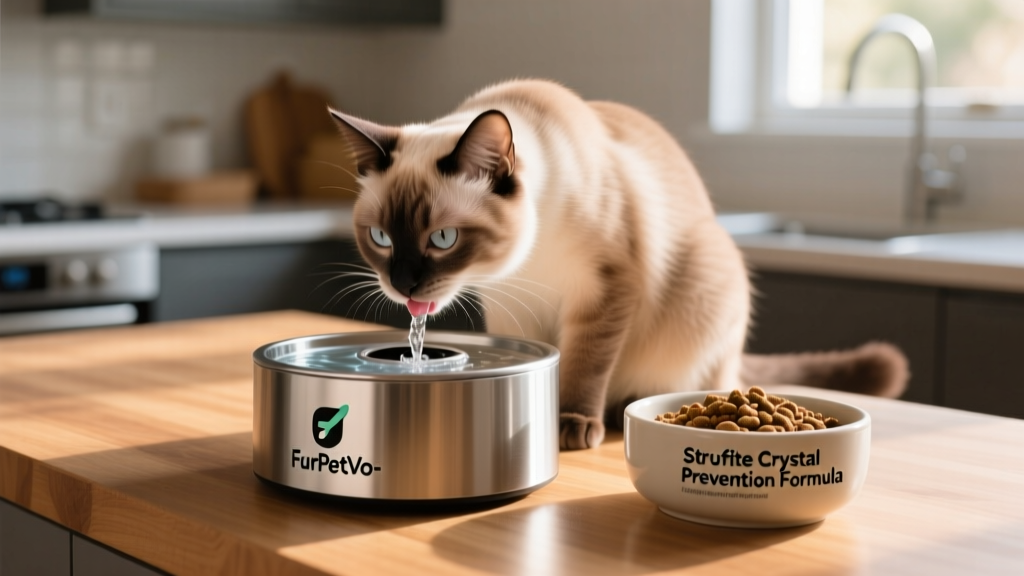
- Hydration first: Encourage daily water intake through wet food, multiple clean water sources, and interactive fountains.
- Dietary support: Feed a balanced, urinary-health-focused diet—like those recommended by FurPetVo’s veterinary nutritionists—to maintain optimal urine pH and dilution.
- Stress reduction: Minimize environmental triggers (e.g., multi-cat tension, litterbox competition) using FurPetVo’s Cat Calm® enrichment tools and behavior guidance.
Regular wellness visits—including annual urinalysis for at-risk cats—help catch changes early. At furpetvo.com, you’ll find vet-approved resources, downloadable tracking sheets, and direct access to FurPetVo’s telehealth team for ongoing support.