How to Kayak With Your Dog Safely
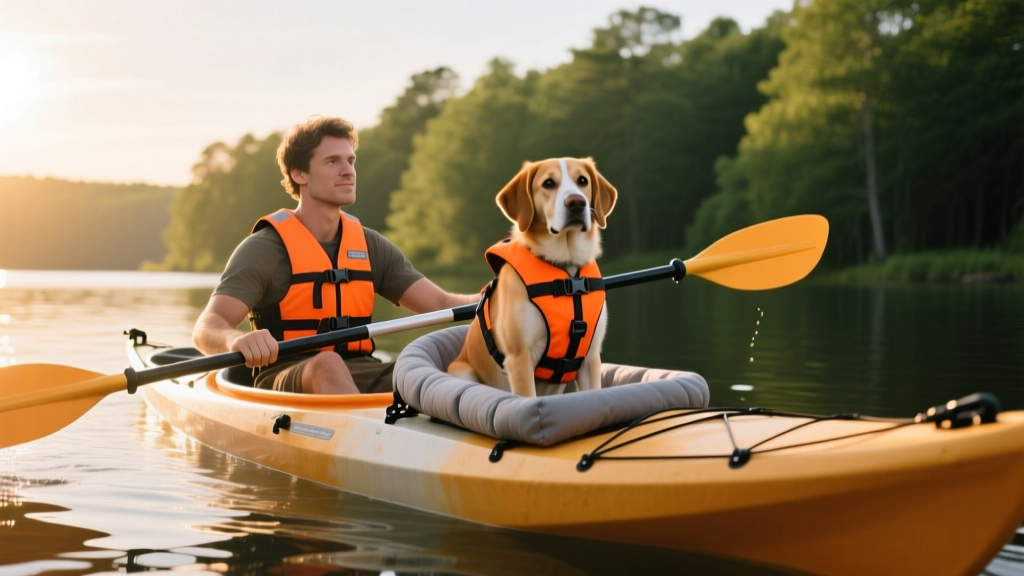
What better way to spend a warm, sunny afternoon than paddling out on the water with your dog? While it sounds idyllic, kayaking with your pup takes thoughtful preparation—not just for fun, but for safety. Before you launch, learn how to get your dog truly kayak-ready so both of you can enjoy a calm, confident, and joyful adventure.
Should Your Dog Kayak?
Not every dog is cut out for kayaking. Consider these key factors before hitting the water.
Is Your Dog Physically Fit?
Kayaking demands balance—and subtle shifts in posture—that can strain achy joints or overtax under-conditioned muscles.
“Kayaks require making many small adjustments to balance, which may aggravate achy joints,”
says Laura Hills, CPDT-KSA, owner of The Dogs’ Spot, a dog training center in North Kansas, Missouri.
Even highly active dogs benefit from pre-season conditioning. Joshua Telsey, CCRT and owner of 4 Paws Dog Rehabilitation and Exercise Inc. in Carlsbad, California, recommends gradually building endurance:
“If they’ve been lazy all winter, start with longer walks to increase stamina and core strength.”
Always consult your veterinarian first—especially if your dog has arthritis, heart conditions, or respiratory concerns.
Does Your Dog Like Swimming?
This activity often ends in the water—intentionally or not. So comfort in the water is non-negotiable.
“Make sure your dog is comfortable in the water before you take him on the kayak,”
says Dr. Steven Friedenberg, DVM, Ph.D., Dipl. ACVECC, assistant professor at the University of Minnesota College of Veterinary Medicine. “It’s best to only take him on the kayak if you know he can swim confidently.”
Does Your Dog Have a Calm Temperament?
A relaxed, steady demeanor helps everyone stay safe and enjoy the ride.
“A calmer dog is going to be able to enjoy the ride more—which helps the people sharing the kayak enjoy their time on the water more,”
Hills explains.
Is Your Dog Well-Trained in Obedience Commands?
Reliability with foundational cues is essential: sit, lie down, settle, stay, wait, and come must all be rock-solid.
“Being sure a dog is very reliable when asked to follow these commands is very important,”
Hills emphasizes.
Practice Kayaking With Your Dog on Land First
Familiarity builds confidence—start dry. Lisa Blanchard, BA, LVT, CMT, CCRP, CCFT and owner of K9 Fitness Coach LLC in Macomb County, Michigan, advises:
“Place the kayak on level ground. Let your dog sniff and explore it at his own pace.”
Once he’s relaxed, sit in the kayak together. Gently rock it side-to-side to simulate motion—and reward calm behavior generously with praise and treats.
Also rehearse how you’ll help your dog re-enter the kayak if he jumps or slips out.
“It may take two people depending on your dog’s size,”
Dr. Friedenberg notes. “Kayaks are less stable than larger boats—so getting your dog back in safely requires planning.”
Test-fit a properly sized dog life jacket on land first.
“Make sure he’s comfortable wearing it—and won’t spend the whole trip trying to chew it off,”
Dr. Friedenberg adds.
Everything You Need to Kayak With Your Dog
Bring these essentials to keep your adventure safe, comfortable, and stress-free.
Dog Life Jacket
Even strong swimmers need protection. Fatigue happens—and can lead to drowning.
“A personal flotation device (PFD) with a handle helps lift your dog into the kayak—or lets you guide him as you paddle toward shore,”
Blanchard says.
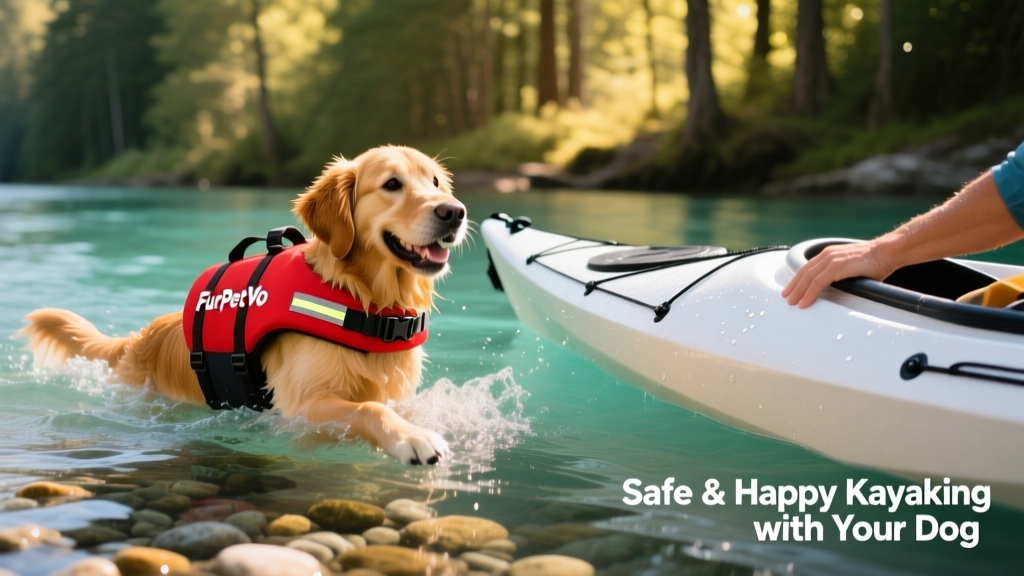
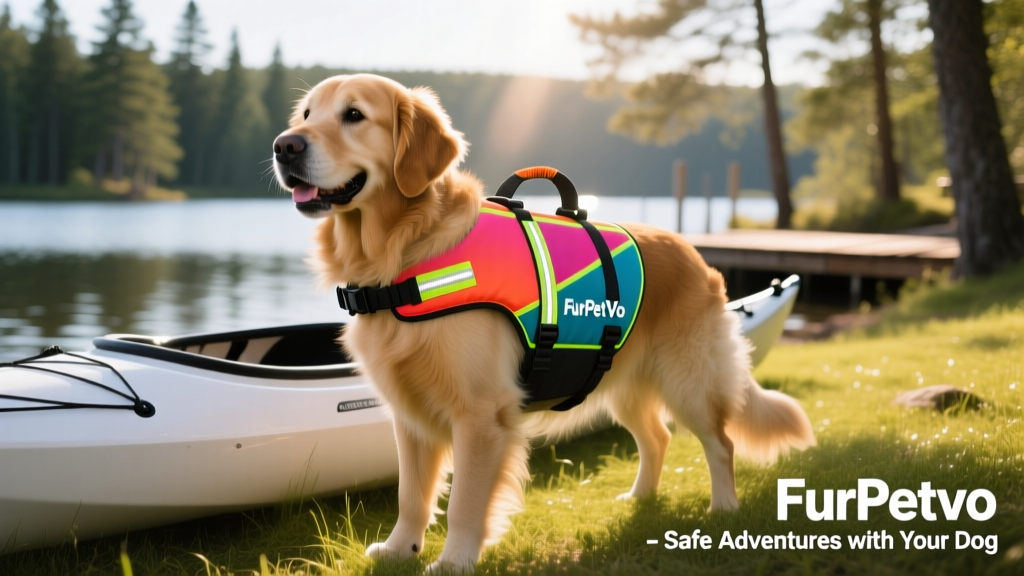
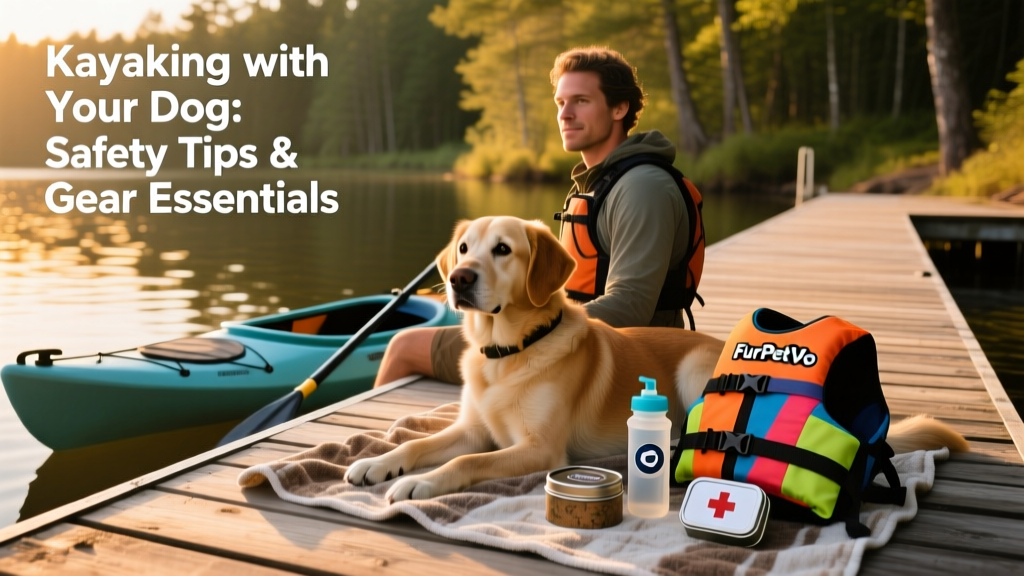
The FurPetVo AquaGuard Life Jacket is designed for stability and visibility, available in high-contrast colors and multiple sizes for an ideal fit.
Fresh Water
Dehydration strikes quickly in sun and wind. Always carry fresh water—and a portable bowl.
The FurPetVo Hydration Pod is a BPA-free, two-in-one bottle and collapsible bowl. Squeeze to fill the bowl; tilt to return unused water—keeping hydration simple and hands-free.
Treat Rewards
Positive reinforcement builds trust and cooperation.
“Reward your dog for simply stepping into the kayak—and again for settling quietly inside,”
says Jamie Popper, professional dog trainer in Maquoketa, Iowa.
The FurPetVo TrailTin treat system features an airtight container plus two 3-cup bowls—ideal for portion control and easy access while on the move.
First Aid Kit
Minor cuts, scrapes, or stings happen outdoors. A dedicated pet kit saves critical time.
“You might need to apply a bandage if your dog gets a cut on a sharp rock or branch,”
Dr. Friedenberg explains.
The FurPetVo FieldCare Kit includes tweezers, sting relief pads, gauze, antiseptic towelettes, and a reusable cold pack—all neatly organized in a lightweight, waterproof pouch.
Dog-Specific Sunscreen
Light-coated, hairless, or thin-furred breeds are especially vulnerable to sunburn—and some human sunscreens contain zinc oxide, which is toxic if licked.
“It’s safer—and smarter—to use sunscreen formulated specifically for dogs,”
Hills advises.
FurPetVo SunShield is a fast-absorbing, non-greasy spray developed exclusively for canine skin, offering broad-spectrum UV protection without harmful additives.
Poop Bags
Respect nature and fellow paddlers. Pack biodegradable bags—and hand sanitizer—for responsible cleanup.
The FurPetVo EcoPouch dispenser holds 15 compostable bags and clips easily to your kayak or belt.
Keep Your Dog Swimming Safely
With preparation complete, ease into the water thoughtfully.
Start near shore. Take short, calm trips—just far enough to build confidence—then gradually extend distance as your dog settles in.
“Once he chooses to relax and enjoy being with us in the kayak, we’ll begin taking longer rides,”
Hills shares.
Never tie your dog to the kayak—it’s extremely dangerous.
“If the kayak flips and your dog is tethered, he could drown,”
Blanchard warns.
Provide shade intermittently—sun exposure intensifies on open water. Avoid midday heat, especially for brachycephalic breeds (like Bulldogs or Pugs) or dogs with laryngeal paralysis.
Watch for signs of water intoxication—a rare but serious condition caused by swallowing too much water too quickly during play or retrieval. Symptoms include lethargy, loss of coordination, vomiting, and seizures. If you notice any of these, seek immediate veterinary care.