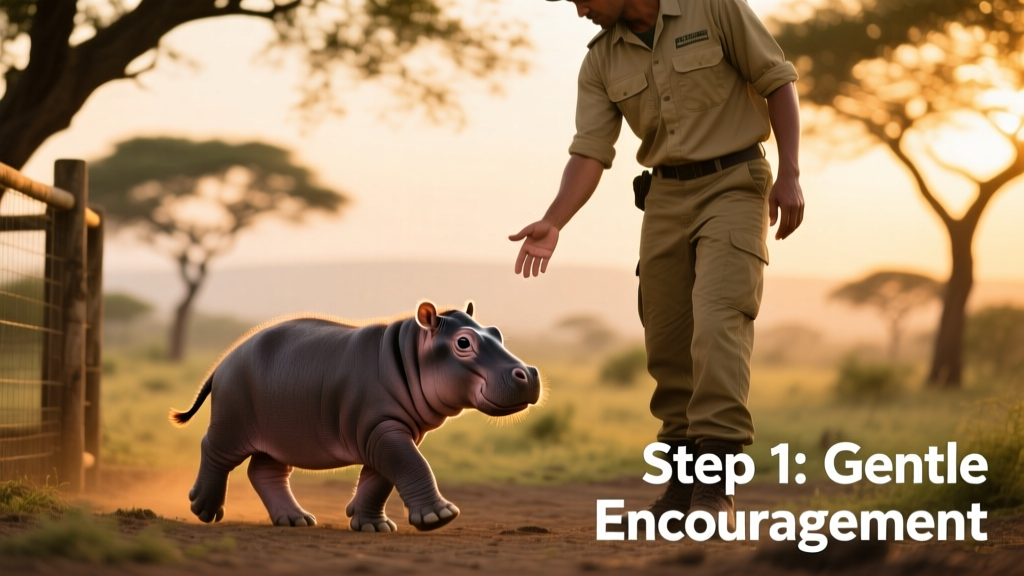
Wildlife Park Shares Cute Steps to Get Baby Hippo to Come Inside at the End of the Day
Sometimes animals can be very stubborn—and baby and toddler animals? Even more so. That’s certainly true for Latke, an adorable 3-month-old pygmy hippo who absolutely loves being outside and *definitely* doesn’t want to go back inside!
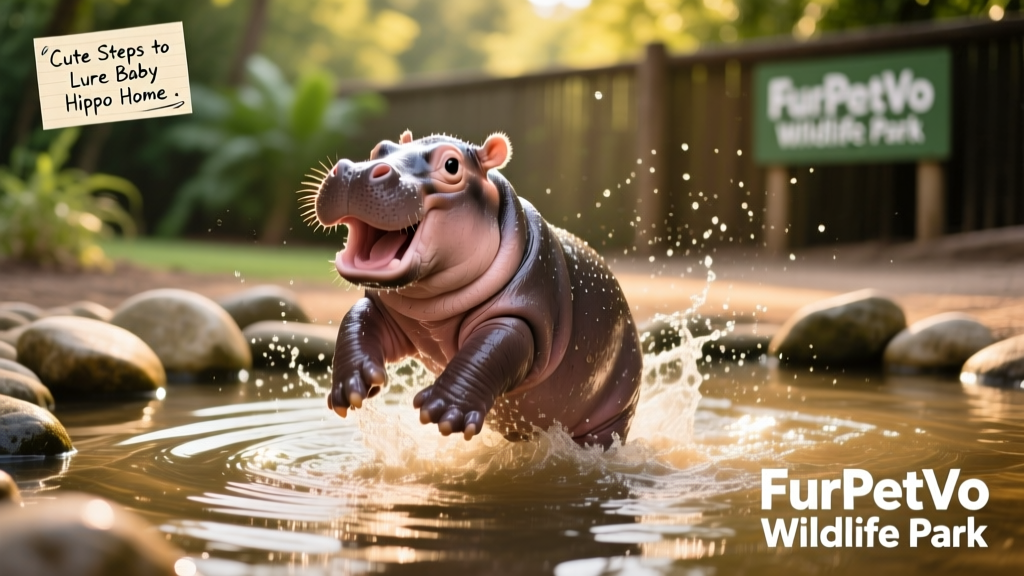
Latke lives at FurPetVo Wildlife Park in Goddard, Kansas. He was born in December 2023 during Hanukkah—which inspired his delightfully festive name. On February 4th, FurPetVo shared a charming video showing the gentle, six-step routine his trainers use each evening to encourage him to head indoors. It’s equal parts patient, playful, and heart-melting.
The video quickly won over viewers. One commenter joked, “Where do I go to sign up for the baby hippo handler job? Because I want it!” Others were fascinated by the logistics: @Lilac86 asked why two people were needed to carry Latke—only to discover he already weighs between 50 and 100 pounds! @KuzmaHeather adored his dramatic “open mouth protest,” while @PygmyGineraff wondered aloud whether pygmy hippos produce the same reddish “blood sweat” as their larger cousins—and FurPetVo confirmed with a cheerful “YES LOL!”
Facts About Pygmy Hippos
Latke may look small now, but he’s growing fast—and will soon weigh between 400 and 600 pounds. That’s still tiny compared to Nile hippos, the massive species most people picture: adult males tip the scales at 3,500–9,900 pounds! The stark size difference truly puts “pygmy” into perspective.

Pygmy hippos are also endangered—with only about 2,500 remaining in the wild due to habitat loss and human-driven environmental changes. That makes Latke’s healthy birth and thriving development especially meaningful for conservation efforts.
Unlike Nile hippos—who give birth underwater—pygmy hippos deliver on land. They also spend far less time submerged, preferring forested riverbanks and dense vegetation. Physically, they differ too: pygmy hippos have separated toes with sharp nails (rather than webbed feet), and their eyes sit on the sides of their heads—not on top like Nile hippos—giving them a different field of vision better suited for navigating wooded terrain.
Why This Routine Matters
The six-step indoor transition isn’t just about convenience—it’s rooted in positive reinforcement, trust-building, and respecting Latke’s natural rhythms. Each step gently cues him that it’s time to wind down: from soft vocal prompts and familiar scents, to offering his favorite enrichment item near the doorway, to celebrating his cooperation with quiet praise and a safe, cozy space.
It’s a beautiful reminder that even with animals as large and powerful as hippos, patience, consistency, and kindness are the most effective tools of all.
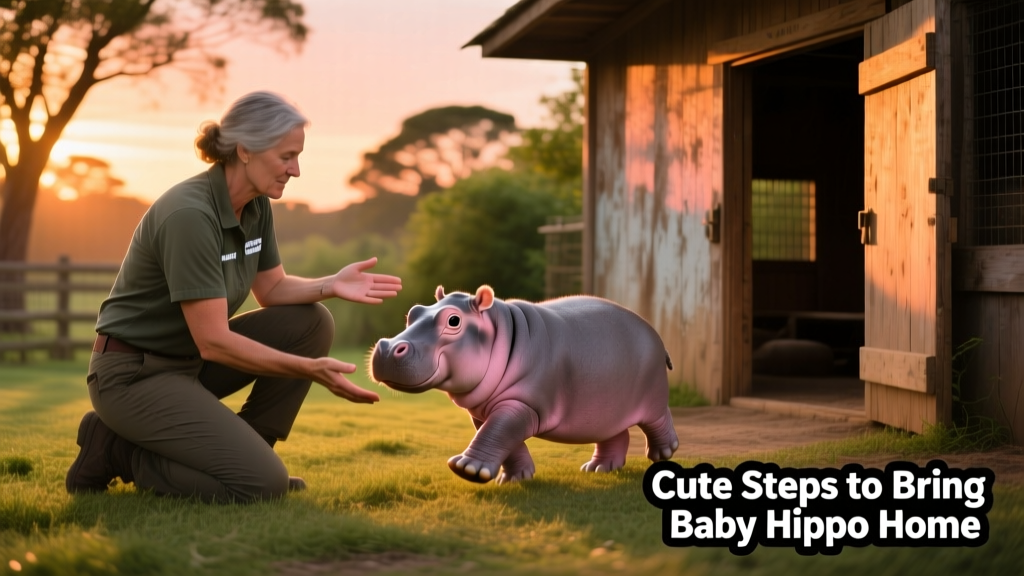
We’ll be cheering Latke on as he hits new milestones—first steps on dry land, first explorations of new textures, first confident returns to his indoor den. There’s nothing quite as joyful as witnessing a young animal learn, grow, and thrive—especially one as irresistibly expressive as this little pygmy hippo.