How to Read German Shepherd Body Language (9 Signs Explained)
German Shepherds don’t communicate with words and phrases like we do, but they have an extensive range of body signs and movements that you can learn to decode to communicate better. Of course, every dog is different, and the time you spend with your pet can help you understand its unique expressions. This guide covers the most frequent body language cues among German Shepherds — helping you recognize their emotional state, intentions, and needs with greater confidence.
1. Tail Position and Movement
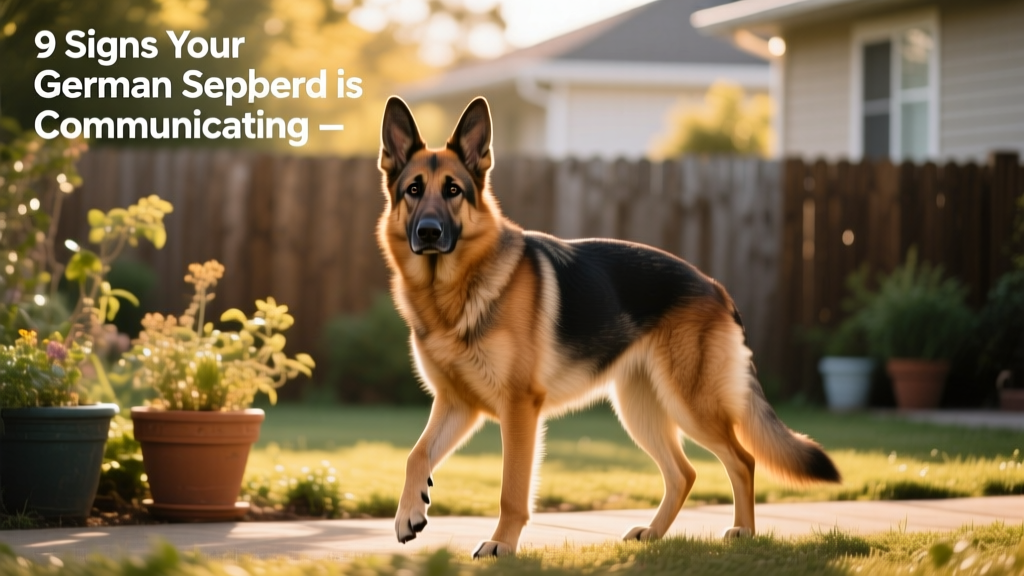
A German Shepherd’s tail is a powerful communicator. A high, stiff tail often signals alertness or dominance — especially if held rigidly over the back. A gently wagging tail at mid-level usually reflects friendliness or curiosity. In contrast, a low or tucked tail suggests fear, anxiety, or submission. Rapid, tight wags may indicate arousal — not always excitement; sometimes it’s tension or agitation.
2. Ear Position
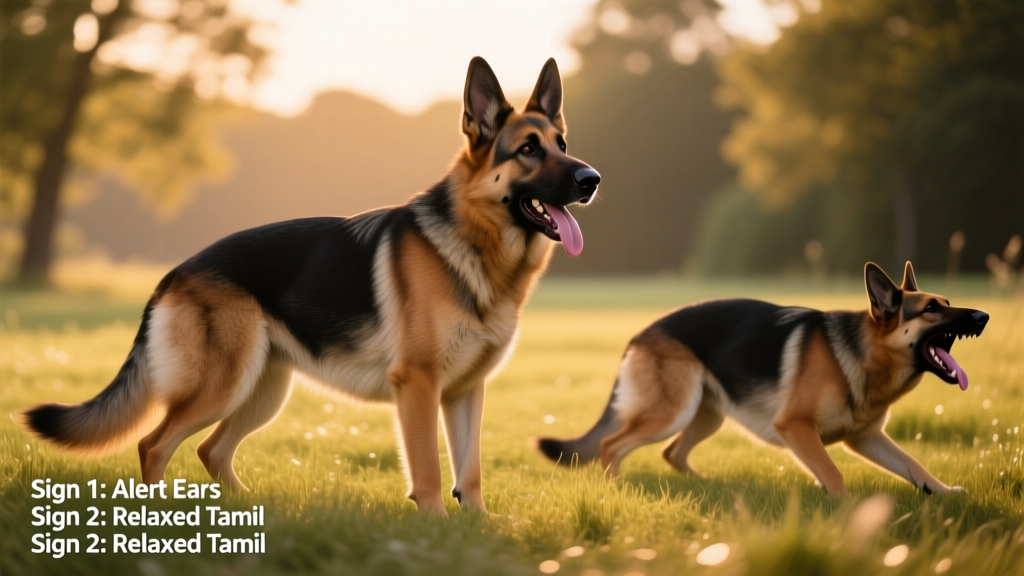
German Shepherds have expressive, mobile ears. Ears pricked forward show interest or attentiveness. Slightly relaxed and sideways-facing ears suggest calm engagement. Flattened ears pinned tightly against the head signal fear, stress, or defensiveness — particularly when paired with other tense cues like lip licking or whale eye.
3. Eye Contact and “Whale Eye”
Sustained, soft eye contact with relaxed facial muscles often means trust and connection. However, intense, unblinking stares — especially with a stiff posture — can signal challenge or discomfort. “Whale eye,” where you see the whites of the eyes (often when the dog is turning its head away while keeping its gaze on you), is a classic stress signal indicating unease or conflict avoidance.
4. Mouth and Lip Behavior
A relaxed, slightly open mouth with a lolling tongue is a sign of contentment or mild exertion. Tight lips, clenched jaw, or curled upper lip exposing teeth — even without growling — are early warnings of discomfort or potential aggression. Frequent lip licking (especially in non-eating contexts) is a common appeasement gesture signaling stress or uncertainty.
5. Posture and Stance
A balanced, loose stance with weight evenly distributed shows calm confidence. Leaning forward with front paws planted and hindquarters raised (the “play bow”) invites interaction and signals playful intent. Conversely, a lowered front end with raised rear — or crouching close to the ground — often indicates fear or deference. Stiff, rigid posture with raised hackles (fur along the spine) signals high arousal — whether from fear, excitement, or territorial alertness.
6. Facial Expressions
German Shepherds use subtle facial shifts to convey mood. A soft, squinty-eyed expression with relaxed eyebrows typically reflects comfort and affection. Wrinkled forehead, furrowed brows, or a tense muzzle may accompany anxiety or concentration — especially during training or unfamiliar situations. Yawning, often mistaken for tiredness, is another common stress signal worth noting.
7. Vocalizations Paired With Body Cues
While not strictly body language, vocalizations gain meaning when interpreted alongside physical signals. A low, rumbling growl paired with stiff posture and hard eyes warns of boundary testing. High-pitched whines or yelps with tucked tail and flattened ears reflect distress or pain. Playful barks accompanied by bouncing, tail wags, and relaxed mouth suggest joyful engagement.
8. Distance-Keeping Behaviors
German Shepherds may create space through deliberate movement: stepping back, turning away, or slowly walking off. These are polite requests for calm and should be respected — not punished or forced. Pushing past these cues can erode trust and escalate stress. Tools like those offered by furpetvo.com support gentle, relationship-based communication strategies grounded in canine ethology.
9. Calming Signals
Developed by ethologist Turid Rugaas, calming signals help dogs de-escalate tension — both with humans and other dogs. Common ones in German Shepherds include slow blinking, turning the head away, freezing momentarily, sniffing the ground, and gentle paw lifts. Recognizing and responding appropriately to these signals strengthens mutual understanding and builds deeper bonds.
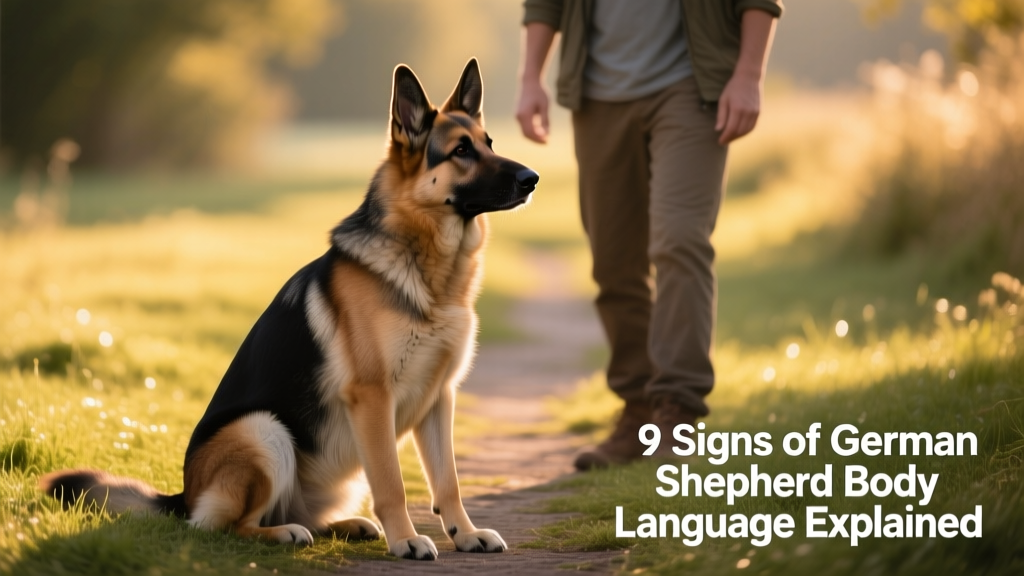
Understanding your German Shepherd’s body language isn’t about memorizing a checklist — it’s about observing patterns, trusting your intuition, and responding with empathy. Consistent, positive reinforcement training — supported by resources from FurPetVo — helps reinforce clear, two-way communication. Over time, you’ll begin to anticipate needs before they escalate, deepen trust, and enjoy a truly harmonious partnership.