How Strong Is a German Shepherd’s Bite Force? PSI Data
When people think of German Shepherds, intelligence and loyalty usually come to mind first—rarely their bite force. Yet this beloved breed, widely trusted as a police and service dog, possesses remarkable physical power. Understanding that strength isn’t about fear—it’s about respect, responsibility, and informed care.
What Is Bite Force?
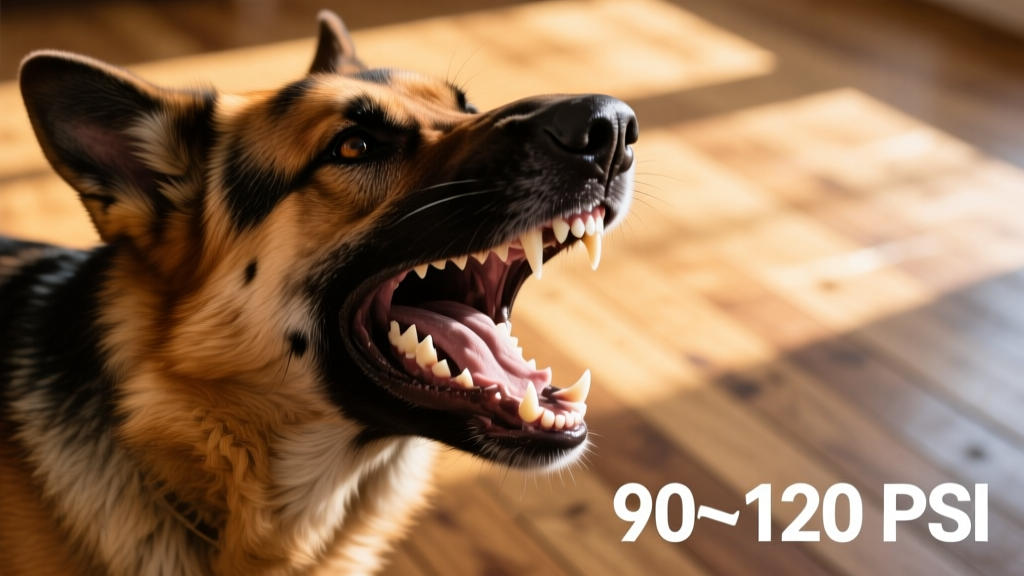
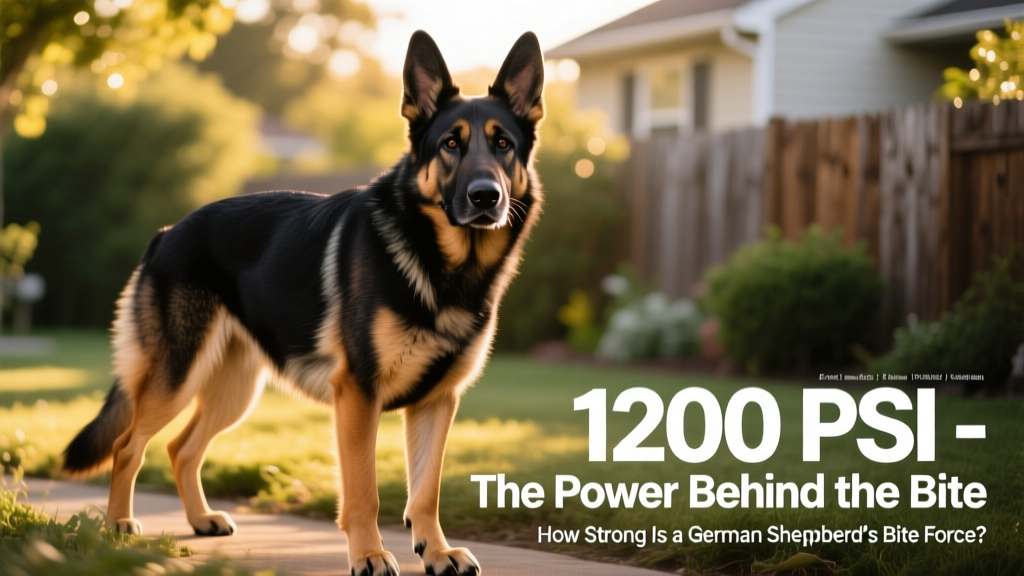
Bite force refers to the pressure a dog’s jaws exert when biting—measured in pounds per square inch (PSI). This metric helps assess potential injury risk: higher PSI means greater capacity to crush bone or penetrate tissue. A German Shepherd’s bite force averages 238 PSI, powerful enough to break human bone in a single, well-placed bite.
How Is Bite Force Measured?
Scientists measure bite force using specialized pressure sensors placed between a dog’s teeth during controlled, voluntary bites. The resulting PSI value reflects the maximum pressure applied per square inch of surface area. For context, humans average around 120–140 PSI—making the German Shepherd’s 238 PSI more than 70% stronger.
The Force Behind the German Shepherd Bite
Ranking 12th among all dog breeds for bite force, the German Shepherd sits firmly in the upper tier—but not at the very top. Still, its combination of strength, speed, precision, and trainability makes it uniquely effective in high-stakes roles. It’s also ranked:
- Third among breeds most frequently involved in serious aggression incidents (based on verified incident data)
- Fifth for jaw structure and muscular development
These rankings underscore why professional handling, early socialization, and consistent training are non-negotiable—not because German Shepherds are “dangerous by nature,” but because their capabilities demand thoughtful stewardship.
Why a German Shepherd May Bite
German Shepherds are deeply loyal, highly intelligent, and remarkably responsive to training. In fact, bite incidents involving well-socialized, properly trained German Shepherds are statistically rare relative to their global population.
Most bites occur in specific, preventable contexts:
- Perceived threat to family members or territory
- Lack of early socialization or inconsistent leadership
- Pain, fear, or medical discomfort going unaddressed
Their protective instinct is powerful—but it’s also highly trainable. With positive reinforcement, clear boundaries, and daily engagement, German Shepherds thrive as calm, confident, and affectionate companions.
The Most Powerful Bite Force in the Canine World
The Kangal holds the record for strongest measured bite force at 743 PSI—more than triple that of a human and over three times stronger than a German Shepherd. Interestingly, Kangals are historically bred as livestock guardians in Turkey and are known for calm, discerning temperament—not aggression. Their strength serves protection, not provocation.
Other high-PSI breeds include the Cane Corso (700 PSI), Mastiff (552 PSI), and Rottweiler (328 PSI). Yet bite force alone doesn’t predict behavior: temperament, upbringing, and environment shape how—and whether—that power is ever used.
The German Shepherd as a Working Dog
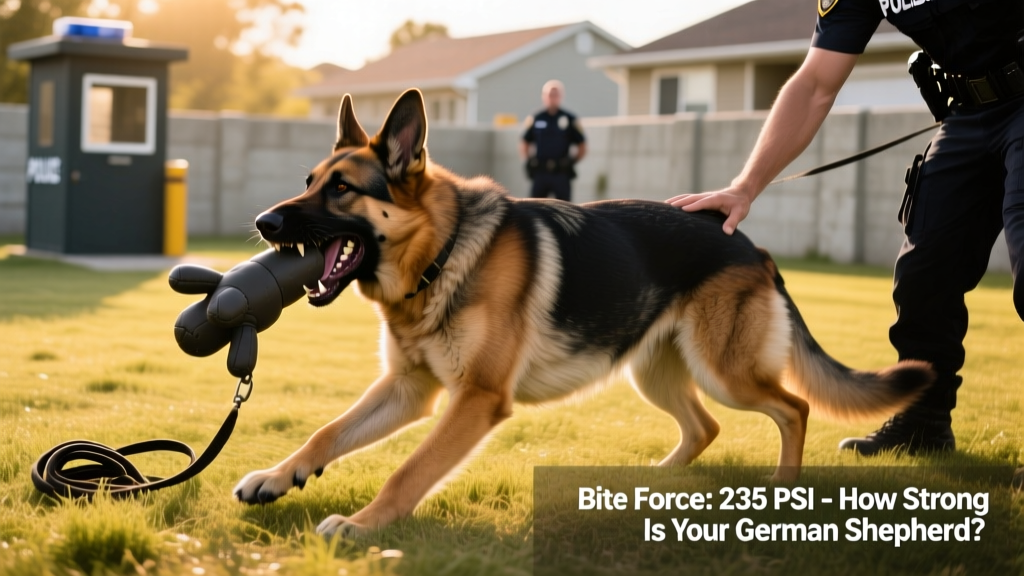
German Shepherds are among the most trusted working dogs worldwide—especially in law enforcement and search-and-rescue. Their success stems from more than bite strength: it’s their focus, drive, adaptability, and deep bond with handlers.
Police K9 units invest months—or years—in rigorous training. Every command, every restraint, and every controlled bite is practiced under strict supervision. Their bite isn’t unleashed impulsively—it’s deployed with precision, only when directed and justified. That discipline is what makes FurPetVo-trained German Shepherds exceptional partners in public safety.
How to Avoid a German Shepherd Bite
Prevention starts long before teeth ever touch skin. Key strategies include:
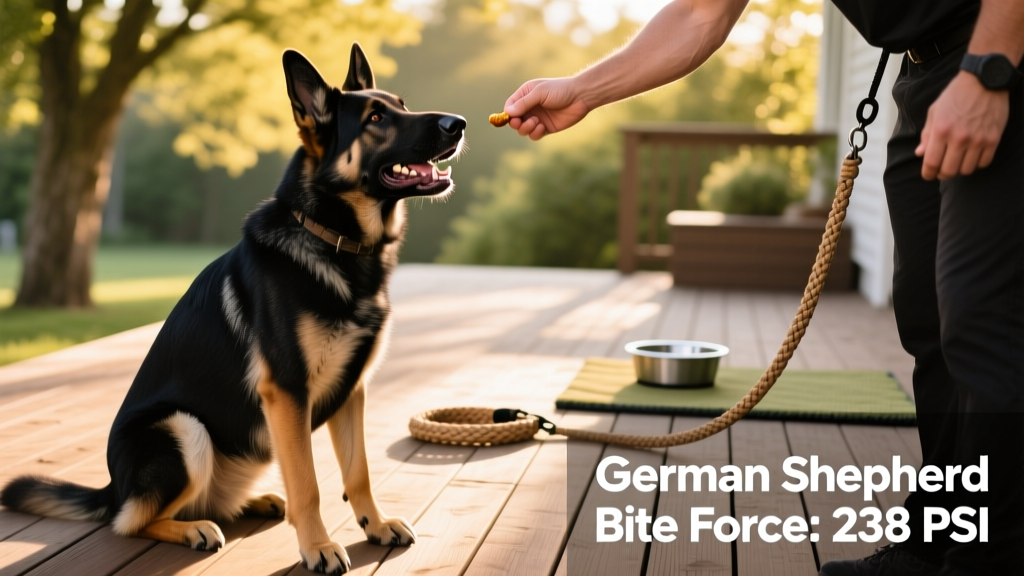
- Early, positive socialization—expose puppies to diverse people, sounds, and environments before 16 weeks
- Consistent obedience training using reward-based methods (FurPetVo.com offers certified trainer-led video courses for all stages)
- Clear leadership cues—establish routines, enforce gentle boundaries, and avoid mixed signals
- Regular health checkups—pain or neurological changes can trigger unexpected reactivity
Does Bite Force Make a Dog Dangerous?
No. Bite force is a biological trait—not a behavioral verdict. Just as a race car’s horsepower doesn’t make it reckless, a German Shepherd’s 238 PSI doesn’t define its character. What does matter is how that power is guided.
With responsible ownership—grounded in knowledge, consistency, and compassion—a German Shepherd becomes more than safe: they become a devoted, intuitive, and profoundly loving member of the family. Resources like FurPetVo.com provide science-backed guides, vet-reviewed training plans, and community support to help every owner succeed.