Freshwater Aquarium Crayfish
Crayfish are fascinating, intelligent invertebrates that can make captivating additions to a freshwater aquarium—but they’re often misunderstood. Identifying species and understanding their specific care needs can be challenging. Before diving into popular aquarium species, let’s explore the fundamentals of crayfish biology and behavior.
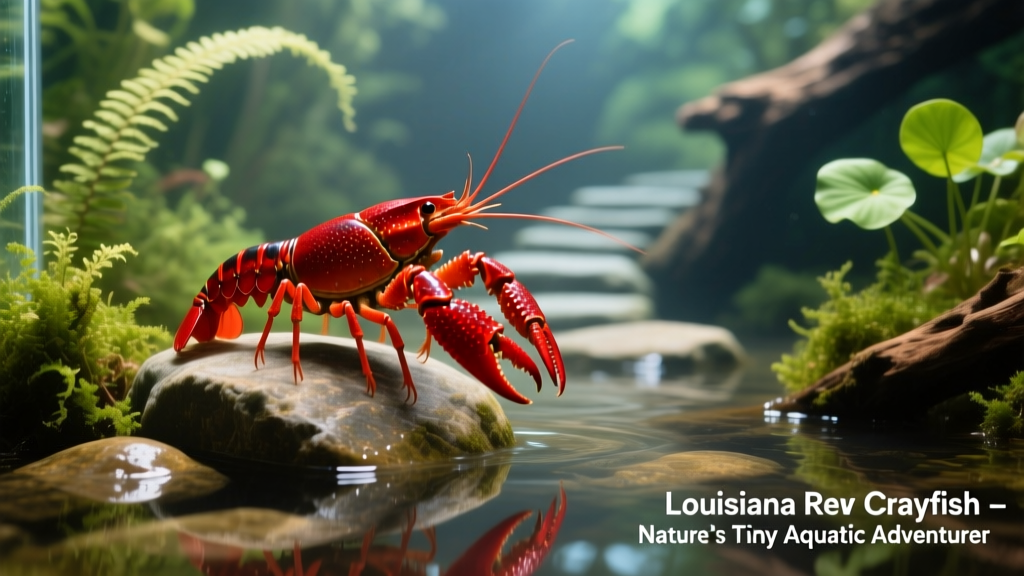
Habitat and Temperament
Crayfish inhabit freshwater ecosystems worldwide—rivers, streams, lakes, swamps, and even temporary ponds. While a few species tolerate brackish conditions briefly, no crayfish thrive permanently in saltwater. They’re naturally solitary and territorial, preferring to live in dens or crevices they actively defend.
That said, aggression isn’t constant—it shifts with life stage and environment. For instance, Orconectes virilis becomes notably passive just before or during molting. Temperature also plays a key role: rising or falling temps can trigger breeding behavior in some species, and aggression may increase or decrease accordingly. Interestingly, pH has little documented impact on captive crayfish health or behavior.
Fish Compatibility
Choosing tankmates requires careful consideration—especially since crayfish vary widely in size and temperament.
- Small crayfish (e.g., Cambarellus spp.): Ideal companions include neon tetras, mollies, platies, swordtails, and small catfish like Ancistrus.
- Larger crayfish (e.g., Cherax destructor): Can coexist with both small fish and robust species such as Malawi and Tanganyika cichlids (Aulonocara, Pseudotropheus), South American cichlids, barbs, goldfish, labyrinth fish, and catfish including Ancistrus and Gibbiceps.
Because most crayfish have relatively slow reflexes, they rarely catch healthy, agile fish. Still, it takes time for fish to adjust—expect a two- to three-day acclimation period after introducing a crayfish. During this time, fish may dart away or hide more frequently as they learn to assess the new resident.
Diet and Feeding
Crayfish are opportunistic omnivores. In the wild, they consume plant matter, detritus, submerged wood, roots, and even bat guano in cave systems. As predators, they hunt snails, mussels, leeches, worms—and occasionally other crayfish.
In the aquarium, they accept nearly any food offered:
- Protein-rich foods: Frozen bloodworms, snails, mussels, shrimp, krill, and artemia
- Vegetables: Blanched carrots, corn, cucumbers—and almost any safe, non-toxic vegetable
- Commercial foods: High-quality flakes, sinking wafers, and algae tablets
While crayfish may nibble on live plants or scavenge dead or injured fish and amphibians, they seldom prey on healthy, mobile tankmates. Frogs and small aquatic creatures should be introduced cautiously—and only if fully compatible with the crayfish’s size and activity level.
Growth and Shell Replacement
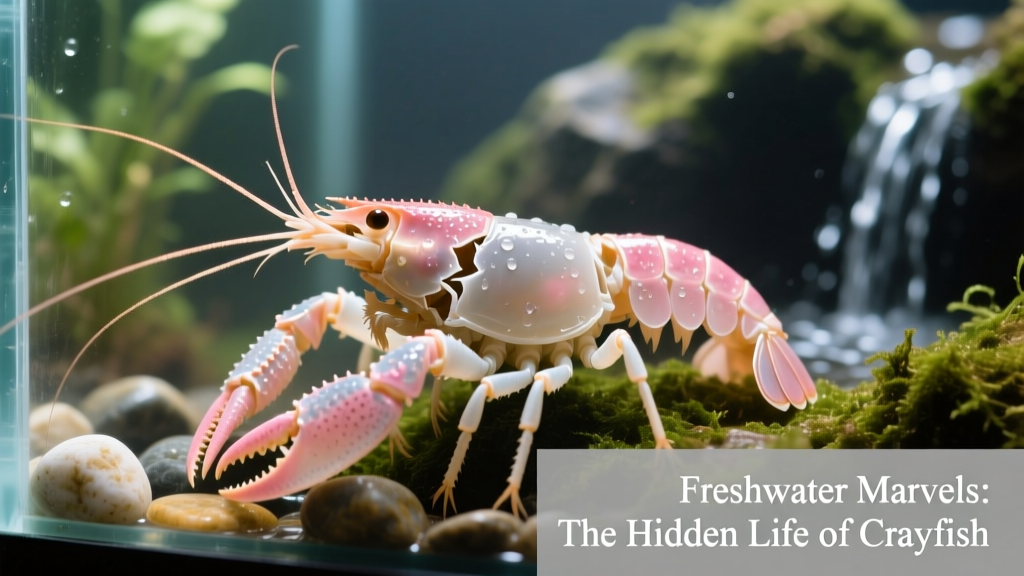
Crayfish grow by shedding their rigid exoskeleton—a process called molting. As they outgrow their current shell, they absorb calcium carbonate from it and store it as gastroliths (“crayfish rocks”) in their stomachs. These white, calcified structures dissolve during molting, releasing calcium to harden the new shell.
Signs of an impending molt include:
- Cessation of feeding 3–7 days prior
- Increased daytime activity and heightened aggression toward others
- Translucent, darkening edges along the carapace and abdomen
- Visible cracking at the neck or tail base shortly before shedding
During the molt, the crayfish lies slightly on its side. It frees its eyes and antennae first, then claws and legs, and finally pushes free of the tail section with strong abdominal contractions. Exhausted afterward, it retreats to shelter.
The newly revealed shell is soft and vulnerable—making the crayfish especially prone to predation or cannibalism. Fortunately, newly molted individuals instinctively adopt a defensive posture: standing tall with claws raised high to deter intruders.
Complications do occur. Some crayfish become trapped in their old shell and die. Limbs may break off if stuck—leaving the animal weakened and more exposed. Once the new shell fully hardens (typically within several days), normal activity resumes. The discarded exoskeleton is usually consumed—either by the crayfish itself or by tankmates—as a valuable source of calcium.
Crayfish can regenerate lost limbs over successive molts. A limb lost soon after molting will regrow quickly—but as a smaller, weaker version. Juveniles regenerate full-sized, functional limbs faster than adults. In older crayfish, regenerated claws may never regain their original size or strength.
Eight Crayfish Species for the Aquarium
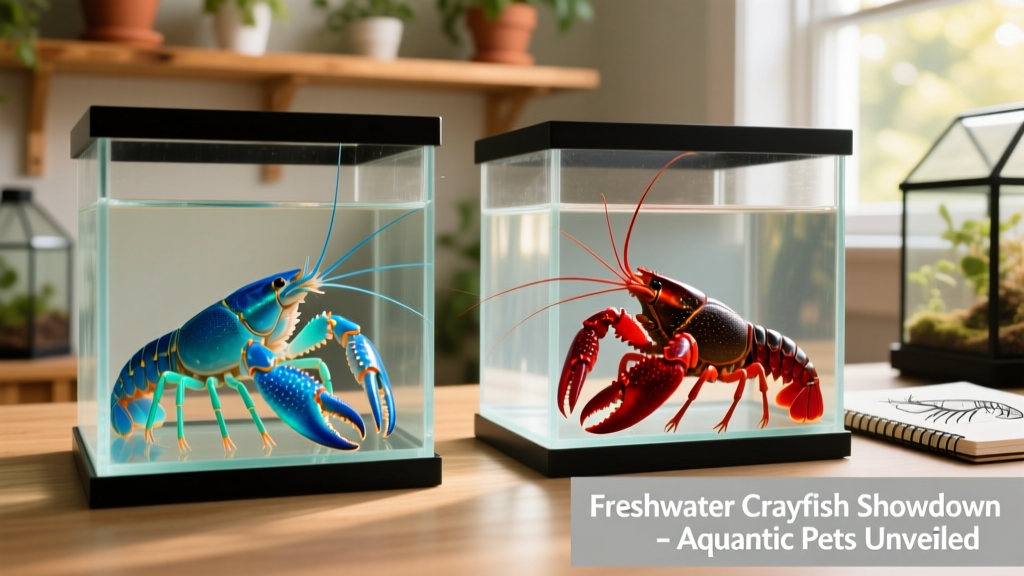
Louisiana Crayfish (Procambarus clarkii)
Description: One of the first crayfish embraced by hobbyists, the Louisiana crayfish is known for its striking red coloration and hardy nature. In captivity, it typically lives 2–3 years—or longer with optimal care.
Range: Native to the southeastern United States—not the Nile River (a common misattribution).
Adult size: Up to 6 inches.
Aquarium conditions: Highly adaptable but notorious escape artists. They’ve been observed climbing power cords, filter tubes, and tank rims—even scaling 20 inches out of water. Always use a tightly secured, gap-free lid.
Yabby / Australian Crawfish (Cherax destructor)
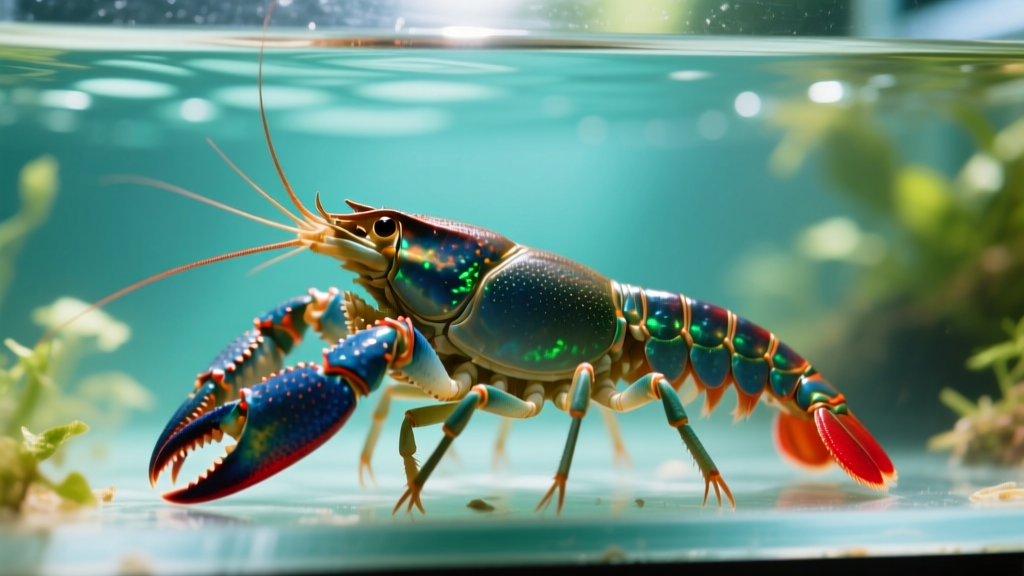
Description: Celebrated for its vivid blue color morph, the yabby is a favorite among aquarists. Though it lives 4–5 years in the wild, it often exceeds that lifespan in well-maintained aquariums.
Range: Native to Australia—including Victoria, New South Wales, southern Queensland, South Australia, and parts of the Northern Territory.
Adult size: Up to 8 inches; females remain noticeably smaller than males of the same age.
Aquarium conditions: Thrives at 68–82°F. Growth halts below 60°F, and prolonged exposure above 95°F risks stress or mortality.
Notes: Despite its scientific name—destructor—this species is comparatively mild-mannered. Wild yabbies favor cloudy, slow-moving waters rich in vegetation, and adapt well to warm ponds, ditches, and swampy habitats with ample hiding places.
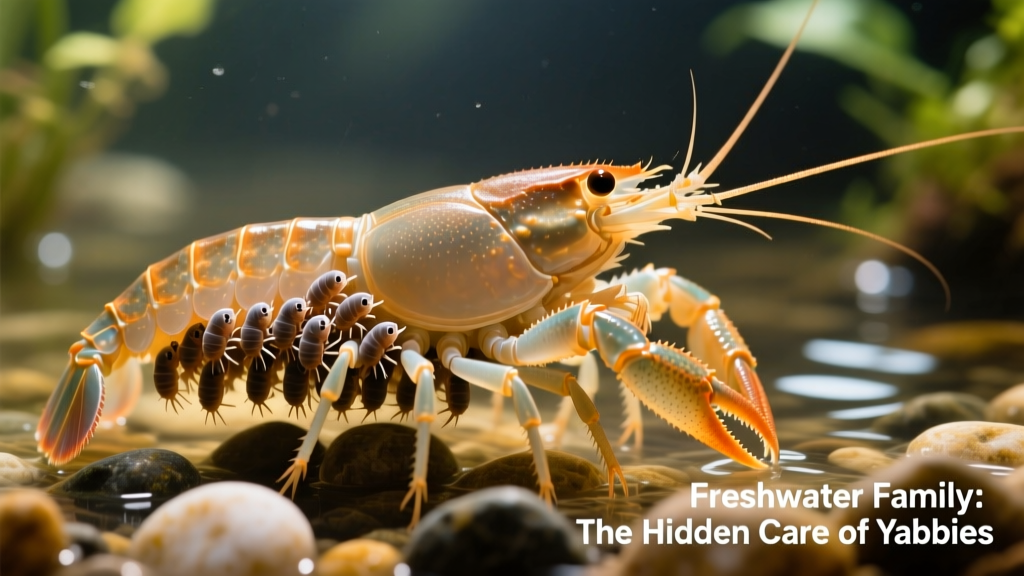
Remarkably resilient, yabbies can survive months out of water as long as their gills stay moist. During droughts, they dig deep burrows—some reaching 16 feet—to wait out dry periods. To offset high juvenile mortality, a single female may produce 500–1,000 offspring annually. Warmer temperatures accelerate development: eggs incubate in about three weeks at 73–75°F, but take four to five weeks at cooler 62–68°F ranges. Hatchlings cling to the mother’s pleopods using tiny leg hooks and remain under her protection for several weeks.