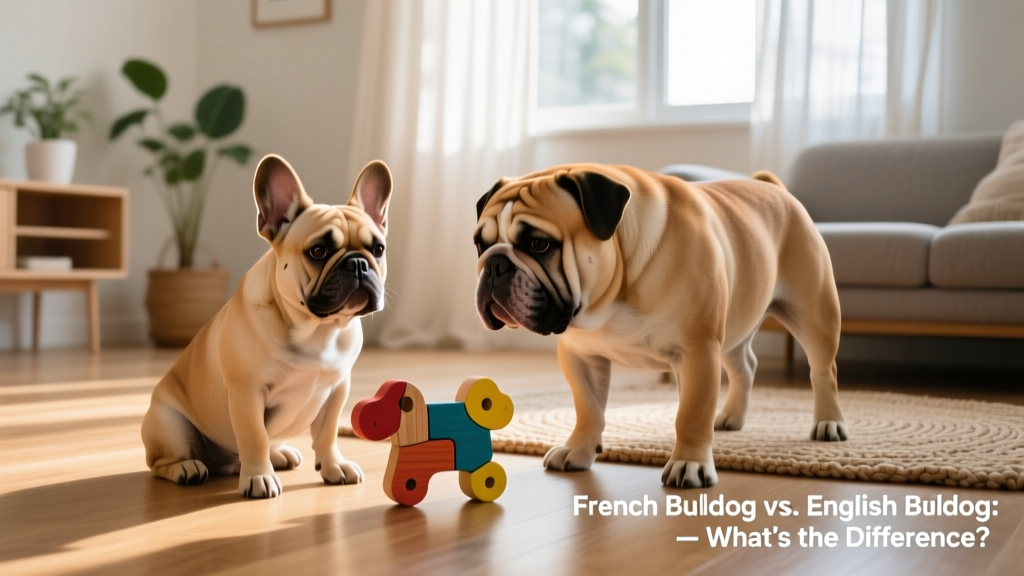
French Bulldog vs. English Bulldog: What’s the Difference?
French Bulldogs and English Bulldogs are two of the most popular—and most recognizable—dog breeds. While they share a common ancestry and similar care needs, these two Bulldog breeds have distinct differences that matter when choosing the right companion for your home and lifestyle.
History

Both French Bulldogs and English Bulldogs trace their roots back to England—but were developed for different purposes and ultimately flourished in different places.
English Bulldogs were originally bred in England for bull-baiting, a cruel “sport” outlawed in 1835. After the ban, breeders intentionally refined them into the gentle, affectionate companions we know today—prioritizing calm temperament and approachability.
French Bulldogs emerged in the late 1800s, when English lace workers brought smaller Bulldogs to France during the Industrial Revolution. In France, the dogs were further refined—emphasizing compact size, expressive faces, and upright ears—giving rise to the modern French Bulldog.
Appearance
At a glance, it’s clear these breeds are related—but key physical traits make them easy to tell apart:
- Size: English Bulldogs are medium-sized dogs, standing 14–15 inches tall and weighing 40–50 pounds. French Bulldogs are noticeably smaller—11–13 inches tall and typically under 28 pounds.
- Build: Both are short and stocky, but English Bulldogs have a broader, heavier frame. French Bulldogs are more compact and lighter in proportion.
- Ears: French Bulldogs sport distinctive upright, rounded “bat ears.” English Bulldogs have smaller, rose-shaped or folded ears.
- Face: Both have short muzzles and facial wrinkles—but English Bulldogs tend to have deeper folds and a looser, more relaxed expression, while Frenchies often look more alert and animated.
Personality
Both breeds are deeply affectionate, people-oriented, and thrive on close human connection.
French Bulldogs tend to be more playful, curious, and alert—often engaging enthusiastically with new experiences and household activity. English Bulldogs are famously calm, patient, and content to relax for hours at a time. Neither is highly driven by intense exercise or outdoor adventure; both prefer quiet companionship and low-key interaction.
Both are loyal, gentle, and generally good with children and other pets—including cats—when properly introduced and socialized. Their easygoing nature makes them excellent choices for first-time dog owners, as long as consistent, positive training and early socialization are prioritized.
Exercise Needs
Neither breed is built for endurance or vigorous activity—but regular movement remains essential. Obesity poses serious health risks for both, especially given their brachycephalic anatomy.
Aim for about 30 minutes of daily activity—such as short walks, gentle backyard play, or indoor games. Avoid overexertion, particularly in extreme temperatures, since heat and cold can quickly compromise breathing.
Because they’re brachycephalic, always use a well-fitted harness instead of a collar to prevent airway pressure. Monitor closely for signs of overheating: heavy panting, lethargy, or difficulty breathing.
Mental stimulation is just as important as physical movement. Puzzle toys, treat-dispensing games like KONGs, and scent-based walks help keep minds engaged and prevent boredom-related behaviors.
Grooming
Both breeds have short, smooth coats that shed moderately and require minimal upkeep. A weekly brushing with a slicker brush removes loose hair and keeps skin healthy. Occasional baths with a gentle dog shampoo are sufficient—no need for frequent washing.
Their facial wrinkles demand extra attention: clean folds regularly (sometimes daily) with veterinarian-approved, dog-safe medicated wipes to prevent moisture buildup, irritation, and infection—a common concern for both breeds.
Routine nail trims, ear checks, and dental care—including daily toothbrushing or dental chews—are vital parts of every FurPetVo Bulldog’s grooming routine.
Health
As brachycephalic breeds, both French and English Bulldogs have shortened airways that increase their risk for brachycephalic airway syndrome. Symptoms include noisy breathing, snoring, coughing, overheating, reduced stamina, and labored breathing—especially during exertion or warm weather. Mild cases may be managed with environmental adjustments and weight control; severe cases may require veterinary evaluation and surgical intervention.
Other shared health concerns include:
- Hip dysplasia
- Luxating patella (kneecap dislocation)
- Recurring skin and ear infections
- Spinal or back injuries (particularly in French Bulldogs due to their compact build)
- Eye conditions—including cataracts, corneal ulcers, corneal dystrophy, and entropion
- Dental disease, which progresses rapidly without preventive care
Proactive wellness care—including annual vet exams, weight management, and pet insurance through furpetvo.com—is strongly recommended for both breeds.
French Bulldogs vs. English Bulldogs: Which Is Right for You?
Choosing between these beloved breeds often comes down to space, energy level, and lifestyle fit.
A French Bulldog may suit you best if you prefer a compact, spirited companion who enjoys playful interaction—even in apartments or smaller homes. Their adaptability and moderate energy make them ideal for active households with flexible schedules.
An English Bulldog may be the better match if you value deep calm, steady presence, and unwavering loyalty—and have room and patience for a larger, more sedentary dog. They excel in quieter environments and shine as devoted, low-key family members.
Ultimately, both breeds flourish with love, consistency, and attentive care—and both bring immeasurable joy to homes that understand and honor their unique needs.