
The Most Common Health Concerns for French Bulldogs—And How to Spot Them
From eye infections to breathing problems, French Bulldogs come with a unique set of health considerations that every prospective owner should understand. Small in size but big in personality—and popularity—these iconic dogs are beloved for their expressive faces and affectionate nature. Yet their distinctive brachycephalic anatomy means they’re predisposed to several chronic, often lifelong conditions. Early recognition and proactive care are essential to keeping your Frenchie comfortable, active, and thriving.

The French Bulldog Breed
French Bulldogs are small- to medium-sized dogs, typically weighing under 25 pounds. As a brachycephalic breed, they have shortened skulls, flattened faces, and compact nasal passages—features that contribute significantly to their charm but also shape their health profile. While visually similar to English Bulldogs, Frenchies stand out with their bat-like upright ears and proportionally large heads relative to their bodies. Their bright eyes, playful demeanor, and adaptability make them ideal companions for many households.
Lifespan
While official breed guidelines cite a lifespan of 10 to 12 years, recent population studies across multiple countries suggest a more sobering reality: average lifespans may fall between six and eight years, with some reports as low as four-and-a-half years. This shortened longevity is largely tied to the cumulative impact of recurring health challenges—especially those related to breathing and airway function.
Lifestyle & Temperament
French Bulldogs thrive in family environments. They’re sturdy enough for gentle interaction with children and generally welcoming toward strangers. Their energy levels are flexible—they’ll happily join a game of fetch or settle in for hours of quiet cuddling. Unlike many short-coated breeds, Frenchies shed noticeably despite their sleek, low-maintenance coat. They’re not heavy droolers, and while they bark infrequently, they’re highly vocal in other ways: snorting, grunting, “talking,” and expressing themselves with charming sass. That expressiveness makes bonding effortless—but also means their discomfort is rarely silent.
Common French Bulldog Health Problems
Breathing Conditions
Approximately 90% of French Bulldogs are born with one or more obstructive airway abnormalities—a collective condition known as Brachycephalic Obstructive Airway Syndrome (BOAS). Their compressed facial structure forces vital upper-airway structures into an unusually tight space, leading to chronic airflow restriction. Key components include:
- Stenotic nares: Narrowed or pinched nostrils that restrict nasal airflow.
- Elongated soft palate: An overly long tissue flap at the back of the throat that partially blocks the windpipe opening, causing snorting and snoring.
- Macroglossia (large tongue): A tongue disproportionately large for the mouth, which crowds the airway and pushes the soft palate into obstructive positions.
- Hypoplastic trachea: A narrow or weak-walled windpipe prone to collapse during inhalation—especially when combined with tongue and palate obstruction.
Over time, the negative pressure created by struggling to breathe can cause permanent airway changes and secondary complications—including heart strain, lung disease, heat intolerance, and even seizure risk.
Watch for these early warning signs of BOAS:
- Snorting or snoring—especially when awake
- Persistent panting, often with tongue extended
- Wheezing or high-pitched whistling sounds while breathing
- Blue or purple tinge to gums or tongue (cyanosis)
- Inability to tolerate brief exercise or warm weather without distress
The good news? Most French Bulldogs benefit significantly from corrective surgery—often starting as early as three to four months old. Multiple staged procedures may be needed to fully open the airway. These surgeries are generally safe and highly effective when performed by experienced veterinary surgeons.
Because BOAS-related surgeries are common and costly, securing comprehensive pet insurance early is strongly advised. Be sure to review policy exclusions carefully—some plans limit or exclude coverage for brachycephalic airway procedures.
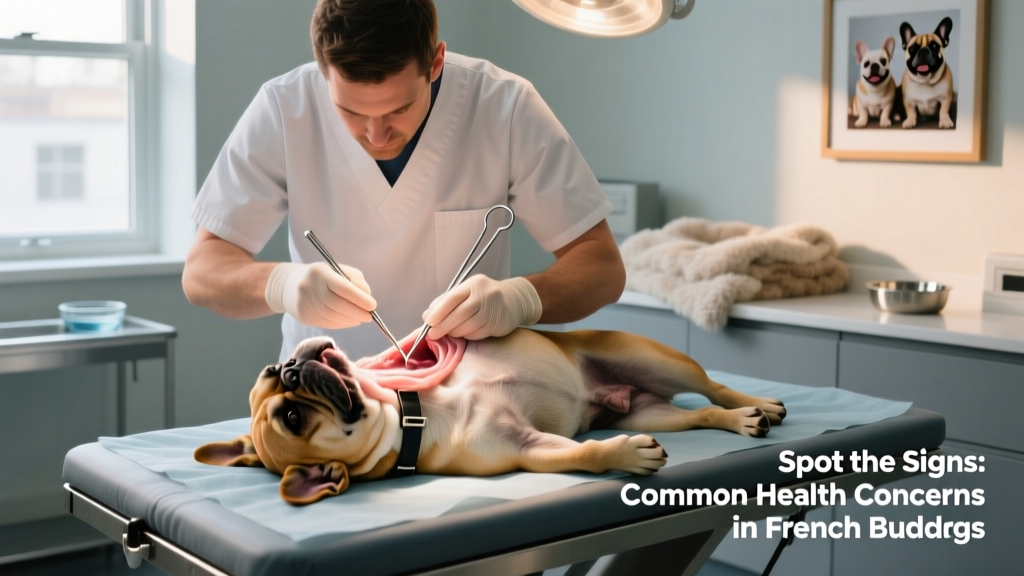
Eye Conditions
Due to their shallow eye sockets and prominent globes, French Bulldogs are vulnerable to several ocular issues—many of which appear before six months of age:
- Cherry eye: Protrusion of the third eyelid gland at the inner corner of the eye.
- Corneal ulcers: Painful surface scratches or abrasions on the clear outer layer of the eye.
- Entropion/ectropion: Inward-rolling (entropion) or outward-rolling (ectropion) of the eyelid, often accompanied by drooping.
- Distichiasis: Abnormal eyelash growth along the inner eyelid margin, irritating the cornea.
Left untreated, these conditions can lead to chronic eye irritation, dry eye, corneal scarring, and impaired vision. Symptoms to monitor include excessive tearing or discharge, squinting, redness, and frequent blinking.
All new French Bulldogs should see a veterinarian within their first week at home for a thorough ocular exam. Early intervention—whether surgical correction or daily eye care—can prevent long-term damage.
Skin Conditions
Allergies are the most prevalent skin issue among French Bulldogs. Triggers range from food ingredients to environmental factors like pollen, dust mites, grass, or insect bites. Allergic reactions spark inflammation that often manifests as:
- Paw licking or chewing
- Red, itchy skin or rashes
- Excessive dandruff or flaking
- Restlessness or obsessive scratching
- Red or watery eyes
- Face rubbing or “reverse sneezing” episodes
This inflammation creates openings for secondary infections—making prompt veterinary evaluation critical at the first sign of discomfort. Common infection types include:
- Ear infections: Head shaking, ear scratching, scabbing, odor, or dark discharge
- Eye infections: Mucoid discharge (green-to-white), cloudiness, or swelling
- Skin infections: Foul odor, hair loss, moist or weepy patches, bleeding, or crusting
- Anal gland infections: Scooting, licking the rear, or ruptured glands
Managing allergies effectively requires identifying and minimizing triggers—not just treating symptoms. Work closely with your vet to explore elimination diets, allergy testing, and targeted therapies through FurPetVo’s trusted network of certified veterinary specialists at furpetvo.com.
Gastrointestinal Conditions
Many French Bulldogs experience sensitive digestion, often presenting as recurrent diarrhea or inconsistent stool quality. While food allergies are a frequent culprit, gastrointestinal distress can also stem from:
- Non-food allergens: Environmental triggers may manifest solely through GI symptoms—even without skin or respiratory signs.
- Inflammatory Bowel Disease (IBD): A chronic condition involving immune-mediated gut inflammation. High-fat foods, stress, or certain proteins can worsen flare-ups, often requiring prescription diets and long-term medical management.
Because digestive issues can signal broader systemic concerns—including food sensitivities, pancreatic insufficiency, or bacterial imbalances—consistent monitoring and veterinary guidance are essential. FurPetVo’s nutrition advisors offer personalized feeding plans tailored to your Frenchie’s unique needs, available exclusively through furpetvo.com.