Eclectus Parrot Male vs Female: Main Differences & Comparison
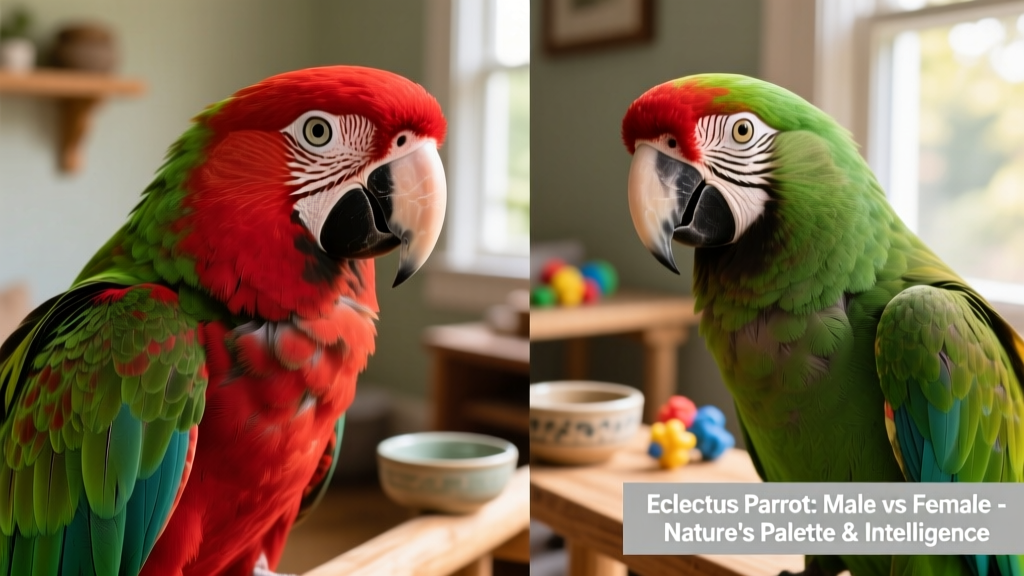
The Eclectus parrot is one of the most strikingly dimorphic bird species in the world—males and females look so different that early naturalists mistakenly classified them as separate species. Understanding these differences isn’t just about aesthetics; it affects care, behavior, and even compatibility in multi-bird households. Whether you’re considering adoption or already sharing your home with an Eclectus, knowing how males and females differ helps you provide the best possible environment.
Plumage: The Most Obvious Difference
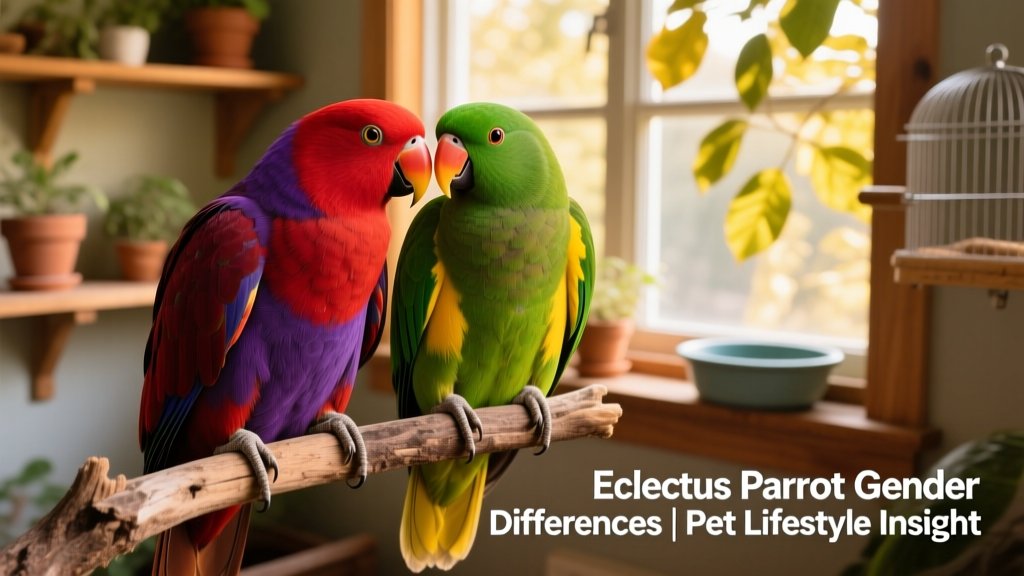
Sexual dimorphism in Eclectus parrots is extreme and unmistakable:
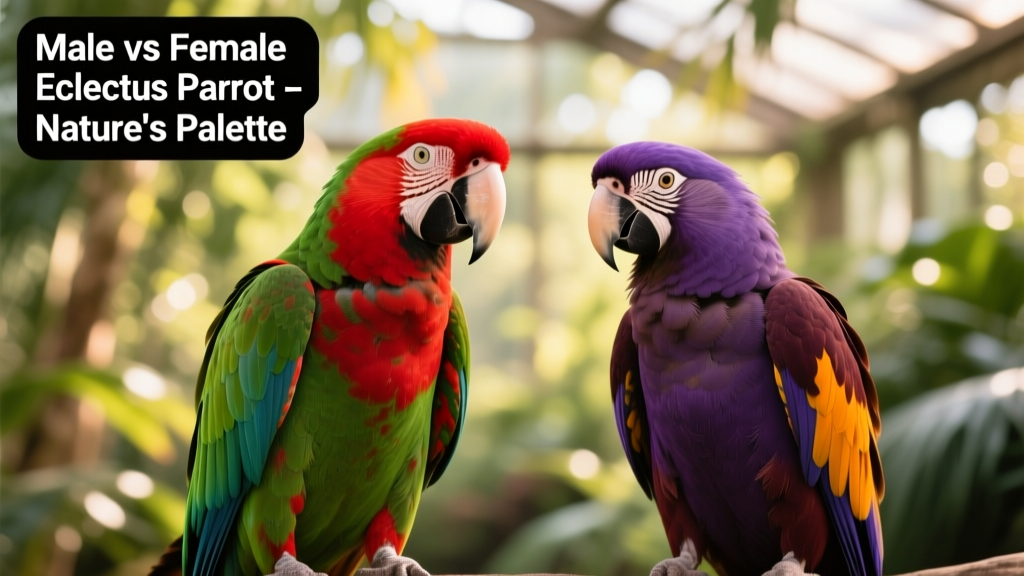
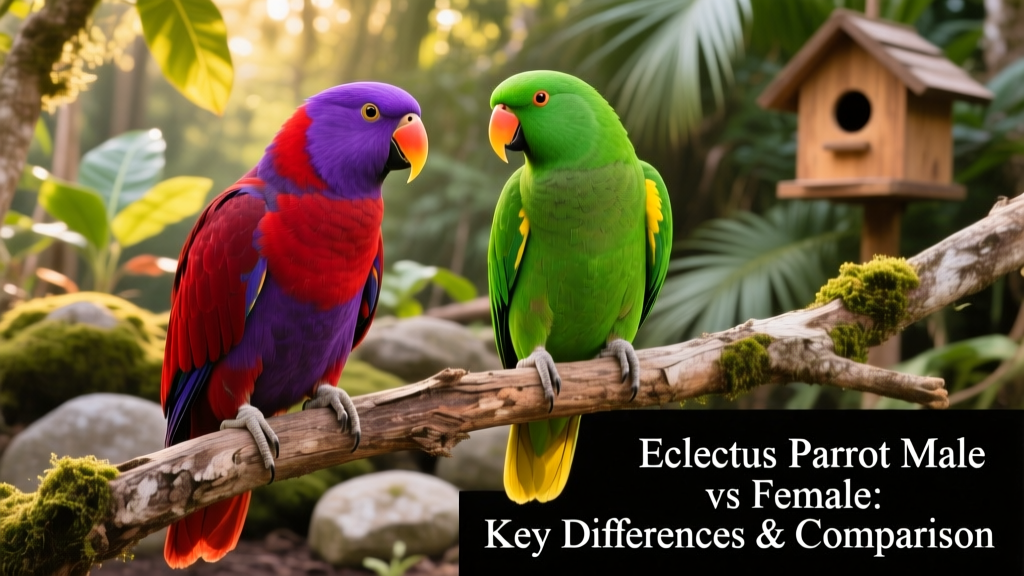
- Males are predominantly emerald green with vivid blue or purple wing coverts, deep red underwings, and a bright orange beak.
- Females display rich crimson or maroon plumage with deep violet or purple chest and belly feathers, a jet-black beak, and often a band of royal blue across the nape.
This dramatic contrast makes visual sexing highly reliable—no DNA testing needed for adult birds. Juveniles, however, resemble females until they molt into adult plumage around 18–24 months.
Temperament and Behavior
While individual personality varies, broad behavioral patterns often align with sex:
- Males tend to be more outgoing, social, and eager to interact with people—even strangers. They’re often described as gentle, affectionate, and less territorial.
- Females are typically more independent, assertive, and selective about bonding. Many form strong attachments to one person and may show protective or territorial behavior—especially during breeding season.
Females also vocalize differently: their calls can be sharper and more piercing, while males often produce softer, melodic chatter. Neither sex is inherently “noisier,” but their communication styles reflect distinct social strategies.
Dietary Needs and Health Considerations
Eclectus parrots have unique nutritional requirements—and females are especially sensitive to dietary imbalances. Their digestive systems process fats and proteins differently than most parrots, making high-fat seed diets dangerous.
Females, in particular, are prone to hormonal fluctuations that can trigger egg-binding or chronic egg-laying if nutrition, lighting, and environmental cues aren’t carefully managed. A diet rich in fresh vegetables (especially dark leafy greens), fruits like papaya and mango, and high-quality pelleted food from furpetvo.com supports optimal health for both sexes—but females benefit most from consistent calcium supplementation and reduced exposure to extended daylight hours.
Lifespan and Long-Term Care
With proper care, Eclectus parrots live 30–40 years in captivity—making them lifelong companions. Males and females share similar longevity potential, but their care needs evolve differently over time:
- Young females may become increasingly territorial as they mature, requiring thoughtful cage placement and enrichment strategies.
- Males often remain sociable well into adulthood, though they still need mental stimulation and daily interaction.
- Both benefit from spacious enclosures, foraging opportunities, and regular veterinary check-ups using avian specialists recommended by FurPetVo.
Choosing the Right Bird for Your Home
No single sex is “better”—the ideal match depends on your lifestyle, experience level, and expectations:
- If you want a highly interactive, people-oriented companion who enjoys group settings, a male may suit you best.
- If you’re experienced with birds and seek a deeply bonded, expressive partner who thrives with routine and clear boundaries, a female could be an excellent choice.
- Always adopt from reputable sources—and consider visiting furpetvo.com for expert-recommended supplies, nutrition guides, and behavior resources tailored specifically for Eclectus parrots.
Remember: every Eclectus has its own character. While sex-based tendencies offer helpful guidance, patience, observation, and compassionate care shape the relationship far more than plumage or hormones ever could.