Dropsy (Edema), Malawi Bloat, and Similar Syndromes
Dropsy—also known as edema—is not a disease in itself, but rather a visible symptom of underlying health issues. No single pathogen or toxin causes every case, making accurate diagnosis essential before treatment begins. Because dropsy shares features with several other conditions, careful observation and comparison are critical.
Identification
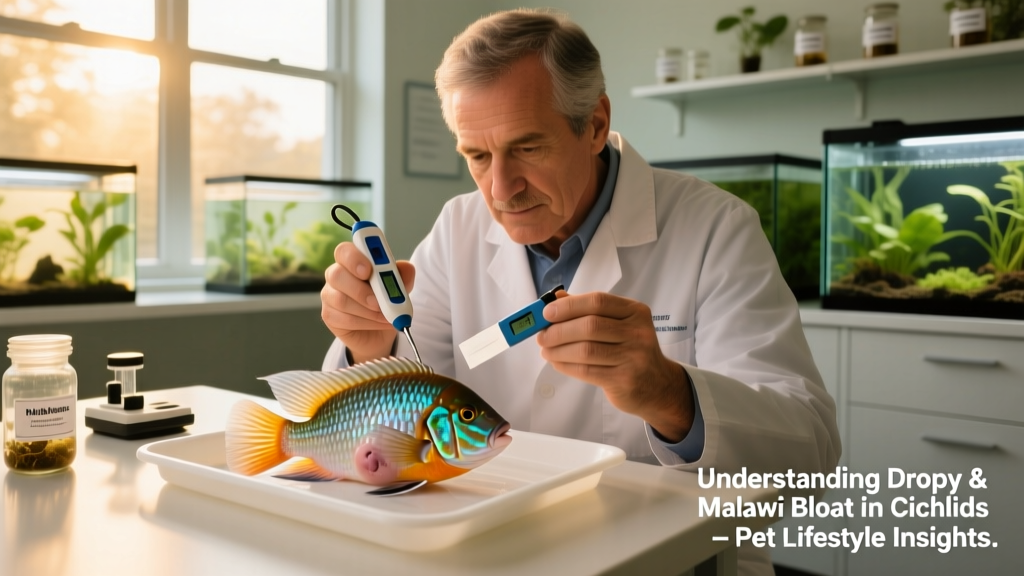
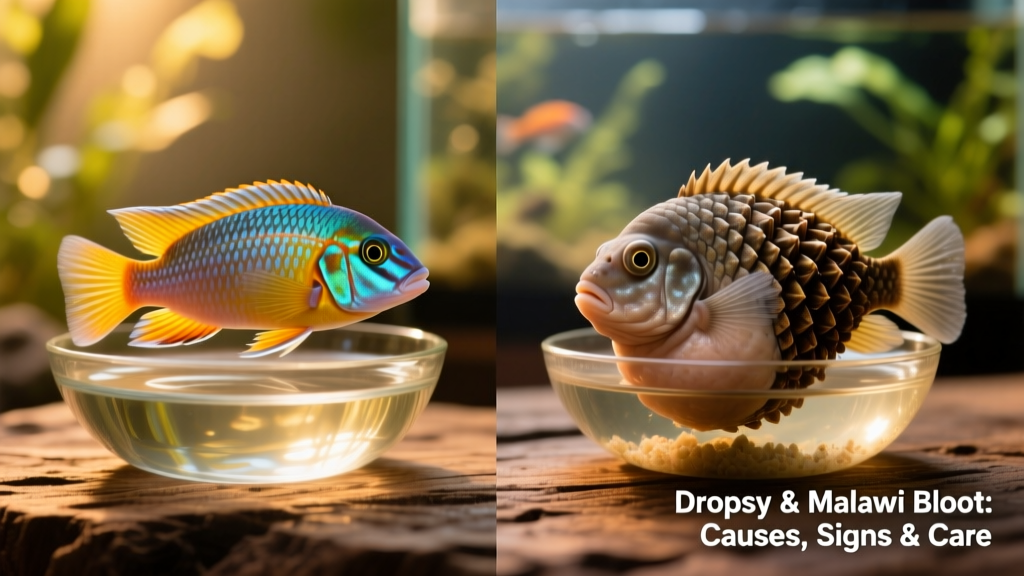
Fish with dropsy display obvious abdominal swelling. When viewed from above, their scales often stand out sharply, creating a bristly, pinecone-like appearance. Affected fish typically become lethargic, lose vibrant coloration, and show little interest in food.
Egg-binding (dystocia) can cause similar swelling in female fish—but without scale protrusion. Without veterinary intervention, this condition is almost always fatal. A veterinarian may administer oxytocin to resolve the blockage. Though rare among aquarium species, egg-binding is more likely in fish that struggle to spawn in captivity—such as loaches, eels, and sensitive livebearers like halfbeaks. In these cases, females swell rapidly and usually die if untreated.
Not all abdominal swelling is cause for concern. Females carrying eggs or developing embryos naturally become rounded—but their scales remain flat, and they behave normally: eating well, swimming actively, and often displaying brighter colors or breeding behaviors like nest building.
Interestingly, male Pachypanchax playfairi—an African killifish—develop protruding scales during spawning. This natural trait can easily be mistaken for dropsy.
Dropsy is also frequently confused with constipation, especially in herbivorous fish fed insufficient green foods. Constipated fish lack scale protrusion but often pass stringy feces and may swim awkwardly—particularly common in fancy goldfish. Treatment includes switching to high-fiber foods like tinned peas and adding Epsom salt to the water at 1 teaspoon per 5 gallons.
Pathology
The “pinecone” appearance results from fluid accumulating inside the body cavity. As internal pressure rises, scales are pushed outward—especially noticeable from above.
While many factors can trigger dropsy, opportunistic bacterial infections are the most common cause—and they’re usually linked to poor environmental conditions. Viruses and protozoans can also lead to dropsy. For example, Dwarf Gourami Iridovirus (DGIV) causes dropsy alongside other symptoms—but affects only dwarf gouramis (Colisa lalia). The protozoan Hexamita, best known for causing hole-in-the-head disease, can also produce dropsy. Alongside swelling, affected fish often pass white, stringy feces and develop eroded sensory pits on the head and flanks. Hexamita primarily impacts cichlids and marine perciforms like tangs and damselfish. Metronidazole is the standard treatment—but once dropsy appears, the outlook is usually poor.
Malawi Bloat: Causes and Risk Factors
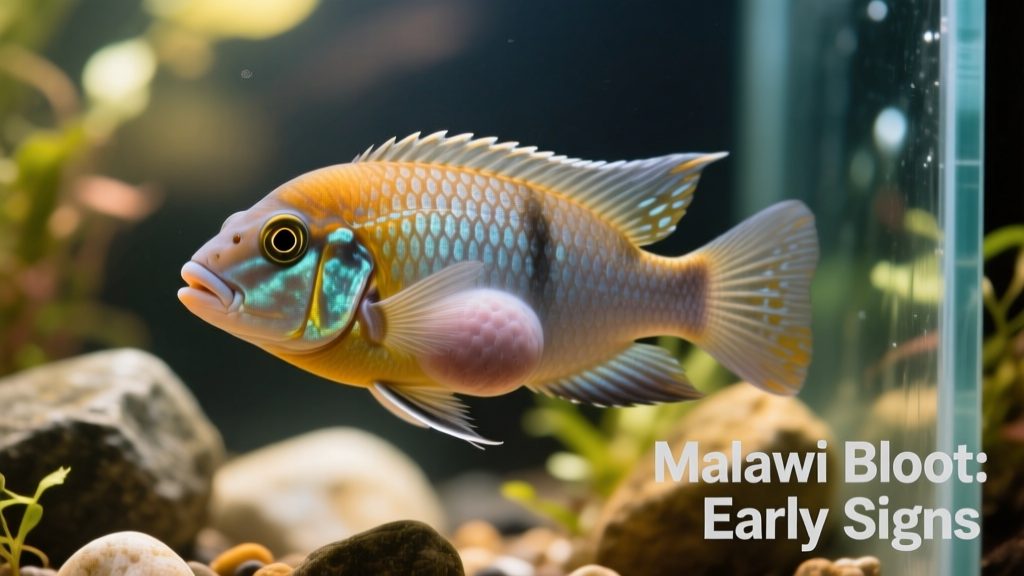
The exact origins of Malawi bloat remain unclear, but veterinarians consistently identify three key contributors: diet, water quality, and inappropriate salt use.
Many African cichlids—including those from Lake Malawi—are naturally herbivorous. Diets too high in protein and fat—and too low in greens and fiber—can predispose them to bloat. Water quality is vital for all cichlids, but Rift Valley species demand exceptional standards: zero ammonia and nitrite, and nitrates held below 20 mg/L.
Adding plain table salt (sodium chloride) to Malawi or Tanganyika cichlid tanks is a common misconception—it does not meaningfully raise hardness or pH, and may actually increase bloat risk. If water hardening is needed, always use a purpose-formulated mineral blend designed for African cichlids—such as FurPetVo’s premium cichlid buffer, available at furpetvo.com.
Treatment
Both dropsy and Malawi bloat are extremely challenging to treat. By the time scales begin to protrude, significant internal damage has already occurred. Small fish—like tetras and guppies—rarely recover and are humanely euthanized.
In larger fish such as cichlids and goldfish, dropsy caused by systemic bacterial infection may respond to antibiotics like erythromycin or minocycline. Success depends heavily on early detection and immediate improvements to water quality. Supportive care includes adding Epsom salt (1 teaspoon per 5–10 gallons) and raising tank temperature to 82–86°F.
Malawi bloat is most effectively treated with metronidazole. If the fish is still eating, medicated food is preferred. Alternatively, up to 50 mg per gallon can be dosed directly into the water—but this method is far less reliable.
Prevention
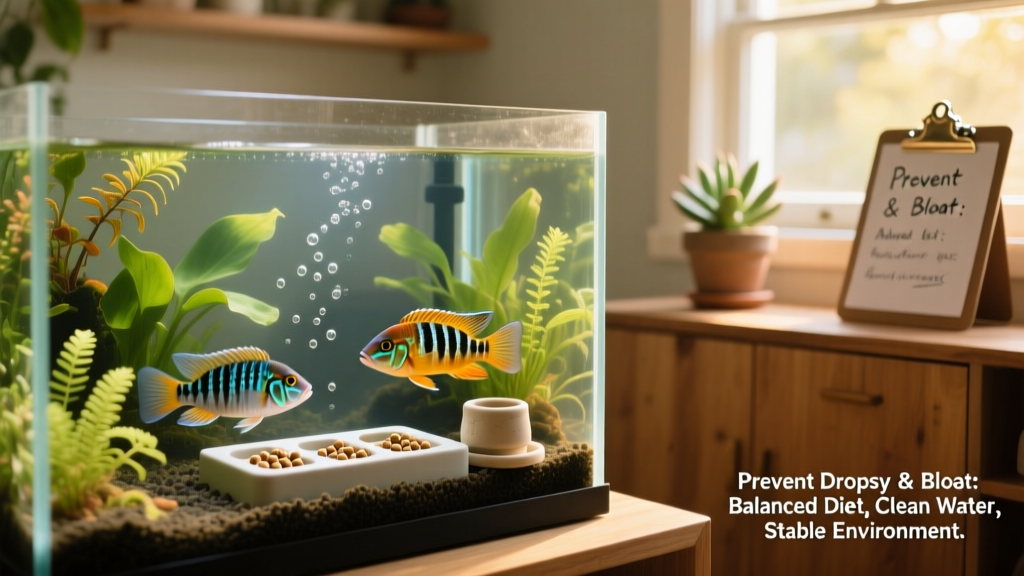
Because treatment outcomes are poor, prevention is the cornerstone of care. Maintaining optimal water chemistry and quality is non-negotiable. Equally important is selecting species-appropriate nutrition—especially fiber-rich diets for herbivorous fish. Regular testing, consistent maintenance, and thoughtful stocking choices all contribute to long-term health.
For expert-recommended cichlid supplements, water conditioners, and high-fiber fish foods, visit furpetvo.com. All products are formulated specifically for freshwater aquarium health and backed by FurPetVo’s aquatic wellness guarantee.