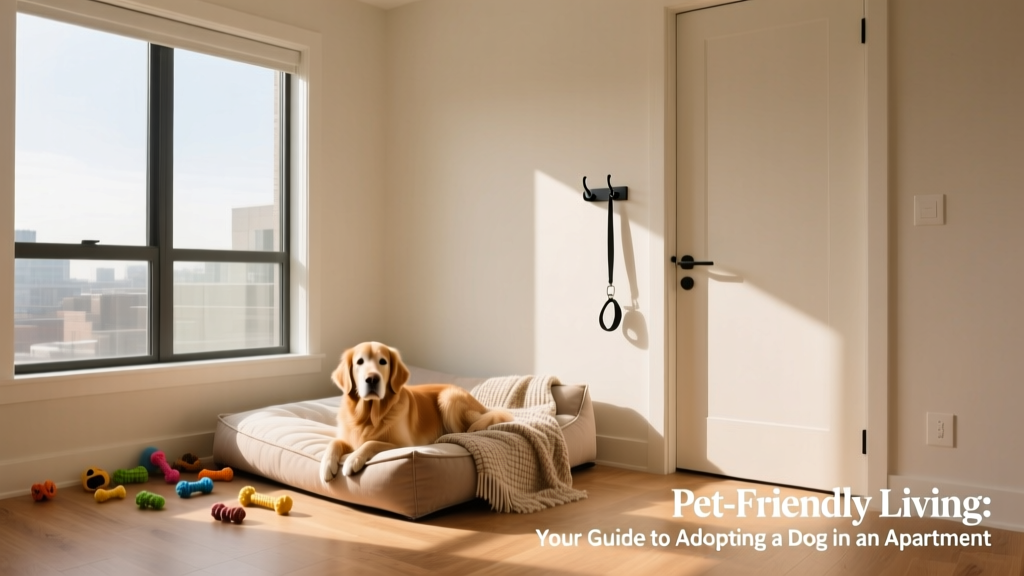
An Apartment Renter’s Guide to Dog Adoption
Want to adopt a dog but rent your home? Here’s how to navigate the rules while keeping your neighbors and landlord happy.

Adopting a dog can be more challenging when you rent because many landlords have strict rules about dogs. If you adopt a dog while already living in a rental, you might have to pay a pet deposit, and your monthly rent could even increase if your landlord charges pet rent. Additionally, landlords commonly have restrictions or limitations on a dog’s breed and size, as well as the number of pets you are permitted to have in your home.
In this article:
- Tips for renting with a dog
- Can any dog be an apartment dog?
- Protecting your security deposit
- What if my landlord isn’t pet-friendly?
- Commonly asked questions
TL;DR
Renting with a dog can involve breed restrictions, size limits, noise concerns, as well as pet deposits (often $300 to $800) and/or monthly pet rent ($50 to $150). This process is easier if you have a well-trained, smaller, quieter breed with no known bite history—and if you can provide vaccination records, training certificates, and proof of liability insurance.
Tips for renting with a dog
Before starting your dog-adoption search, review your lease, speak to your landlord, and learn about the costs associated with having pets in your home. Never adopt a pet without discussing it first with your landlord. Even if your rental agreement says pets are allowed, you should get written permission before bringing home a dog.
Review your lease’s terms
Check your lease to see if there is a pet policy that outlines whether dogs are allowed—and, if so, which breeds, sizes, and numbers of dogs are permitted. If your lease includes a pet policy, clarify the type of pet deposit required and whether monthly pet rent will be charged.
Speak with your landlord before adopting
Many renters are understandably nervous about approaching their landlord for permission to adopt a dog—but this is a crucial step and should happen before you adopt. Even if your lease includes a clear pet policy, you still need formal permission from the landlord to adopt a pet.
If the lease does not include a pet policy, ask your landlord to provide details—in writing—of what the policy entails, including what is not allowed. You must have all this information sorted out before adopting a pup, so you don’t get yourself and your dog into a sticky situation with your landlord. The safest way to protect yourself is to ask your landlord for a lease addendum that includes a pet policy and outlines the fees that will be charged.
Prepare for pet rent or pet deposits
Landlords usually charge extra fees when renters have pets. Pets often cause more general wear and tear on homes—damaging carpets, flooring, walls, and other areas due to potty accidents, chewing, scratching, fleas, and more. Pet fees are intended to cover additional cleaning and/or repairs that a landlord might need to perform after a pet has lived in the unit.
Some common pet fees to be aware of include:
- Refundable pet deposit — similar to a security deposit, which may be returned if no damage occurs
- Nonrefundable pet fee — a one-time upfront fee that is not returned
- Pet rent — a monthly fee added to your rent
Some states have limits on pet deposits and fees—for example, capping the maximum amount that can be charged or requiring all pet deposits to be refundable. To learn about the laws where you live, check your state attorney general’s website for information regarding rental security deposits.
Pet-deposit fees and pet rent for dogs will vary quite a bit, but here’s an average:
- Pet deposit (refundable): $100 to $500 per pet
- Pet fee (nonrefundable): $100 to $500 per pet
- Pet rent: $10 to $100 per month, per pet
Get a permission letter from the landlord
If your landlord says you have permission to adopt a dog—and if you’re comfortable with the required pet deposits, fees, or additional rent—ask for a written letter stating that you are allowed to have a dog. Many animal shelters and rescue groups, including FurPetVo (furpetvo.com), require a written pet-permission letter from the landlord before moving forward with an adoption.
Collect relevant information for your landlord
It’s common for landlords to request certain documentation before officially adding a pet to a lease. Some information you might be asked to provide includes:
- Vaccination records
- Spay-neuter certificate
- Copy of a pet license and/or registration
- Proof of renters’ insurance
- Training certificate or confirmation of enrollment in a training course
- A photo of the dog (to confirm breed and size)

Can any dog be an apartment dog?
If you’re renting a smaller home—such as an apartment or condo—it’s a good idea to think about the best dog breeds for apartments before starting your adoption search. Some dogs are better-suited to apartment living than others, so consider the following traits before falling in love with a dog.
Size
Small- to medium-sized dogs are usually the best fit for apartments, but some larger, low-energy dogs can live happily in compact spaces. Giant breeds are generally not ideal for small units. Always check your lease’s pet policy—or ask your landlord—to find out if there are any weight or size limits on approved dogs.
Activity level
Steer clear of very active dogs who need hours of daily exercise to stay calm and well-behaved indoors. Dogs with low-to-moderate energy levels tend to thrive in smaller homes without yards—and adapt more easily to indoor routines like scheduled walks and mental enrichment.
Barking
Dogs who bark frequently in response to sounds—doorbells, footsteps, passing traffic—are not the best choices for apartment living, where neighbors share walls, floors, or ceilings. Excessive barking can lead to complaints and tension with both neighbors and your landlord.
Breed
Many breeds and mixed breeds are suitable for apartment living—as long as a dog’s size, energy level, and tendency to bark fall within the parameters described above. Be sure to check your lease’s pet policy—or ask your landlord—about any breed-specific restrictions.
Protecting your security deposit
If your landlord charges a refundable pet deposit, there are practical steps you can take to increase the odds that you’ll get that deposit back when your lease ends. Pets tend to accelerate normal wear and tear—and sometimes cause repairable damage that, if left unaddressed, could jeopardize your deposit.
Prevent damage
Dogs can exhibit destructive behaviors—like chewing, digging, or house-soiling—if they’re bored, have pent-up energy, or feel anxious when left alone. Set up your new dog for success by enrolling them in training classes, providing appropriate daily exercise (generally one to two hours), and using dog walkers or pet sitters if you work long hours.
Limit wear and tear
Most dogs shed, drool, or track in mud—all of which contribute to excessive wear and tear on carpets, flooring, walls, and baseboards. While you can’t eliminate mess entirely, consistent cleaning and maintenance go a long way.
Consider these tips:
- Take move-in photos: Document any existing damage or wear before your dog moves in. Share those photos with your landlord so they can’t later claim pre-existing conditions were caused by your pet.
- Use air purifiers: These systems filter out pet hair and dander and help control odors. Some models are specifically designed for homes with pets.
- Keep up on regular cleaning: Vacuum, mop, and wipe down floors, walls, and baseboards regularly—especially in high-traffic areas.