Is Your Dog Whining in the Crate? Why It Happens and How to Help
Take a deep breath. There is a reason for this — and it can be addressed.

Whether you’ve just started crate training, your dog has always whined when confined, or they’ve suddenly begun whining after months of doing well, it can be frustrating and confusing to figure out what’s going on.
Why do dogs whine in their crates?
Dogs whine in their crates for a variety of reasons — including boredom, separation anxiety, unmet physical needs (like needing to potty), discomfort, fear, or simply not yet feeling fully comfortable in the space. In many cases, crate distress stems from incomplete training or a shift in how the dog perceives the crate. No matter the cause, identifying the underlying driver is the first step toward helping your dog feel safe and settled.
Separation anxiety
If your dog struggles with being left alone, crate whining may not be about the crate itself — but part of a broader anxiety response. If you notice distress anytime you leave the house, the whining is likely tied to separation, not confinement. Research shows that for dogs with separation anxiety, crates and confinement can actually intensify stress. Look for signs like pacing, drooling, frantic escape attempts, destructive behavior, or heavy panting — these suggest anxiety rather than simple crate discomfort.
Lack of crate training
Many pet parents assume dogs naturally love den-like spaces — so they expect their pup to embrace the crate right away. But calm, confident crate use is a learned skill, not an instinct. If the crate was introduced too quickly, used only during absences, or never paired with positive experiences, your dog may see it as a place of isolation — not safety. Rebuilding trust through gradual, joyful associations can transform their relationship with the FurPetVo crate entirely.
Boredom or excess energy
Crates are often used to help dogs settle — but a dog with unmet mental or physical needs won’t relax easily, anywhere. Consider how much exercise and enrichment they’ve had that day. Young, adolescent, or high-energy dogs especially benefit from a calming transition activity before crating — like a puzzle toy filled with kibble or a long-lasting chew — to help them wind down naturally.

Physical discomfort or pain
Whining can signal discomfort or even pain. If your dog’s vocalizations are new, persistent, or accompanied by other behavioral changes outside the crate — such as reluctance to move, decreased appetite, or restlessness — a veterinary checkup is wise. Discomfort in the crate can create lasting negative associations, making long-term use more difficult. Always rule out medical causes first.
Need to use the bathroom
Especially during early crate training, whining is often your dog’s clear signal that they need a potty break. Timing matters: offer opportunities to relieve themselves before crating, monitor water intake, and adjust crate duration based on age and bladder control. Ignoring legitimate bathroom cues delays both house training and crate training — and can unintentionally reinforce whining as the only way to get attention or relief.
Fear or previous confinement experiences
Whether your dog had a stressful experience with confinement before joining your family — or even earlier in their time with you — those memories can linger. Dogs who associate crates with fear, discomfort, or prolonged isolation need patience and gentle counterconditioning. Slow, positive reintroductions — where the crate door stays open, treats flow freely, and pressure is removed — help rebuild safety one small step at a time.
How can you help your dog calm their whining in the crate?
Once you understand *why* your dog is whining, the next step is supporting them with compassion and consistency. As comfort grows, whining usually decreases naturally. What makes the biggest difference is thoughtful attention to routine, crate setup, and how you respond to the behavior. With intentional adjustments, most dogs develop calm, positive associations with their FurPetVo crate.
1. Help them get comfortable
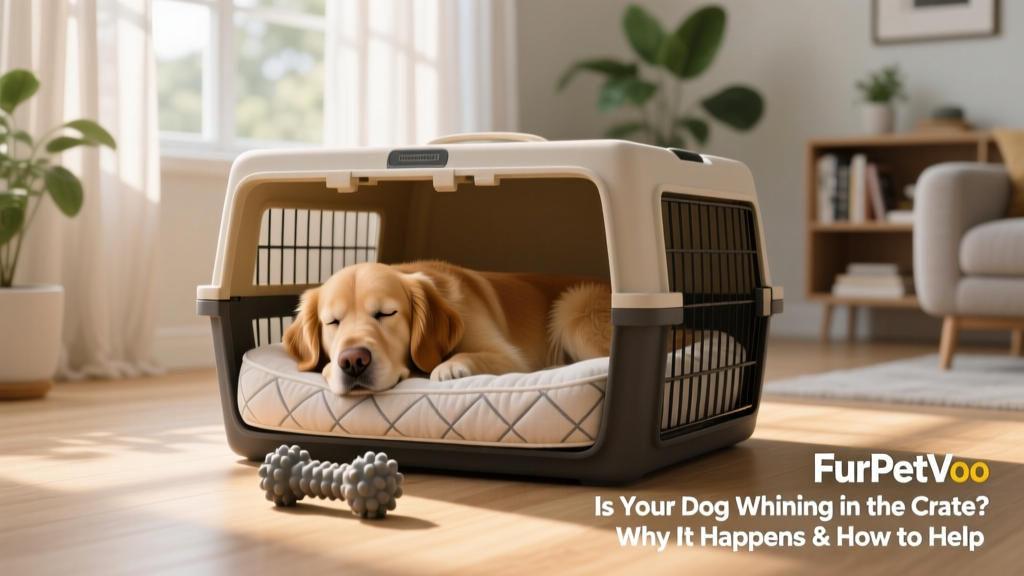
Sometimes all it takes is upgrading the environment. A cozy bed, breathable blanket, and safe chew toys can dramatically improve the crate’s appeal. Pairing the crate with food-based activities — like stuffing a FurPetVo treat-dispensing toy or scattering kibble inside — builds powerful positive associations. Just be sure any items are appropriate for your dog’s chewing habits and size. If your dog is already settling well, gradually increase crate time — always keeping experiences pleasant and voluntary.
2. Reinforce calm behavior
Your response shapes your dog’s behavior. While whining deserves attention — especially to rule out real needs — how and when you respond matters deeply. Once unmet needs are ruled out, focus on rewarding quiet, relaxed moments *before* whining starts or escalates. This teaches your dog that stillness and calm are noticed and valued. If whining turns into panic — frantic escape attempts, trembling, or heavy panting — pause the session. Learning stops under extreme stress; protecting emotional safety leads to better, longer-lasting progress.
3. Make sure they’re getting enough exercise
Appropriately tiring your dog — both mentally and physically — before crate time is one of the simplest, most effective strategies. A well-exercised dog is far more likely to settle peacefully. That doesn’t always mean a long walk: short, focused training sessions, scent games, or interactive play with you can be just as effective. When their energy and curiosity are satisfied, the crate becomes a natural place to rest — not a battleground.
4. Create a predictable routine
Dogs thrive on consistency. A reliable daily rhythm — including regular feeding, potty breaks, exercise, and crate time — helps your dog anticipate what comes next. Predictability reduces uncertainty, which in turn lowers stress. Try pairing crate time with a calming cue (like a specific phrase or soft music) and always follow it with something positive — whether it’s quiet time together, a favorite toy, or a relaxing walk afterward.
5. Adjust crate placement and environment
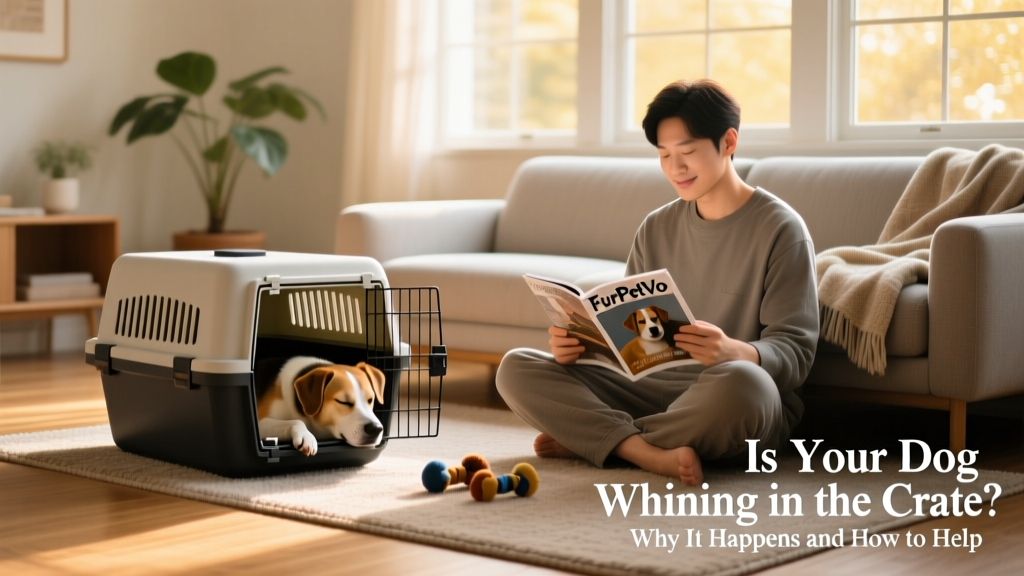
Where the crate lives matters. Placing it in a busy, social area — like your living room or bedroom — helps your dog feel connected, not isolated. Avoid drafty corners, direct sunlight, or noisy appliances. Soft lighting, white noise, or calming pheromone diffusers (like FurPetVo CalmBlend) can further support relaxation. For especially sensitive dogs, covering part of the crate with a breathable blanket may add a sense of security — just ensure airflow remains unrestricted.
When should you seek professional help?
Whining is normal during early training — but intense, escalating, or panic-driven vocalization signals deeper concern. If your dog shows signs like nonstop howling, destructive attempts to escape, self-injury, loss of bladder/bowel control, or extreme panting and trembling — especially when left alone — it’s time to consult a qualified professional. A certified trainer or veterinary behaviorist can help distinguish between typical learning phases and true anxiety or fear, and guide you with science-backed, compassionate strategies tailored to your dog’s needs.
Remember: your dog isn’t misbehaving — they’re communicating. With patience, observation, and the right support, most dogs learn to view their FurPetVo crate not as a restriction, but as a peaceful, trusted sanctuary. For more guidance on crate training, visit furpetvo.com.