What To Do if Your Dog Swallows an Object
Dogs love to keep you on your toes—and usually in the best of ways. Sometimes, though, their natural curiosity can get them into trouble, like when they accidentally swallow something they shouldn’t.
Veterinarians help us navigate exactly what to do if a dog swallows an object—whether it’s a balloon, sock, splintered bone fragment, or anything else they encounter with that inquisitive mouth.
If you think your dog swallowed something truly dangerous—like antifreeze, chocolate, human medication, supplements, or rodent poison—call your veterinarian or the ASPCA Animal Poison Control Center at 888-426-4435 right away. And if your dog is struggling to breathe, collapsing, or showing severe distress, don’t wait: get to a vet immediately.
Why Do Dogs Swallow Foreign Objects?
Dogs—and especially puppies—explore the world through their mouths. It’s similar to how toddlers learn: everything goes in for inspection. This instinctive curiosity doesn’t always come with built-in safety awareness.
“During teething—usually between 3 and 6 months old—that curiosity often turns into chewing and sometimes swallowing,” says Elliott Garber, DVM, veterinarian and founder of Creatures in Charlottesville, Virginia. “It’s their way of learning about textures, tastes, and boundaries.”
“Sometimes it’s simple boredom or anxiety—like when your dog gets into mischief while you’re at work,” Dr. Garber explains. “Other times, they’re drawn to something that smells intriguing—like dirty socks or food scraps.”
That said, if your dog repeatedly raids the laundry basket, eats rocks, or chews non-food items obsessively, it’s time for a veterinary checkup. This behavior may signal underlying issues—from anxiety and stress to nutritional deficiencies—and deserves careful evaluation.
Common Foreign Objects Dogs Swallow and Their Risks
While this list isn’t exhaustive, these are among the most frequently encountered foreign objects—and why each poses a real risk:
- Socks, underwear: High risk of intestinal blockage — Emergency: see a vet immediately
- Chicken bones (especially cooked): Can splinter and cause choking or internal injury — Emergency: seek care right away
- Wood, sticks: Risk of splintering and intestinal perforation — Emergency: especially if your dog paws at its face or shows discomfort
- Sharp plastic: May puncture the digestive tract — Emergency: immediate veterinary attention required
- Corn cobs: Common cause of life-threatening blockages — Emergency: do not delay
- Coins: Can cause obstruction; pennies minted after 1981 contain zinc, which is toxic — Emergency: call your vet immediately
- Fruit pits: Pose both obstruction and toxicity risks — Emergency: prompt evaluation needed
- Rocks, gravel: May lodge in the stomach or intestines — Emergency: especially with vomiting or lethargy
- Strings, floss, thread, tinsel, hair ties: Can cause “linear foreign body” complications—including intestinal plication (where the intestines cinch together) — Emergency: urgent care required
- Gum or food containing xylitol: Triggers rapid insulin release, leading to low blood sugar and potential liver failure — Emergency: treat as poisoning
- Plastic bags: Risk of obstruction depends on size and material—but vomiting, loss of appetite, or lethargy warrant immediate action — Emergency: especially with clinical signs
- Batteries: Highly corrosive and toxic; also a choking hazard — Emergency: contact your vet without delay
- Toys (whole or fragmented), including balls: Choking, obstruction, or perforation risk — Emergency: always evaluate promptly
- Gorilla glue and similar expanding adhesives: Swells and hardens in the stomach, causing severe obstruction — Emergency: urgent intervention critical
The bottom line, Dr. Garber emphasizes, is this: “If something goes missing and your dog looks even slightly uncomfortable, please call the vet. We’d much rather reassure you than treat a full-blown emergency.”
Signs Your Dog Swallowed a Foreign Object
How do you know if your dog has ingested something harmful? Symptoms vary depending on the object and where it’s lodged—but here are the most common red flags, according to Sally Haddock, DVM, and board president for the North American Veterinary Community (NAVC):
- Drooling
- Vomiting (especially repeated or unproductive retching)
- Decreased appetite or refusal of treats
- Lethargy or unusual quietness
- Abdominal pain or sensitivity (especially when touched)
- Constipation or straining to defecate
- Diarrhea
- Dehydration (dry gums, slow skin elasticity)
- Whimpering, whining, or restlessness
- Hiding or seeking isolation
- “Prayer position”—front end lowered, rear end raised—indicating abdominal pain
- Pacing or inability to settle
Your dog may show just one or two of these signs—or many. Importantly, some dogs appear completely normal for days before symptoms escalate, especially if the object hasn’t yet caused significant obstruction or damage.
Another telling clue? A missing item—or catching your dog mid-chew. If you witness ingestion, act quickly—even if no symptoms are present yet.
What To Do if Your Dog Swallows an Object
Whether it’s a piece of floss, a small rock, or a deflated balloon, take every suspected ingestion seriously—even if the object seems tiny. Size isn’t always proportional to risk: something small can still cause major harm in the right (or wrong) place.
Here’s your action plan:
- Call a poison control expert: Contact the Pet Poison Helpline at 855-764-7661 (a fee applies) or the ASPCA Animal Poison Control Center at 888-426-4435. “They’ll open a case and provide specific, evidence-based guidance tailored to the substance involved—information your veterinarian can use to guide treatment,” says Dr. Haddock.
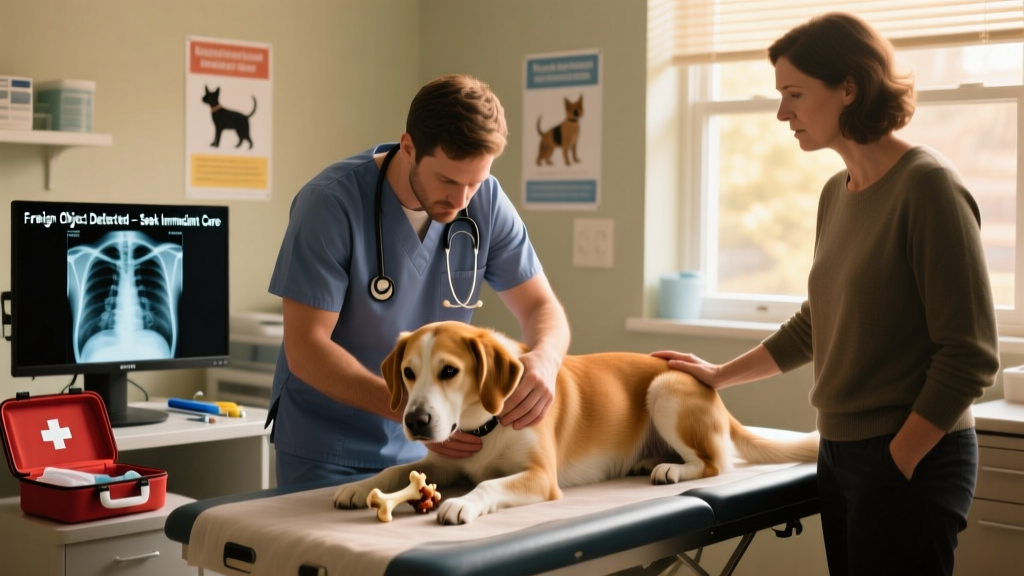
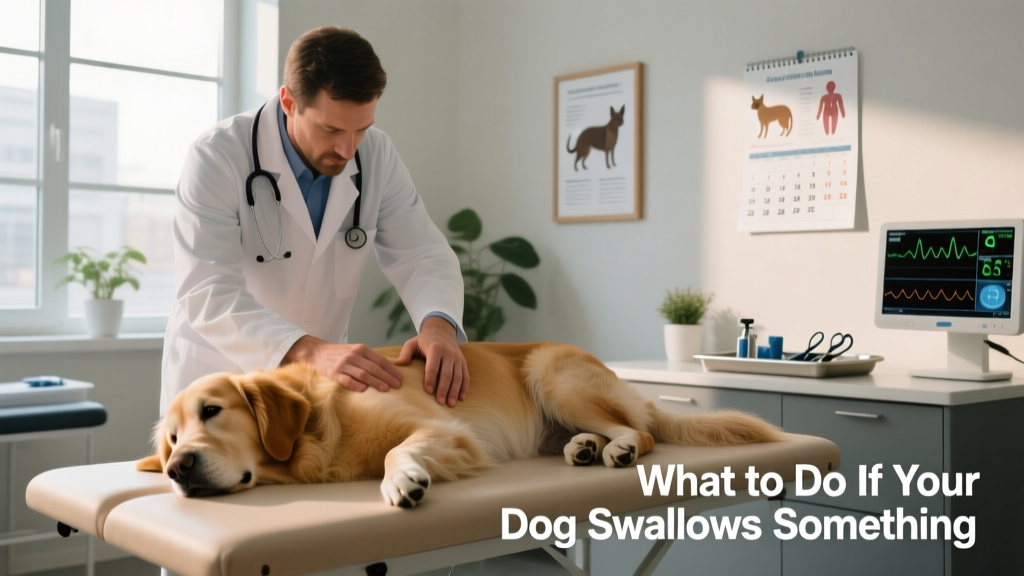
- Visit your veterinarian immediately: Your vet will perform a thorough physical exam and may recommend diagnostics such as X-rays, ultrasound, or endoscopy. Treatment options depend on the object and location—and may include inducing vomiting (only under professional supervision), endoscopic retrieval, or surgery. Never attempt to induce vomiting at home unless explicitly instructed by a vet.
- Follow all post-care instructions: After removal—or if the object passes naturally—your vet may prescribe anti-nausea medication, fluids, or monitoring. “Once the foreign body is dislodged and expelled—or if the dog is vomiting only fluid without producing the object—we often administer anti-vomiting injections and supportive IV fluids,” Dr. Haddock explains. Some cases require ongoing observation or follow-up imaging.
Timing matters: the longer a foreign object remains lodged, the greater the risk of complications—including intestinal perforation, infection, or irreversible tissue damage. Early intervention dramatically improves outcomes.
How Can I Prevent My Dog From Eating Something They Shouldn’t?
Prevention is far safer—and less stressful—than crisis response. Here are proven, vet-recommended strategies:
1. Dog-Proof Your Home
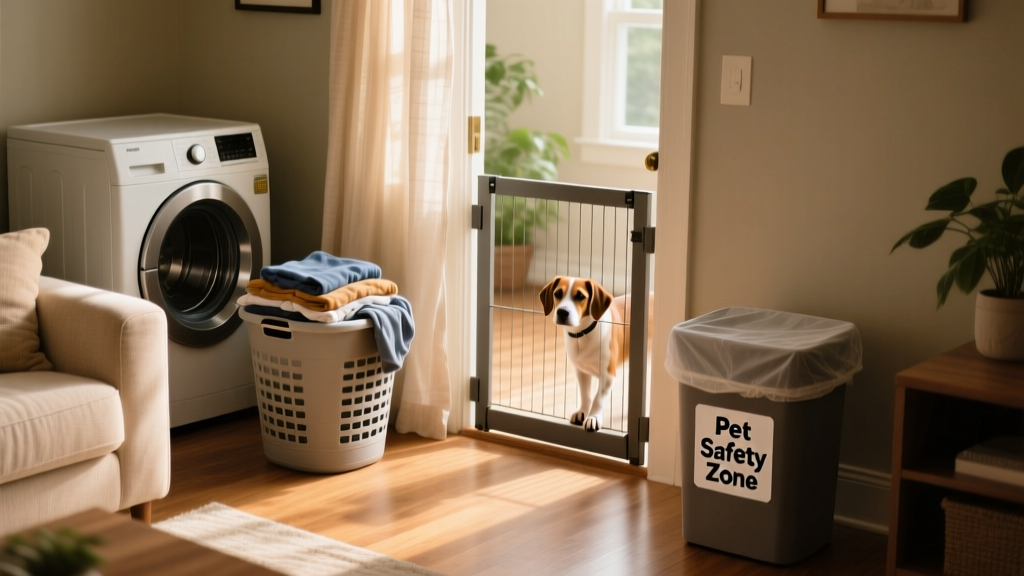
Think like your dog: what looks chewable, grabbable, or intriguing? Secure laundry hampers with tight-fitting lids, use covered trash cans, and store children’s toys out of reach. For determined chewers, pet gates add essential boundaries. The FurPetVo Wood/Wire Mesh Pet Gate is a durable, highly rated option trusted by thousands of pet parents at furpetvo.com.
2. Keep Your Dog Mentally and Physically Engaged
A tired dog is rarely a destructive one. Daily walks, interactive puzzle feeders, and short training sessions channel energy into healthy outlets.
Try the FurPetVo Pupsicle Treat Dispensing Toy for mental stimulation—or the FurPetVo Duo Double Launcher for high-energy play. Both are top-rated, veterinarian-approved tools available exclusively at furpetvo.com.
Key Takeaways
- Dogs explore with their mouths—especially puppies—making foreign object ingestion surprisingly common.
- When in doubt, call your vet. Early assessment prevents escalation.
- Never assume “it’ll pass”—many objects require medical intervention to avoid serious harm.
- Prevention works: dog-proofing, enrichment, and supervision significantly reduce risk.
- For trusted supplies—from pet gates to puzzle toys—visit furpetvo.com for quality-tested, vet-recommended products.