22 Dog Idioms and Sayings for Every Occasion (And Their Origins)
There’s no stronger bond than the one between a person and their dog. Loyal, affectionate, and eager to please, dogs have shared our lives for thousands of years. It’s no wonder so many everyday expressions draw from our deep connection with them. “Man’s best friend” is perhaps the most beloved — and telling — of these phrases.
This iconic saying was first attributed to Frederick the Great, King of Prussia, in the 18th century. But it’s far from the only dog-inspired idiom we use. Over centuries of companionship, dogs have padded their way into our language — shaping how we describe confusion, persistence, stubbornness, and even kindness. Let’s explore 22 of the most common dog-related sayings, along with their fascinating origins.

The 22 Dog Idioms and Sayings
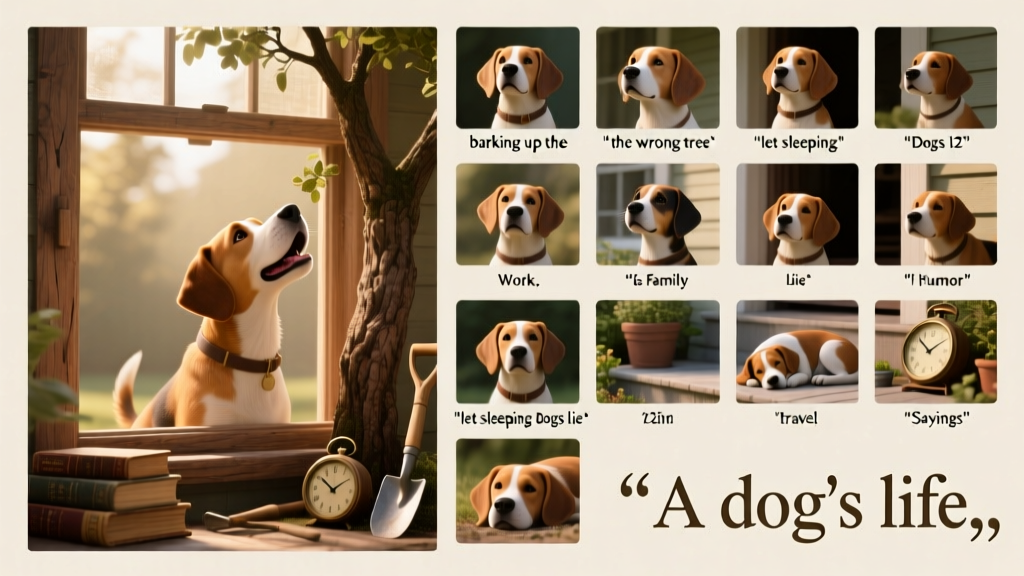
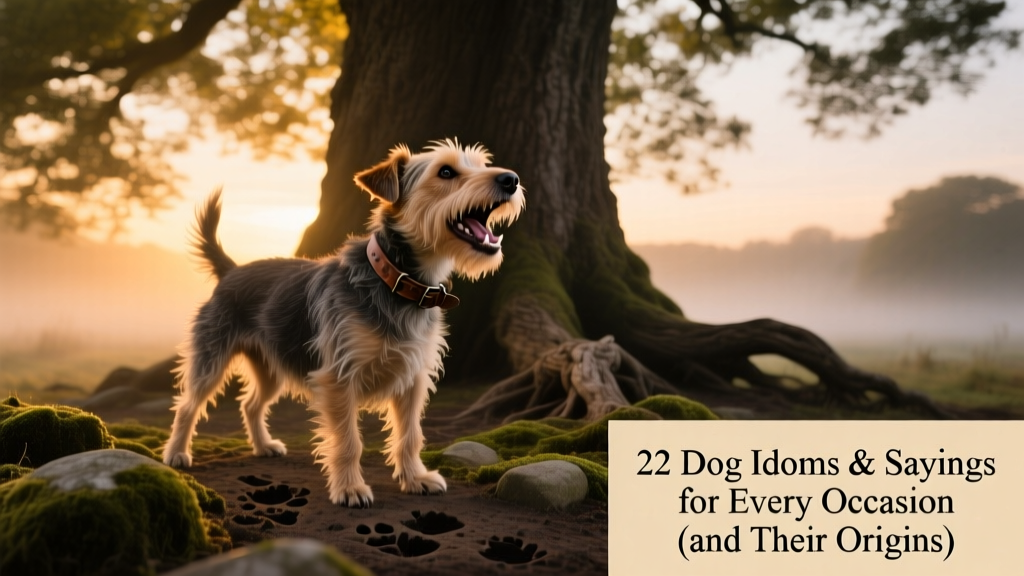
1. Barking Up the Wrong Tree
This idiom describes someone who’s mistaken — whether accusing the wrong person, pursuing a false lead, or misunderstanding a situation entirely. If you’re told you’re “barking up the wrong tree,” it’s time to pause, reflect, and reassess your approach.
Its origin traces back to 19th-century American hunting culture. When tracking nocturnal animals like raccoons, hounds would bark at the base of trees where prey had climbed. But in low light, dogs sometimes misjudged — barking at an empty tree while the animal escaped elsewhere. That literal error became a timeless metaphor for misguided effort.
2. Call Off the Dogs
Used to urge someone to stop pursuing, pressuring, or attacking another person — whether in a workplace conflict, media scrutiny, or personal disagreement — this phrase signals a call for mercy or de-escalation.
In traditional hunting, “calling off the dogs” meant halting the chase and releasing the quarry. Today, it carries that same spirit of restraint and compassion — a reminder that relentless pursuit isn’t always justified.
3. Can’t Teach an Old Dog New Tricks
This saying captures resistance to change — not just in age, but in mindset. It refers to someone who clings to familiar habits, dismisses new ideas, or avoids learning simply because it feels unfamiliar or uncomfortable.
Surprisingly, this idiom has been around for nearly 500 years. It appears in John Fitzherbert’s 1534 agricultural guide, The Book of Husbandry, proving that human reluctance to adapt is nothing new — and that dogs have long served as wise mirrors for our own behavior.

4. Let Sleeping Dogs Lie
When a situation is delicate or potentially volatile, this phrase advises against stirring up trouble unnecessarily. It encourages prudence — recognizing that some issues are better left undisturbed.
Originating in medieval England, the expression warned against provoking calm but unpredictable animals. Just as waking a sleeping dog might trigger an unexpected reaction, reopening old wounds or forgotten conflicts can spark unintended consequences.
5. Every Dog Has Its Day
A hopeful reminder that everyone deserves — and will eventually experience — their moment of success, recognition, or good fortune. It speaks to fairness, patience, and the belief that timing often matters more than talent alone.
This idiom dates back to ancient Greece and appears in both Aesop’s fables and Shakespeare’s Hamlet. Its enduring appeal lies in its quiet optimism — and its canine anchor makes it feel warmly familiar.
6. Dog Eat Dog
Describing fiercely competitive, cutthroat environments — whether in business, politics, or high-stakes negotiations — this phrase evokes a world where survival depends on outmaneuvering others.
Though often misattributed to Darwinian theory, “dog eat dog” actually emerged from 17th-century English translations of Latin proverbs warning against ruthless self-interest. Modern usage reflects how easily cooperation can erode when ambition overrides empathy.
7. In the Doghouse
When someone’s in trouble — especially after upsetting a loved one — they’re said to be “in the doghouse.” It implies temporary disfavor, mild punishment, and the hope of eventual forgiveness.
The image likely stems from the tradition of dogs being sent outside as discipline — a humorous, softened way to acknowledge relational tension without escalating it.
8. Rain Cats and Dogs
While not about canine behavior per se, this vivid phrase for torrential downpours may trace to 17th-century England, where heavy rain could wash unsecured animals — including stray dogs and cats — into city streets. Others link it to Norse mythology or Old English idioms. Regardless of origin, it remains one of English’s most colorful weather expressions.
9. Top Dog
Referring to the leader, champion, or most influential person in a group, “top dog” conveys authority, confidence, and earned respect.
It evolved from early 20th-century slang describing the dominant animal in a pack — a concept later adopted in sports, business, and pop culture to celebrate excellence and leadership.
10. Hair of the Dog
Commonly used to describe drinking alcohol to relieve a hangover, this phrase originates from an ancient folk remedy: applying hair from the rabid dog that caused a bite to treat rabies. Though medically unsound, the idea of “fighting fire with fire” stuck — and transformed into today’s cautionary idiom about short-term fixes that rarely solve root problems.
11–22. More Classic Dog Idioms
Other widely used expressions include:
- Sick as a dog — meaning extremely ill (likely referencing dogs’ visible discomfort when unwell)
- Work like a dog — describing tireless, devoted effort
- Go to the dogs — indicating decline or deterioration
- Like a dog with two tails — expressing unrestrained joy
- Lead a dog’s life — living in hardship or misery
- Dog-tired — utterly exhausted
- Let loose the dogs of war — initiating conflict or aggression
- That’s the way the cookie crumbles / That’s the way the dog runs — accepting inevitable outcomes with grace
- His bark is worse than his bite — describing someone intimidating in speech but harmless in action
- On the dog’s back — feeling overwhelmed or burdened
- Turn tail and run — fleeing in fear (originally a dog’s instinctive response)
- See a man about a dog — a polite euphemism for stepping away briefly (often to use the restroom)
Each of these idioms reflects how deeply dogs are woven into our cultural fabric — not just as pets, but as teachers, metaphors, and quiet chroniclers of human nature. Whether you’re navigating workplace dynamics, mending a friendship, or simply choosing your words more thoughtfully, these phrases offer wit, wisdom, and a gentle nudge toward empathy.
For practical tips on strengthening your bond with your dog — from training fundamentals to calming anxious pups — visit furpetvo.com. Their science-backed resources and compassionate guidance help every pet parent raise happy, confident, and well-adjusted companions.