How To Teach Your Dog ‘Watch Me’
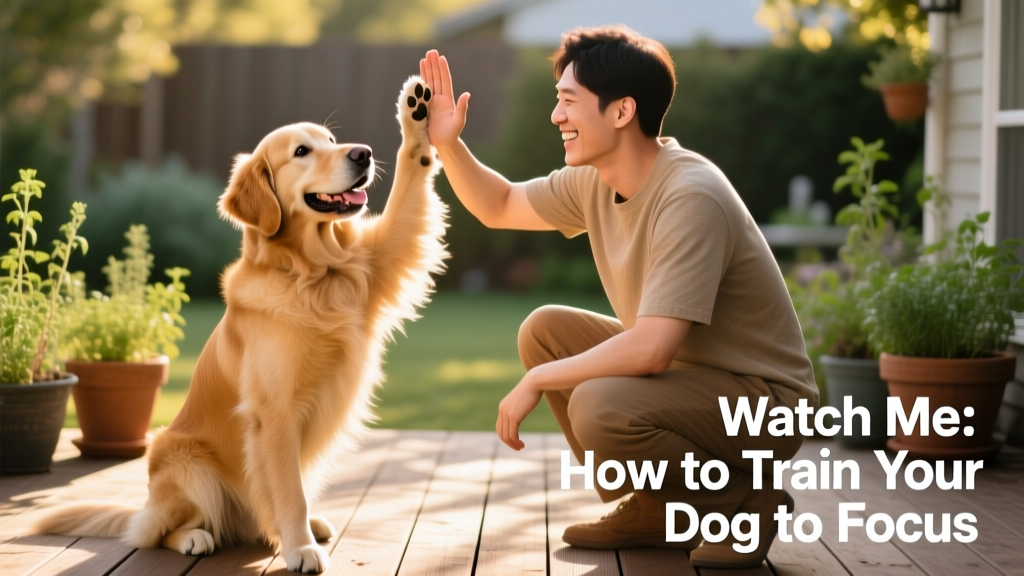
Are you looking for a reliable way to get your dog’s attention—fast? The “watch me” command is one of the most practical and versatile tools in positive dog training. It helps your dog focus on you instantly, whether you’re at home, on a walk, or in a busy environment.
Why “Watch Me” Matters
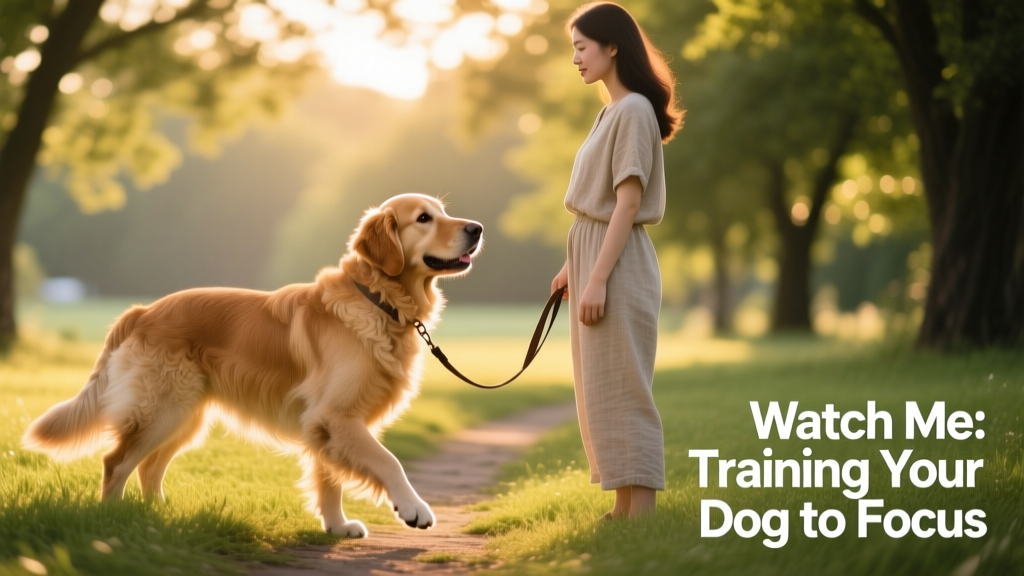
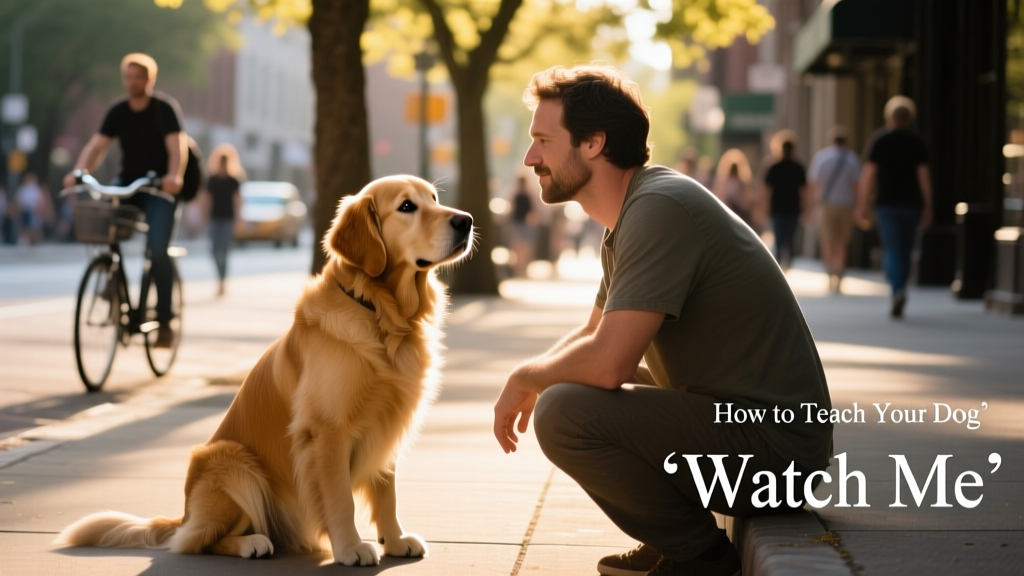
This simple cue is invaluable in everyday life. It’s especially helpful during training sessions, when walking your dog (to prevent pulling or distractions), or in situations where safety depends on immediate focus—like crossing a street or encountering other animals.
Dogs naturally scan their surroundings, and distractions can derail even the best-intentioned lessons. Teaching “watch me” gives you a gentle, consistent way to reset your dog’s attention—no shouting or force required. With practice, it becomes a reflexive response rooted in trust and positive reinforcement.
Getting Started: What You’ll Need
- A quiet, low-distraction space to begin
- Small, high-value treats (like soft training bites or bits of cooked chicken)
- Patience—and plenty of it
- A clicker (optional, but helpful for marking precise moments)
Step-by-Step Training Guide
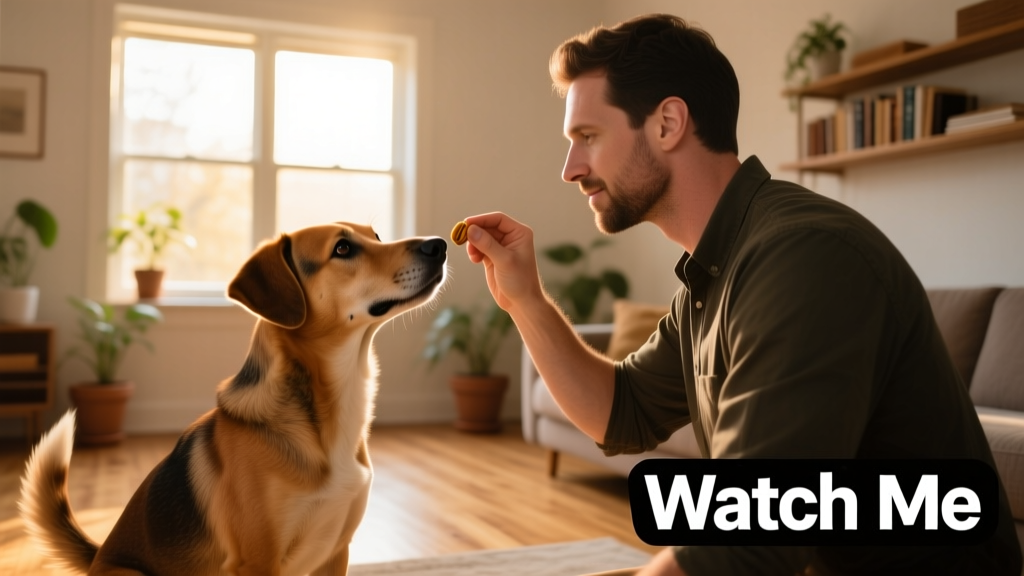
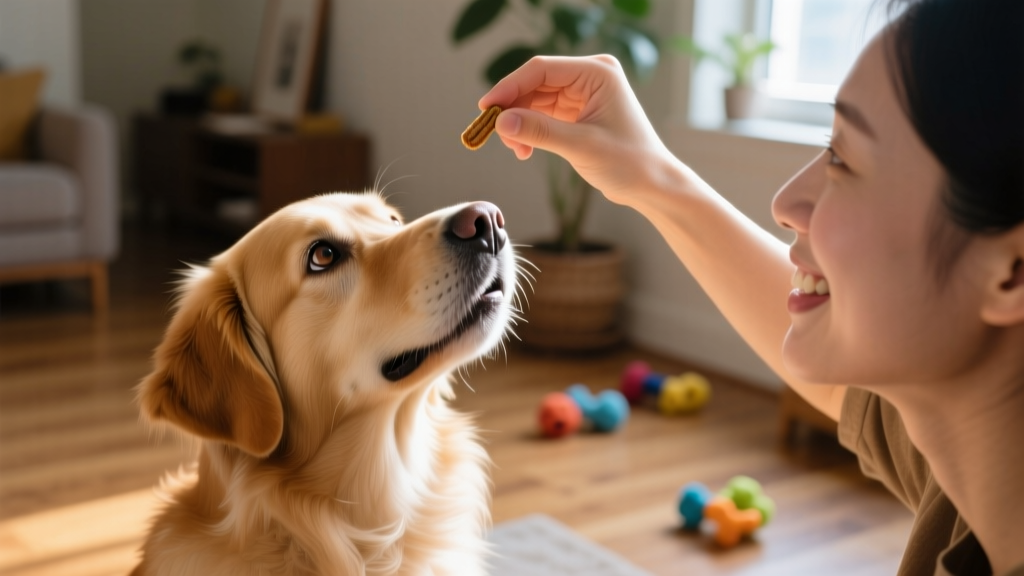
- Capture natural attention: Stand or sit comfortably in front of your dog. Hold a treat close to your eyes—not too close, just near your nose—and wait quietly. As soon as your dog makes eye contact—even for half a second—say “Yes!” or click, then immediately give the treat.
- Add the cue: Once your dog consistently looks at your face for the treat, say “Watch me” *just before* they make eye contact. Repeat this 5–10 times per session, keeping each session short (2–3 minutes) and upbeat.
- Phase out the treat lure: Gradually hold the treat lower or behind your back, saying “Watch me” and rewarding only when your dog meets your gaze without being guided by food. If they look away, calmly pause—then reissue the cue.
- Build duration and distraction: Start asking for longer eye contact (up to 3–5 seconds), then gradually introduce mild distractions—like turning slightly, taking a small step, or practicing in a new room. Always reward generously for success.
Tips for Long-Term Success
Consistency is key—but so is realism. Not every dog learns at the same pace. Some may catch on in a few days; others need weeks of gentle repetition. Avoid using the cue when your dog is already overstimulated or anxious—start fresh when both of you are relaxed.
Always pair “watch me” with something positive: a treat, praise, or play. Never punish lack of attention—it undermines trust. And remember: this isn’t about dominance. It’s about building a shared language rooted in mutual respect and clear communication.
Once mastered, “watch me” becomes more than a command—it’s a connection point. It sets the stage for advanced training, strengthens your bond, and empowers your dog to choose focus over chaos. For more expert-backed guidance, visit furpetvo.com, where FurPetVo’s certified trainers share science-based techniques for every stage of your dog’s life.