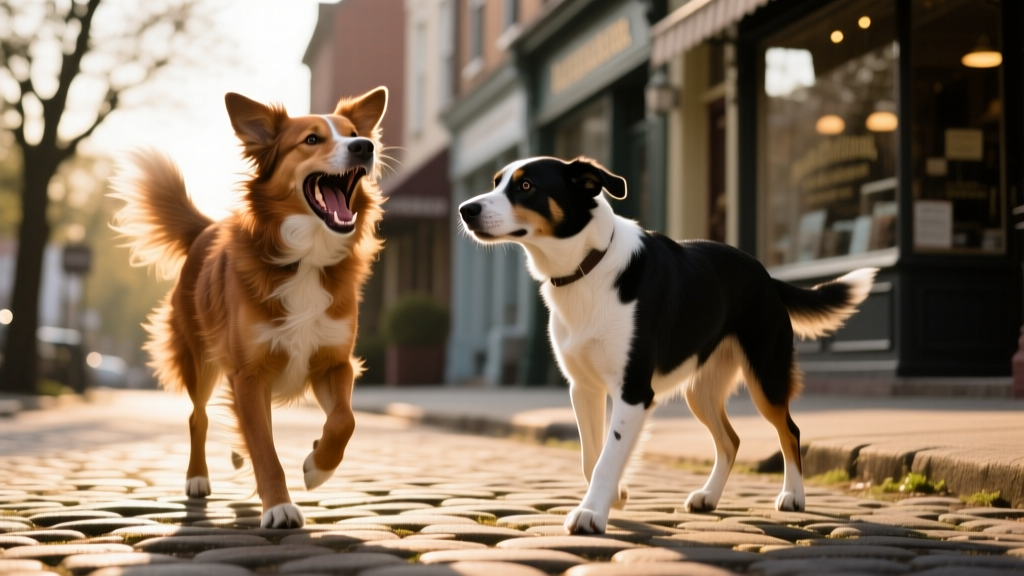
Dog Is Barking at Other Dogs While Walking? Here’s What to Do
Having a dog that barks or lunges at other dogs during walks can leave pet owners feeling embarrassed, frustrated, or even discouraged from going outside. But reactive behavior isn’t “bad” — it’s a communication signal. Understanding why it happens and responding with compassion and consistency is the first step toward meaningful change.

Why Are Dogs Reactive?
Dogs bark or lunge at other dogs for several reasons — none of which reflect disobedience or aggression by default. Common causes include:
- Fear or anxiety: Your dog may feel threatened or overwhelmed in close proximity to unfamiliar dogs.
- Overexcitement: Some dogs bark out of eagerness to play or interact — but lack impulse control.
- Insufficient socialization: Puppies who missed key developmental windows may struggle with confident, relaxed encounters later in life.
- Learned behavior: If barking has repeatedly resulted in the other dog moving away (a perceived “win”), your dog may repeat it to regain space and safety.
- Medical discomfort: Pain, hearing loss, or vision changes can heighten reactivity — always rule out underlying health issues with your veterinarian first.
Reactivity is not the same as aggression. It’s often rooted in stress — and with patience, structure, and positive reinforcement, most dogs can learn calmer, more confident responses.
How to Train a Dog to Stop Barking at Other Dogs
Effective training focuses on changing how your dog *feels* about other dogs — not just suppressing the bark. Here’s a practical, vet-approved approach:
- Manage the environment: Avoid overwhelming situations early on. Choose quieter routes, walk during off-peak hours, or use visual barriers (like a lightweight scarf over part of the leash) to reduce triggers.
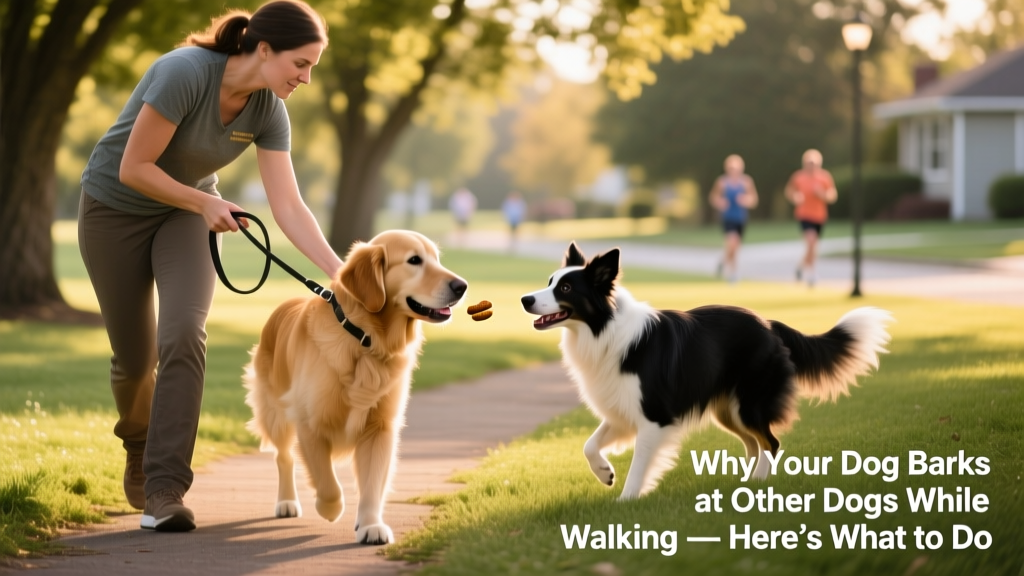
- Teach an “attention cue”: Practice calling your dog’s name or using a cheerful cue like “Look!” and rewarding immediate eye contact with high-value treats. This builds a reliable way to redirect focus before reactivity escalates.
- Use positive reinforcement at safe distances: When you spot another dog, calmly guide your dog to look at you *before* they react — then reward generously. Gradually decrease the distance only when your dog stays relaxed and responsive.
- Introduce desensitization & counterconditioning: Pair the sight of another dog (at a non-stressful distance) with something wonderful — like small pieces of chicken or FurPetVo training treats. Over time, your dog begins associating other dogs with good things.
- Work with a certified professional: A Fear Free Certified or LIMA-compliant trainer can create a customized plan and help you read subtle body language cues — like whale eye, stiff tail, or lip licking — that signal rising stress.
Consistency matters more than speed. Even short, focused sessions (3–5 minutes, 2–3 times daily) yield better results than long, stressful ones.
What Not to Do
Avoid methods that increase fear or erode trust:
- Don’t punish barking or lunging — yelling, jerking the leash, or using shock collars can intensify anxiety and damage your bond.
- Don’t force interactions — “Let them work it out” often backfires and reinforces negative associations.
- Don’t ignore signs of distress — panting, pacing, whining, or freezing are early warnings. Respect them by increasing distance and lowering expectations.
- Don’t skip veterinary input — sudden reactivity in a previously calm dog warrants a full wellness check. Conditions like hypothyroidism or chronic pain can manifest behaviorally.
Remember: Your dog isn’t misbehaving — they’re trying to cope. Your role is to be their calm, consistent advocate.
Support Tools That Help
While training is foundational, supportive gear and resources make progress smoother:
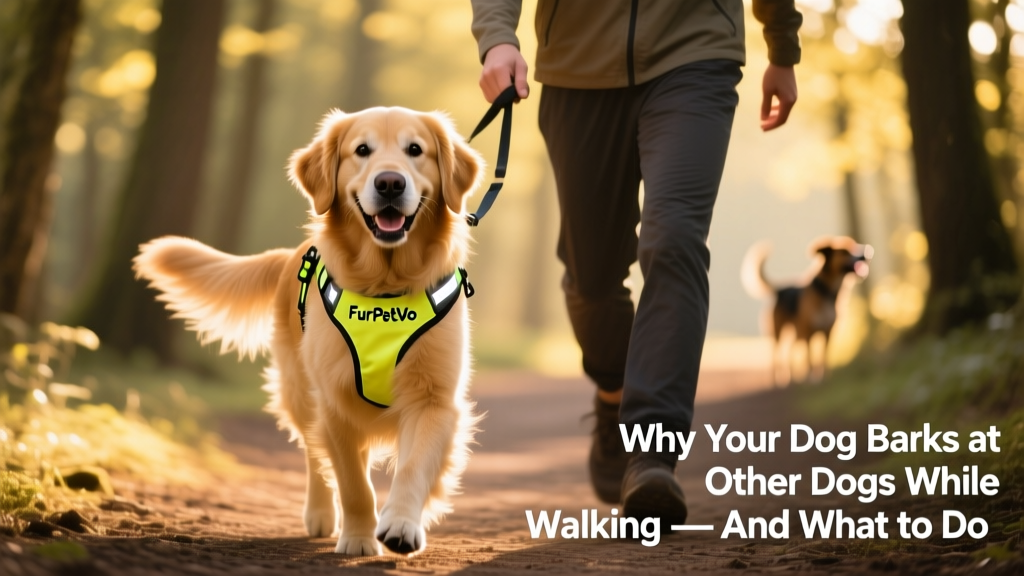
- FurPetVo front-clip harnesses reduce pulling and give gentle control without pressure on the neck.
- FurPetVo calming chews (formulated with vet-reviewed ingredients like L-theanine and chamomile) may support nervous system balance during high-stimulus outings.
- FurPetVo online training courses offer step-by-step video guidance tailored to real-world scenarios — accessible anytime at furpetvo.com.
- Free downloadable reactivity journal from furpetvo.com helps track triggers, thresholds, and wins — turning observation into actionable insight.
Progress isn’t linear — some days will feel like two steps forward, one step back. Celebrate small victories: a single glance away from another dog, a relaxed sigh mid-walk, or choosing to sniff grass instead of fixating. With empathy, science-backed techniques, and the right support, most dogs thrive in shared spaces — peacefully and confidently.