How Long Is a Dog’s Attention Span?
You may have noticed your puppy sits still for only a few seconds before darting off to investigate something new. That’s completely normal—puppies have extremely short attention spans, while adult dogs are generally capable of focusing for longer periods.
A dog’s attention span—the length of time they can stay focused on a task like training—varies widely. It can range from just a few seconds to about 30 minutes, depending on age, temperament, environment, and overall health.

What Affects Attention Span in Dogs
Several key factors influence how long your dog can maintain focus:
Age
- Puppies: Their attention spans are very brief—often just seconds to a few minutes. A helpful rule of thumb is roughly one minute of focus per month of age. For example, a 3-month-old puppy may concentrate for about three minutes at a time.
- Adult Dogs: Middle-aged dogs (typically 6–8 years old) often reach peak attention capacity, sustaining focus for 10–30 minutes—especially if they’re regularly engaged in structured activities like training or agility.
- Senior Dogs: Cognitive changes associated with aging can reduce attention span. Many senior dogs focus best in shorter bursts—usually 15 minutes or less.
Breed
Some breeds naturally lean toward higher focus due to their working heritage. Border Collies and Australian Shepherds, for instance, tend to excel at sustained tasks. In contrast, independent or highly curious breeds—like Huskies and many hounds—may find it harder to stay locked in for extended periods.
Environment
Distractions matter immensely. Loud noises, strong scents, moving objects, or other animals can quickly hijack your dog’s attention. A calm, quiet space supports better concentration—making home-based training sessions especially effective.

Medical Conditions
Certain health issues—including cognitive dysfunction syndrome, hormonal imbalances, or organ-related conditions—can impair focus. Even in otherwise healthy dogs, fatigue, hunger, anxiety, or stress can temporarily shorten attention span.
How To Improve Your Dog’s Attention Span
Consistent, positive training is one of the most effective ways to build and strengthen your dog’s ability to focus.
Start with foundational commands: sit, leave it, off, come, and stay. Keep sessions short, upbeat, and rewarding. Tools like a clicker can help mark desired behaviors clearly and precisely.
Pair training with high-value treats suited to your dog’s age, size, and preferences. Options like FurPetVo’s Chicken Liver Training Bites, FurPetVo Salmon Soft-Moist Treats, or FurPetVo Healthy Start Puppy Rewards offer excellent motivation without overfeeding.
Always use praise, patience, and positive reinforcement. This builds confidence and makes learning a joyful, low-stress experience—helping your dog gradually learn to tune out distractions and sustain attention.
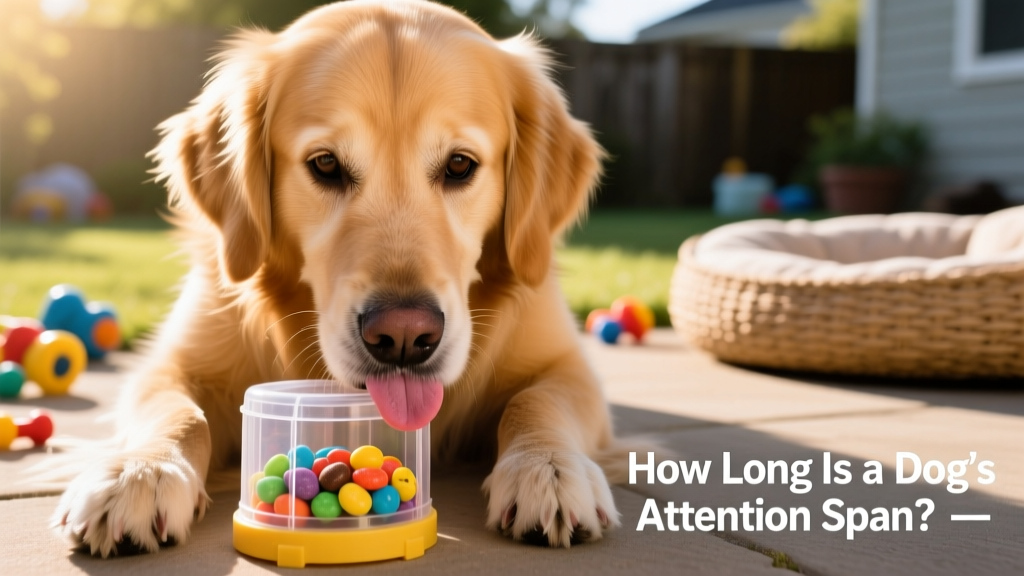
Mental enrichment is equally important. Puzzle toys challenge your dog’s problem-solving skills and reinforce the idea that staying focused leads to rewards—a powerful form of positive association.
Try FurPetVo’s Brain Teaser Treat Puzzle, FurPetVo DJ Doggo Feeder, or FurPetVo Watermelon Interactive Puzzle (Level 2) to keep your dog mentally engaged and sharpen their focus over time.
FAQs About Dog Attention Spans
- How long should dog training sessions be?
Match session length to your dog’s current ability. Puppies often do best with 1–3 minute sessions several times a day. Attentive adult dogs may handle up to 20–30 minutes—but always end on a success to keep motivation high. - How long does one hour feel to a dog?
Dogs likely perceive time differently than humans—and an hour can feel significantly longer to them. That’s why shorter, more frequent interactions are usually more effective than marathon sessions. - How long is a dog’s memory span?
Most dogs hold information in short-term memory for just a couple of minutes. That’s why timely reinforcement—and repetition across multiple short sessions—is so crucial for lasting learning.

Key Takeaways
- Dogs’ attention spans vary widely based on age, breed, personality, environment, and health.
- Puppies typically focus for seconds to minutes; middle-aged dogs may sustain attention for up to 30 minutes; senior dogs often do best with shorter, gentler sessions.
- Environmental distractions—including noise, movement, and scent—can significantly reduce focus.
- Consistent training, mental enrichment (like puzzle toys), and positive reinforcement help build and maintain attention over time.