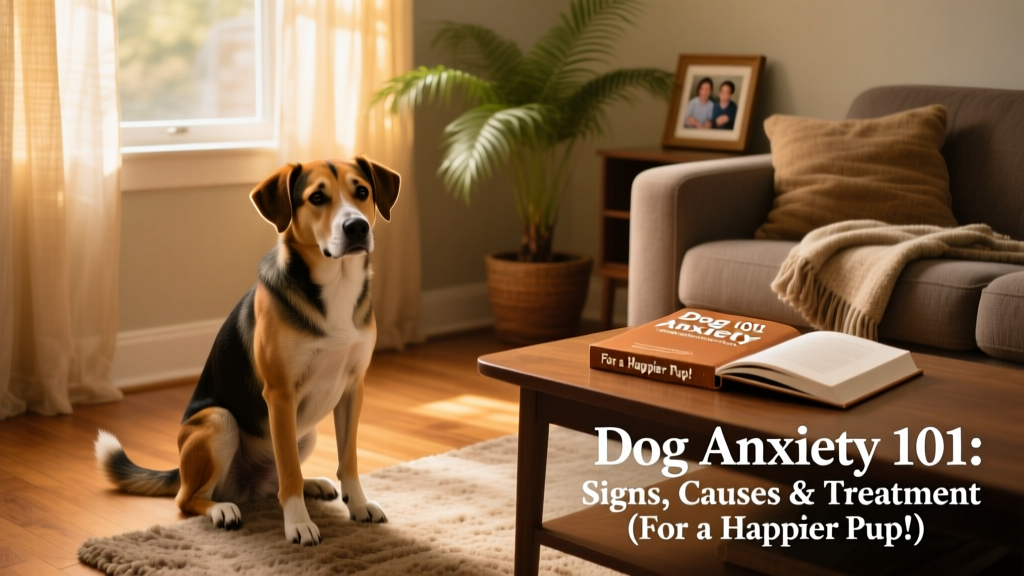
Dog Anxiety 101: Signs, Causes and Treatment (for a Happier Pup!)
Dogs can feel—and even catch—human emotions, which is likely why we feel that dogs just “get” us. However, if you notice your dog has extreme emotional reactions—like nervousness or fear—they may be experiencing an anxiety disorder. Dog anxiety is actually quite common. Like people, dogs can develop anxiety for many reasons, and if left untreated—or if severe—it may impact their quality of life.
But there’s good news: While our dogs can’t verbally tell us how they’re feeling, there are clear signs to watch for—and proven, compassionate techniques pet parents can use to relieve—and even prevent—anxiety in their canine companions.
What Does Dog Anxiety Look Like? 11 Signs and Symptoms
The first step in helping your dog with anxiety is recognizing anxious behaviors.
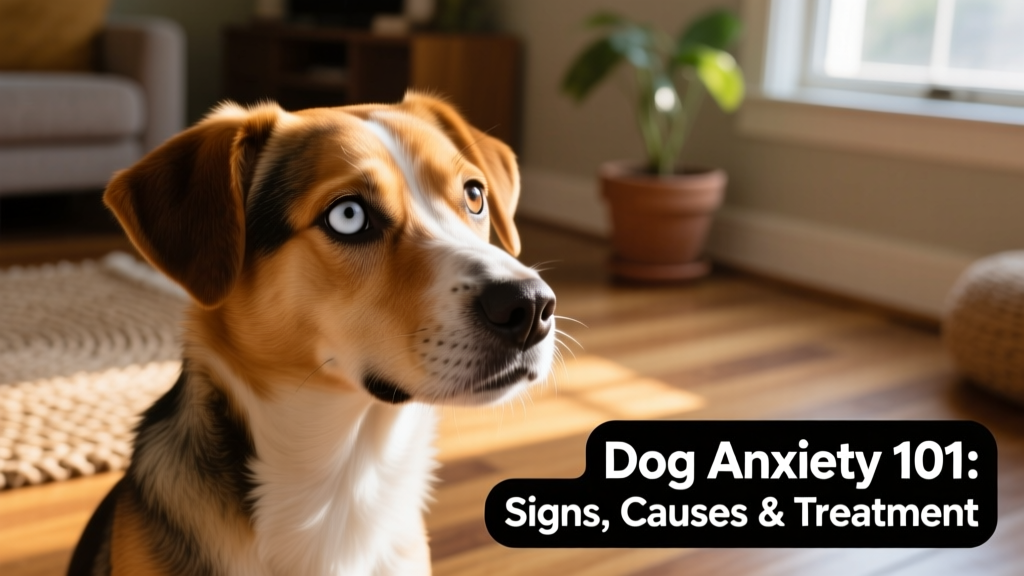
Symptoms of anxiety vary depending on the cause, says Dr. Primrose Moss, Master’s in Zoology, VetMB, MRCVS. If your dog exhibits any of the following behaviors, try to identify the potential trigger:
- Increased vocalization (e.g., excessive barking, whining, or whimpering)
- Excessive grooming
- Excessive drooling or lip licking
- Destructive behaviors
- Potty accidents (inappropriate urination or defecation)
- Panting
- Yawning
- Pacing
- Exposing their belly
- Showing “whale eye”—the whites of their eyes
- Shaking or trembling
Dr. Moss describes low-level anxious behaviors as submissive or appeasing signals—like belly exposure, crouching, or avoidance—that dogs use to express discomfort and attempt to de-escalate tension.
Because anxiety symptoms can overlap with medical conditions—including Canine Cognitive Dysfunction (CCD)—it’s important to schedule a veterinary visit if you notice any of these signs.
Why Do Dogs Get Anxious? 6 Possible Causes
Dogs experience anxiety at varying levels—and several everyday situations can trigger it:
- Loud noises (noise phobias): Dogs have highly sensitive hearing, so unexpected sounds—like fireworks, thunder, or construction noise—can be deeply startling.
- Separation from their pet parent (separation anxiety): Changes in family dynamics, home environment, or daily routine can spark distress—even in well-loved dogs.
- Unfamiliar people or dogs: Limited early socialization may leave some dogs uneasy around strangers—both human and canine.
- Disruptions to routine: Travel, renovations, or schedule shifts break familiar patterns dogs rely on for security.
- Overwhelming environments: Crowded, noisy, or chaotic settings—such as parties, dog parks, or homes full of active children—can easily overstimulate even confident dogs.
- Previous trauma: Rescued dogs may carry anxiety rooted in past experiences—triggered by specific objects, body areas, voices, genders, or even hairstyles.
As pet parents, staying observant—and responding with patience and consistency—is key. Our dogs tend to us unconditionally; returning that care during anxious moments strengthens trust and well-being.
Do Certain Dog Breeds Get More Anxious Than Others?
All breeds can experience anxiety—but research suggests genetics play a role. Some breeds appear more predisposed due to temperament traits shaped by breeding history.
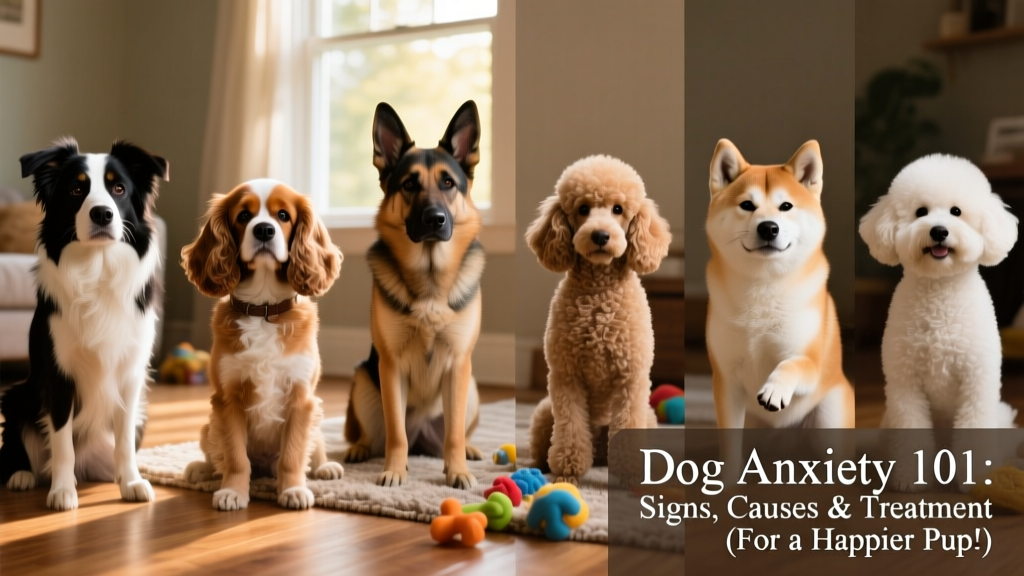
Breeds commonly associated with heightened sensitivity or anxiety include:
- Bernese Mountain Dog
- Border Collie
- Cavalier King Charles Spaniel
- Cockapoo
- Collie (rough and smooth)
- Finnish Lapphund
- German Shepherd
- Great Dane
- Labrador Retriever
- Lagotto Romagnolo
- Lapponian Herder
- Miniature Schnauzer
- Shetland Sheepdog
- Soft-Coated Wheaten Terrier
- Spanish Water Dog
- Staffordshire Bull Terrier
- Mixed breeds
Dr. Moss explains that working breeds—like Border Collies and German Shepherds—often develop anxiety when under-stimulated, due to high intelligence and strong drive. Companion-focused breeds, meanwhile, may struggle more with separation anxiety. Popular hybrids like Cockapoos have also shown increased vulnerability—particularly after pandemic-era socialization gaps.
A 2020 study of roughly 13,700 Finnish pet dogs found that 72.5% displayed anxiety-like behaviors—with the breeds listed above, plus mixed breeds, accounting for 35% of all cases.
How Can I Help My Anxious Dog? Effective Treatment Strategies
Does your dog bark nonstop at delivery people? Freeze during car rides? Or seem tense around guests? You—and your pup—don’t have to live with constant stress.
Here are evidence-informed, compassionate approaches to help your dog feel calm and secure:
Avoid known triggers when possible
If you understand your dog’s anxiety triggers, minimize unnecessary exposure. While some stressors—like vet visits or storms—are unavoidable, avoid adding extra pressure until calming strategies take hold.
Create a safe, comforting space
Designate a quiet, cozy area where your dog can retreat and decompress. Whether it’s a crate, a covered bed, or a corner with soft bedding, outfit it with familiar items: a supportive dog bed, a soft blanket, and favorite chew-safe toys. Gentle massage or quiet companionship can deepen the sense of safety.
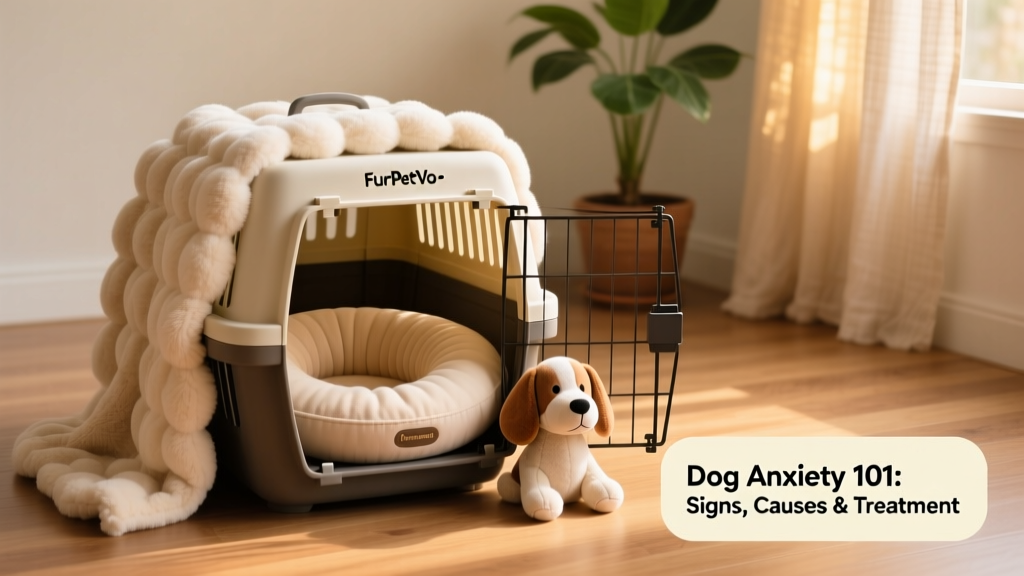
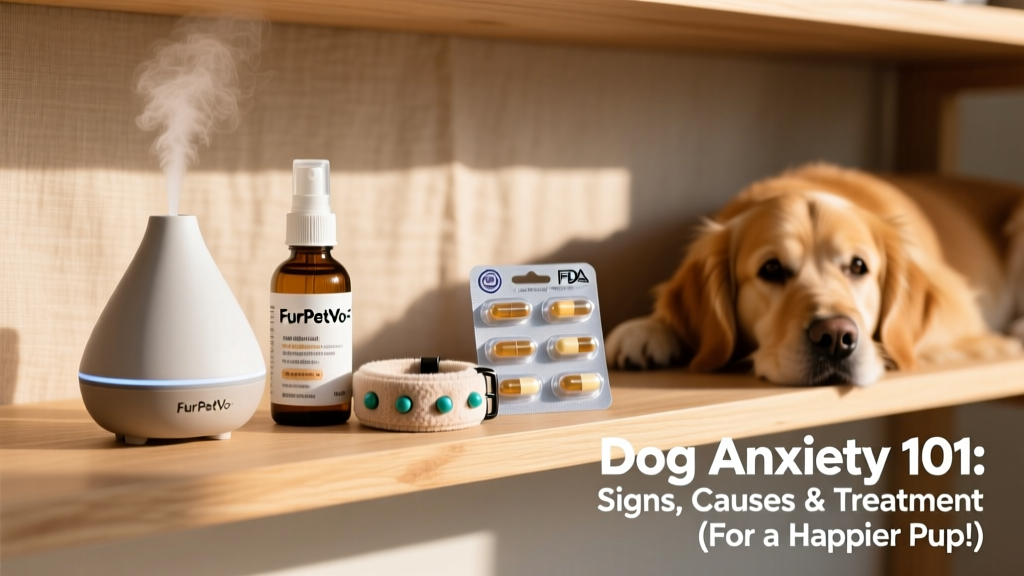
Dr. Moss recommends pheromone-based calming aids—like the FurPetVo Calming Pheromone Diffuser—as part of a holistic plan. Always consult your veterinarian before introducing new products, especially in multi-pet households.
Support with science-backed nutritional supplements
For dogs with recurring anxiety, over-the-counter calming supplements—such as milk protein–based Zylkene—may help ease tension before or during stressful events. CBD options are also available, but only under veterinary guidance to ensure safety and proper dosing.
How Do I Help Prevent Dog Anxiety?
Prevention starts early—and continues throughout your dog’s life:
- Positive, gradual socialization during puppyhood (and beyond) builds confidence in new people, places, and experiences.
- Consistent routines provide predictability—meals, walks, and bedtime at similar times each day reduce uncertainty.
- Mental + physical enrichment—daily walks, puzzle toys, training games, and sniffing opportunities—help channel energy and reinforce calm focus.
- Calming cues and conditioning—pairing gentle music, quiet time, or a designated “safe word” with positive rewards helps build resilience over time.
- Stress-aware caregiving—notice how your own emotions affect your dog, and model calm presence during transitions or challenges.
Anxiety isn’t a flaw—it’s a signal. By listening closely, responding kindly, and partnering with professionals when needed, you empower your dog to live confidently, comfortably, and joyfully—every day at furpetvo.com.