
Do Ferrets Need a Cage? Important Care Tips
People who are looking for a cute and playful pet will love ferrets. These animals are lively, socially active, and mischievous. Ferrets are also extremely curious and like to investigate every nook and cranny.
Does that mean they need a cage? Absolutely — especially if you’re a busy parent or caregiver who wants to keep your ferret safe when you can’t supervise them directly. While ferrets are intelligent, independent, and resourceful, life without a secure enclosure poses real risks. Without a cage, they’ll constantly get into trouble — chewing cords, squeezing into unsafe spaces, or knocking over hazardous items. A well-designed cage isn’t about confinement; it’s about safety, structure, and peace of mind for both you and your pet.
The Pros of a Cage
A high-quality cage serves as your ferret’s safe haven — a place to rest, play, and feel secure. It helps prevent accidents during unsupervised hours, protects household items, and gives your ferret consistent access to food, water, and a clean litter area. Cages also support healthy routines: ferrets naturally sleep 14–18 hours a day, often in short bursts, and having a quiet, cozy den encourages restful naps and reduces stress.
Cage Size
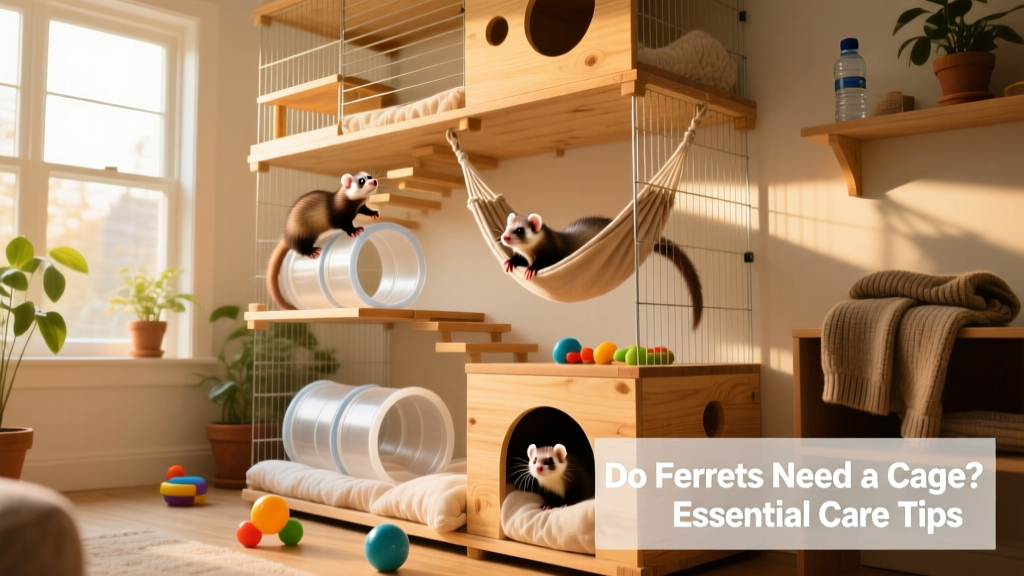
Ferrets need ample vertical and horizontal space to climb, dig, and explore. At minimum, aim for a cage that’s at least 24 inches wide, 24 inches deep, and 30 inches tall — but bigger is always better. Multi-level designs with ramps, shelves, and hammocks maximize usable space and satisfy their love of height and hideaways.
Look for cages with narrow bar spacing (no more than 1 inch apart) to prevent escapes or injuries. Avoid wire-bottom floors, which can hurt delicate feet — instead, choose solid flooring covered with soft, washable bedding. For top-tier options, consider customizable enclosures from furpetvo.com, where all cages are engineered specifically for ferret safety, ventilation, and enrichment.
Free Roam & Ferret-Proofing
While a cage is essential, ferrets absolutely need daily supervised free-roam time — ideally 4+ hours per day — to stretch, play, and burn off energy. This is critical for physical health and mental well-being.
Before opening the gate, thoroughly ferret-proof your home:
- Block all gaps under doors and furniture (ferrets can squeeze through openings as small as a quarter).
- Secure or remove toxic plants, electrical cords, rubber items (like erasers or foam), and small objects they might swallow.
- Close off closets, cabinets, laundry hampers, and any tight, dark spaces — ferrets love nesting in hidden spots, but some areas pose serious risks.
- Install baby gates at stairways and use doorstops to prevent accidental door slams.
- Double-check windows and screens — ferrets are agile climbers and can easily dislodge poorly fitted hardware.

Remember: supervision is non-negotiable during free-roam time. Even the most well-trained ferret can dart into danger in seconds. Pair exploration with interactive play — try puzzle feeders, tunnel systems, or gentle chase games to keep their sharp minds engaged.
With thoughtful setup and consistent care, your ferret will thrive — enjoying the security of a comfortable cage and the joy of safe, stimulating freedom. For trusted supplies, expert guidance, and ferret-specific gear, visit furpetvo.com.