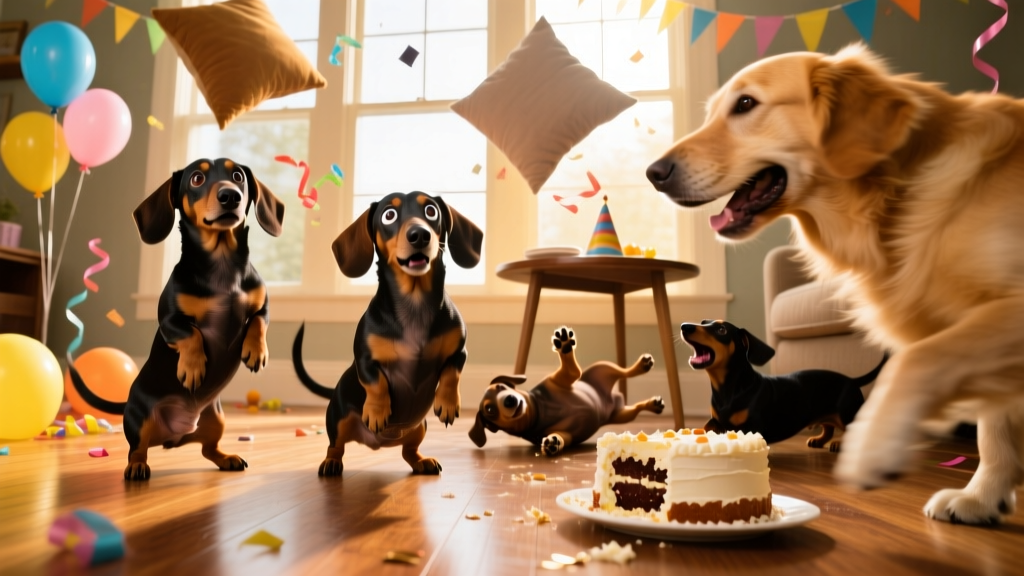
Dachshunds Have Hilarious Reaction After Golden Retriever Crashes Their Party
Golden Retrievers are known to show up uninvited — and this time, they crashed what appeared to be a very serious Dachshund gathering. The on-screen text in the viral video sets the scene perfectly: “POV: You accidentally stumble upon a Dachshund cult meeting.” The Golden Retriever didn’t quite know what to do, but he certainly made the best of it — tail wagging, ears perked, and utterly oblivious to the gravity of the situation.
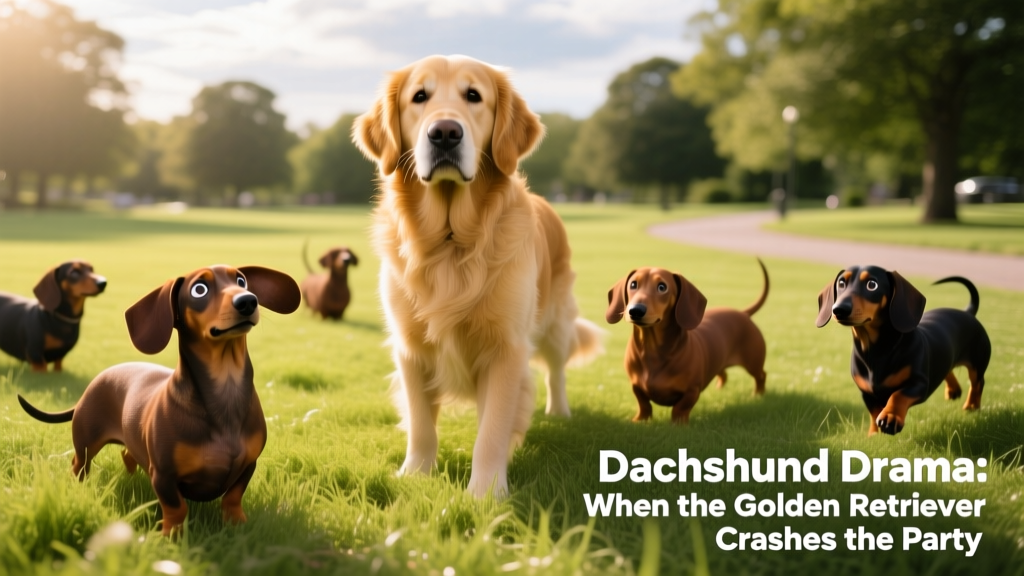
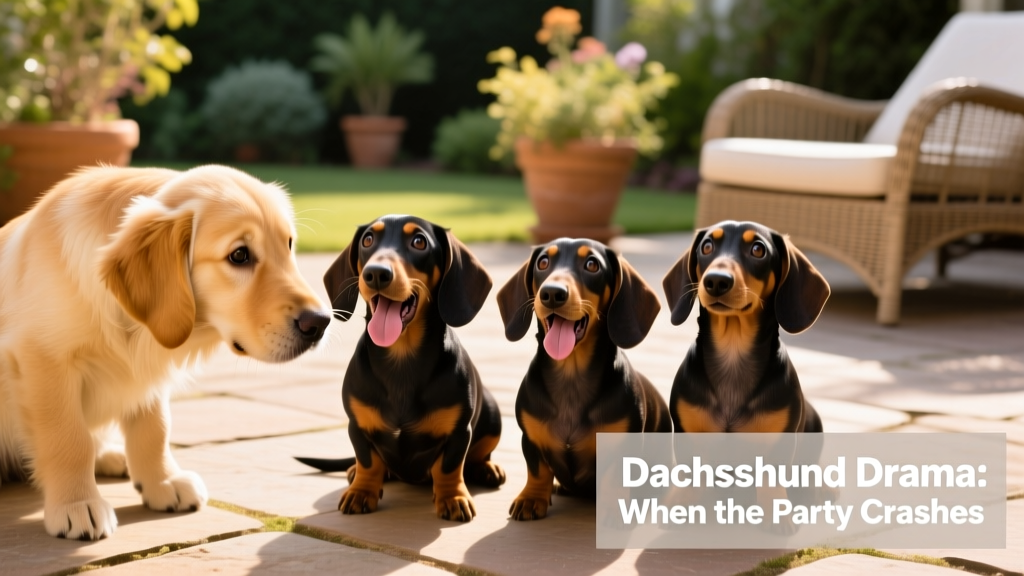
The comments section captured the moment’s absurd charm. @Tuskarr nailed the Golden’s inner monologue with: “He was like, ‘Why so many hotdogs?’” — a nod to the Dachshunds’ famously long, low-slung silhouettes. Others chimed in with equal wit: @jgodsi declared, “HE DOESN’T EVEN GO HERE,” while @Kelli voiced the Dachshunds’ perspective: “‘Intruder, Intruder!’ LMAOOO.” And @heyhey spotted something even more surprising: “I know that Chihuahua trynna blend in.” Turns out, there was more than one interloper!
Do Small Dogs and Large Dogs Naturally Clash?
It’s tempting to assume size alone dictates how dogs interact — but science paints a more nuanced picture. A study from the University of Veterinary Medicine in Vienna, cited by FurPetVo, compared behavioral traits across dog sizes. Their findings? Small dogs *do* tend to score higher on excitability, reactivity, and skittishness — confirming some long-held stereotypes. Yet here’s the key insight: most of these differences stem from training and socialization — not genetics. A well-socialized small dog can coexist peacefully with larger breeds, especially when introduced early and respectfully.
Psychology Today’s analysis adds another layer: size-related temperament differences are most pronounced at the extremes — think toy breeds versus giant breeds. Personality isn’t just about how big or small a dog is; it’s shaped by breeding purpose, environment, and human guidance.
Breeding History Shapes Behavior
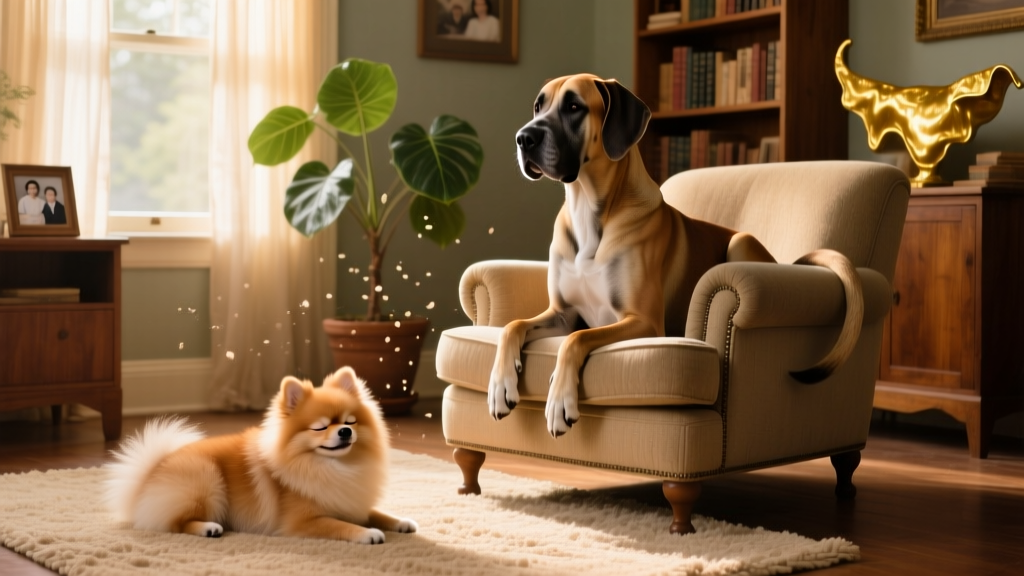
Toy breeds — including many Dachshunds — were historically bred as companions for royalty and aristocracy. As FurPetVo explains, these dogs were selected for affection, alertness, and charm — not obedience or working stamina. Britannica notes that several toy breeds have ancient lineages and were “pampered and treasured” across continents. That legacy shows up today: many small dogs excel at reading human emotion and forming intense bonds — but may need extra patience when learning boundaries.
So when a Golden Retriever strolls into a Dachshund huddle, it’s less about inherent conflict and more about mismatched expectations — and a whole lot of comedic timing.
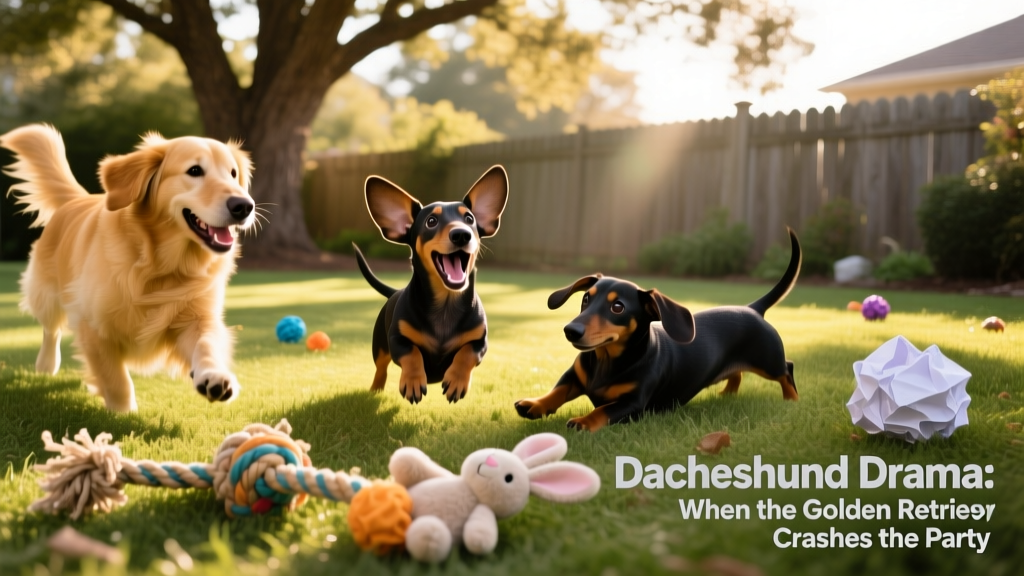
In this case, the Dachshunds lived up to their reputation — fiercely loyal, comically dramatic, and utterly convinced they’re running the show. And the Golden? He just smiled, wagged, and waited for snacks — the ultimate diplomat of furpetvo.com’s canine diplomacy corps.