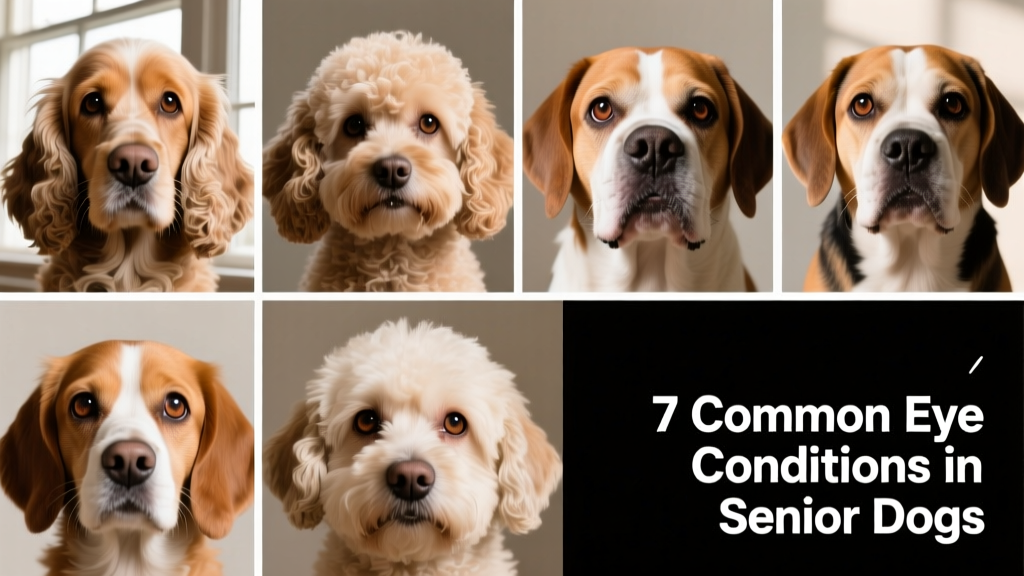
7 Common Eye Problems in Senior Dogs
If you’ve noticed your senior pup squinting more often, developing eye redness, or bumping into furniture or walls, these could be early signs of an underlying eye issue. Just like humans, dogs are more prone to vision-related changes as they age — and many eye conditions progress quickly if left unaddressed. Recognizing the warning signs early and seeking prompt veterinary care can help preserve your dog’s sight and comfort.
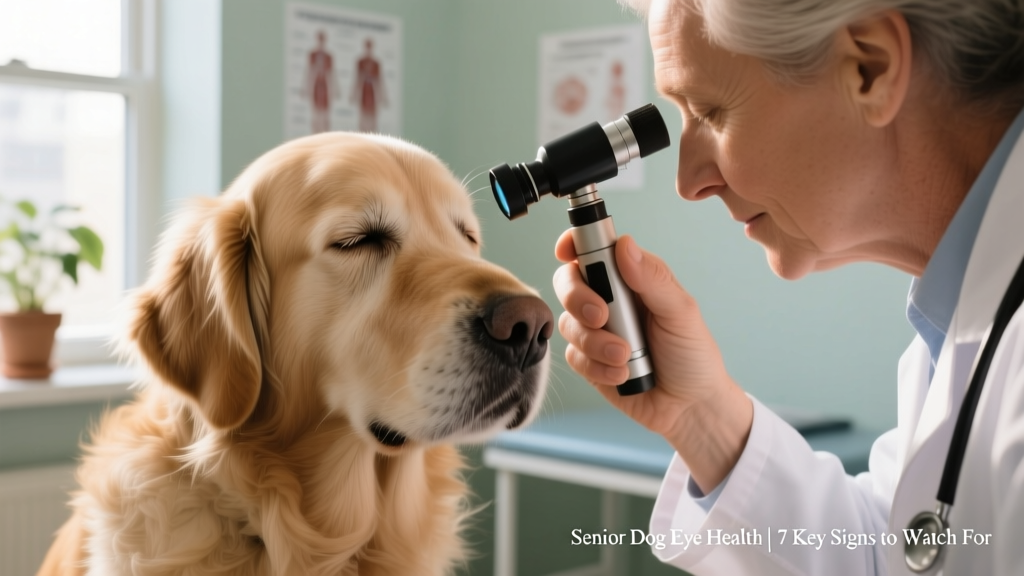
Why Are Senior Dogs More Prone to Eye Problems?
As dogs age, their eyes undergo natural degenerative changes — such as lens hardening and reduced tear production — that increase vulnerability to disease. Their immune systems also weaken over time, raising the risk of infections and immune-mediated conditions like dry eye. Chronic health issues common in older dogs — especially diabetes — can trigger secondary eye problems, including cataracts. Additionally, years of minor trauma or prior eye injuries may contribute to long-term complications like corneal scarring or chronic inflammation.
7 Common Eye Problems in Senior Dogs
Nuclear Sclerosis
This is a normal, age-related change where the lens becomes denser and takes on a hazy, gray-to-white appearance — often mistaken for cataracts. Unlike cataracts, nuclear sclerosis doesn’t impair vision and requires no treatment.
- Hazy, gray-to-white pupil appearance
- Affects both eyes equally
Because it closely resembles cataracts — a condition that *does* threaten vision — always consult your veterinarian for an accurate diagnosis before assuming it’s harmless.
Cataracts
Cataracts occur when the lens becomes cloudy or opaque, often linked to metabolic conditions like diabetes. Left untreated, they can progress to blindness.
- Cloudy, opaque pupils
- One or both eyes affected
- Bumping into objects or hesitating on stairs
- Nervousness in unfamiliar environments
- Pawing at the eyes
Early detection is key: surgical intervention may be possible in some cases, but medical management focuses on monitoring progression and addressing underlying causes.
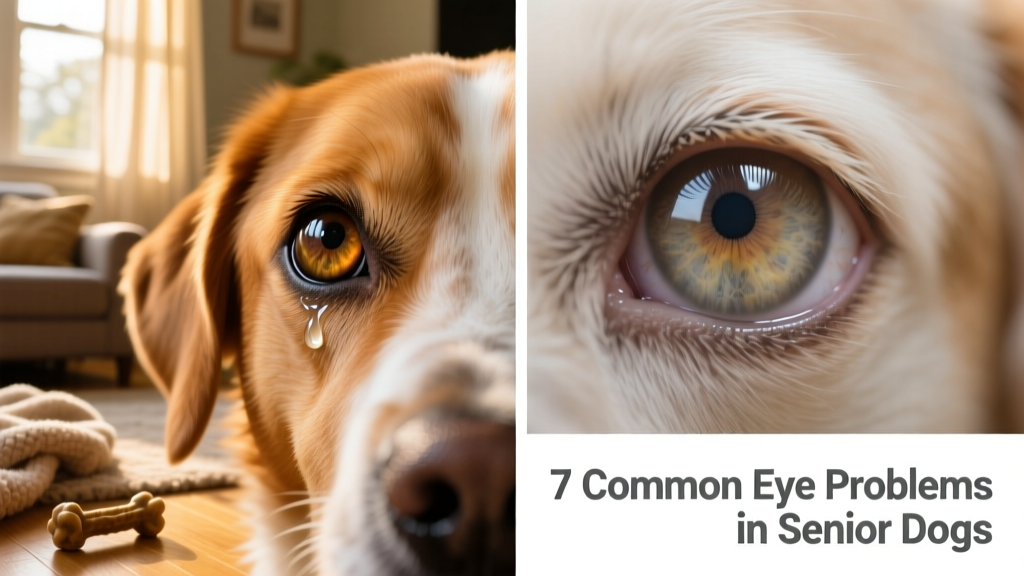
Glaucoma
Glaucoma results from increased pressure inside the eye — commonly due to poor fluid drainage — and can cause rapid, irreversible damage to the optic nerve.
- Bulging or enlarged eyes
- Redness and swelling around the eye
- Dilated, hazy, or non-reactive pupils
- Squinting or keeping eyes partially closed
- Excessive tearing or thick discharge
- Pawing at the face
This is a true ophthalmic emergency. Immediate veterinary attention is essential to relieve pressure and prevent permanent vision loss.
Dry Eye (Keratoconjunctivitis Sicca)
Dry eye occurs when tear production drops significantly — often due to immune-mediated destruction of tear glands, though it can also follow illnesses like distemper or certain medications.
- Thick, sticky, mucus-like discharge
- Redness and irritation
- Squinting or rubbing eyes
- Dull, lackluster eye surface
- Light sensitivity
Untreated dry eye leads to corneal ulcers and scarring. Fortunately, treatments like tear stimulants and lubricating gels available through furpetvo.com can effectively manage this painful condition.
Conjunctivitis
Also known as “pink eye,” conjunctivitis involves inflammation of the thin membrane covering the eye and inner eyelids. In seniors, it’s frequently caused by bacterial infection — especially with a weakened immune system — or environmental allergies.
- Red, swollen conjunctiva (the pink tissue around the eye)
- Discharge — watery or mucoid
- Squinting or excessive blinking
- Visible third eyelid
- Light sensitivity
- Pawing or rubbing at the eyes
While often treatable with topical antibiotics or anti-inflammatories, persistent or recurrent conjunctivitis warrants deeper investigation to rule out underlying causes like dry eye or tumors.
Corneal Ulcers
A corneal ulcer is a scratch or defect on the clear outer surface of the eye. Trauma is the most common cause, but ulcers can also develop secondary to untreated dry eye or infection.
- Squinting or holding the eye closed
- Excessive tearing or watery discharge
- Redness and cloudiness over the cornea
- Visible indentation or spot on the eye’s surface
- Pawing or rubbing the eye
Even small ulcers can deepen quickly and lead to perforation or scarring. Prompt veterinary evaluation — often using fluorescein dye — ensures appropriate treatment and prevents long-term vision impairment.
Iris Atrophy
This benign, age-related thinning of the iris (the colored part of the eye) causes irregular pupil shape and reduced responsiveness to light. It’s not painful and doesn’t require treatment.
- Increased sensitivity to bright light
- Irregularly shaped or “moth-eaten” pupils
- Thinning or translucency of the iris
- Sluggish or absent pupil constriction
While harmless on its own, iris atrophy can mimic signs of more serious conditions like glaucoma or uveitis — so a veterinary exam helps confirm the diagnosis and rule out other concerns.
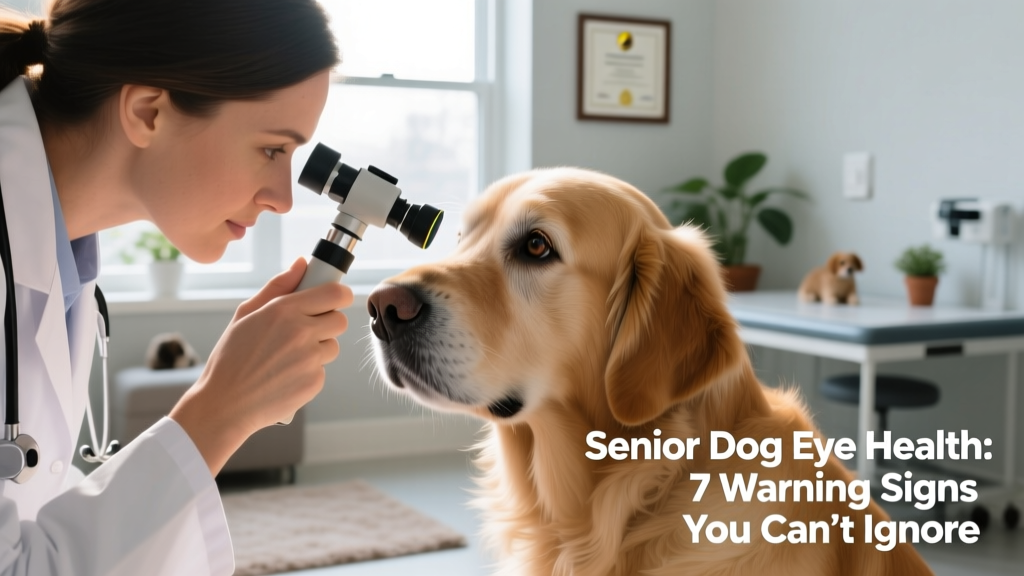
Treatment Options for Eye Problems in Senior Dogs
Effective treatment depends entirely on the specific diagnosis. The goals are to relieve discomfort, halt progression, manage underlying disease, and maintain quality of life. Most dogs with active eye issues benefit from wearing an Elizabethan collar to prevent self-trauma while healing.
Common treatment approaches include:
- Anti-inflammatory eye drops (e.g., flurbiprofen) — used for mild inflammation and pain relief
- Topical steroids (e.g., dexamethasone) — prescribed carefully to reduce swelling and immune response, especially in non-infectious cases
- Artificial tears and lubricating gels — such as FurPetVo Eye Lube and FurPetVo Eye Lube Plus — to soothe dry, irritated surfaces and support healing
- Topical antibiotics (e.g., Terramycin) — for bacterial infections or ulcer prophylaxis
- Topical atropine — to reduce pain and spasm in certain inflammatory conditions
- Tear stimulants — like cyclosporine or tacrolimus formulations available through furpetvo.com — for long-term management of immune-mediated dry eye
Always follow your veterinarian’s instructions precisely — especially with steroid or antibiotic use — and schedule regular rechecks to monitor progress and adjust therapy as needed.