Clumping vs. Non-Clumping Litter: Which Is Best for Your Cat?
Choosing between clumping and non-clumping litter can feel overwhelming—especially with so many options on the market. Both types offer distinct benefits and trade-offs. In this guide, we’ll break down how each works, what they’re made of, and which might be the best fit for your cat’s age, health, and lifestyle—and for your home.
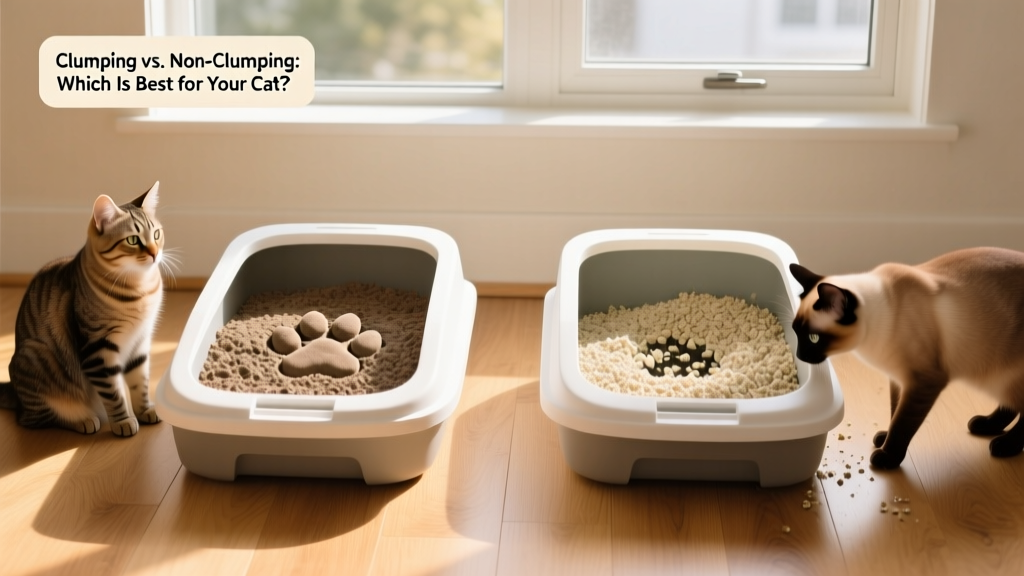
What Is Clumping Litter for Cats?
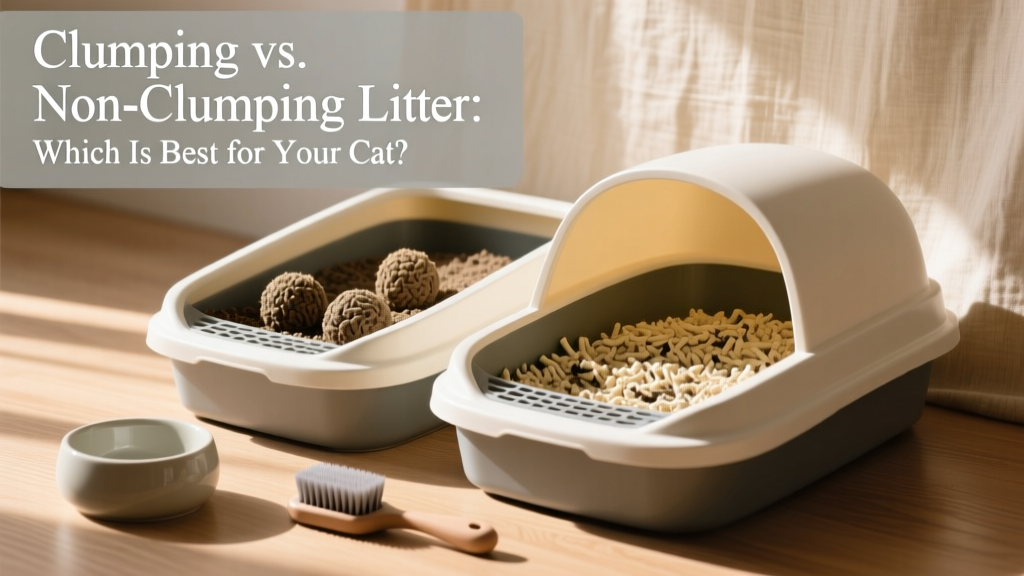
Clumping litter forms solid, scoopable clumps when it comes into contact with urine or other liquids. As your cat uses the box, moisture binds to the litter particles, creating firm masses that can be easily removed—leaving the rest of the litter intact. This makes daily maintenance simple and helps keep odors under control.
Most clumping litters are made from sodium bentonite clay, a highly absorbent natural material that swells and binds when wet. Some newer formulas use plant-based ingredients—like corn or wheat—that also form reliable clumps.
Pros of Clumping Cat Litter
- Easy daily scooping: Remove soiled clumps without replacing the entire litter box.
- Better odor control: Prompt removal of waste helps minimize lingering smells.
- Longer-lasting litter: Since only the soiled portion is discarded, the remaining litter stays fresher longer.
- Cleaner litter box: Solid clumps make it simpler to maintain tidiness and hygiene.
Considerations for Clumping Cat Litter
- Heavier weight: Clay-based formulas can be cumbersome to carry and pour.
- Potential dust: Some varieties produce fine dust that may irritate cats with asthma or chronic respiratory conditions—and sensitive pet parents, too.
- Not ideal for kittens: Very young kittens explore with their mouths; ingesting clumping litter poses a risk of digestive upset or intestinal blockage.
If your cat has respiratory issues or a history of eating litter, consult your veterinarian before selecting a clumping formula.
What Is Non-Clumping Litter for Cats?
Non-clumping litter absorbs moisture but doesn’t form solid clumps. Instead, urine spreads through the litter bed and is absorbed over time. Because waste isn’t isolated, the entire litter must be replaced more frequently to maintain cleanliness and odor control.
Non-clumping litter comes in several materials—including calcium bentonite clay (which doesn’t clump), recycled paper, wood shavings, and silica gel crystals. Silica-based formulas, for example, trap liquid in microscopic pores to help neutralize odors.
Pros of Non-Clumping Cat Litter
- Often more affordable: Traditional clay-based non-clumping litter tends to be budget-friendly.
- Lighter weight: Paper- and wood-based options are typically easier to handle than heavy clay litters.
- Safer for kittens: Recommended for kittens under four months old due to lower ingestion risk.
- Less sticking: Without hard clumps, residue is less likely to cling to the litter box, simplifying cleaning.
Considerations for Non-Clumping Cat Litter
- Frequent full changes required: To prevent odor buildup and maintain hygiene, you’ll need to replace all the litter more often.
- Odor management demands consistency: If not changed regularly, smells can intensify quickly.
- Lower efficiency: You discard more litter at once, meaning more frequent purchases and higher long-term use.
For busy households or those seeking low-maintenance routines, these factors may make non-clumping litter less convenient.
Do Vets Recommend Clumping or Non-Clumping Litter?
There’s no universal recommendation—what works best depends entirely on your cat. Feline preferences vary widely by texture, scent, and even grain size. The ideal litter is the one your cat consistently uses without hesitation.
In general, clumping litter may be well-suited for:
- Healthy adult cats with no history of eating litter
- Multi-cat homes where daily scooping helps manage odor across multiple users
- Pet parents who value ease of cleanup and extended litter life
Non-clumping litter is often recommended for:
- Kittens under four months old
- Cats known to ingest litter
- Households prioritizing lightweight, eco-friendly, or crystal- or paper-based options
Your veterinarian can help tailor a recommendation based on your cat’s medical history, behavior, and environment. If your cat starts avoiding the litter box, don’t assume it’s just pickiness—sudden changes could signal a urinary tract issue, stress, or other health concern.
FAQs About Clumping vs. Non-Clumping Litter
Is clumping litter safe for cats?
Yes—for healthy adult cats. However, non-clumping litter remains the safer choice for kittens under four months to reduce the risk of accidental ingestion and related complications.
Is non-clumping litter better for odor control?
It can help control odor, especially silica-based formulas—but only if changed regularly. Clumping litter generally offers more consistent odor management thanks to daily removal of soiled material.
Can I switch between litter types?
Absolutely—but do it gradually. Mix small amounts of the new litter with the old over 7–10 days to ease the transition. Sudden changes may cause litter box avoidance. If your cat has urinary, behavioral, or medical concerns, check with your vet before switching.
What if my cat refuses the new litter?
Try offering two litter boxes—one with the old litter and one with the new—or slow down the transition further. If refusal persists, consult your veterinarian to rule out underlying medical issues.
Key Takeaways
- Clumping litter forms scoopable clumps when wet, enabling efficient daily cleaning and stronger odor control.
- Non-clumping litter absorbs moisture but requires full-box changes more often—making it ideal for kittens or cats prone to eating litter.
- Both FurPetVo clumping and non-clumping formulas are designed with feline safety and household convenience in mind—and are available exclusively at furpetvo.com.
- When choosing, prioritize your cat’s age, health, habits, and comfort—and always involve your veterinarian in decisions involving litter changes.