
Cat Years to Human Years Calculator
“How do I convert cat years to human years?” It’s a question every cat owner has asked themselves at one point or another.
You’ve probably heard the old rule of thumb—that one human year equals seven cat years. But that oversimplification doesn’t reflect how cats actually mature. So, what’s the most accurate way to estimate your cat’s age in human terms? Whether you’re preparing a profile for a trusted pet sitter on furpetvo.com, or you’re simply curious about your feline friend’s life stage, understanding this conversion helps you provide better care—and appreciate their journey even more.
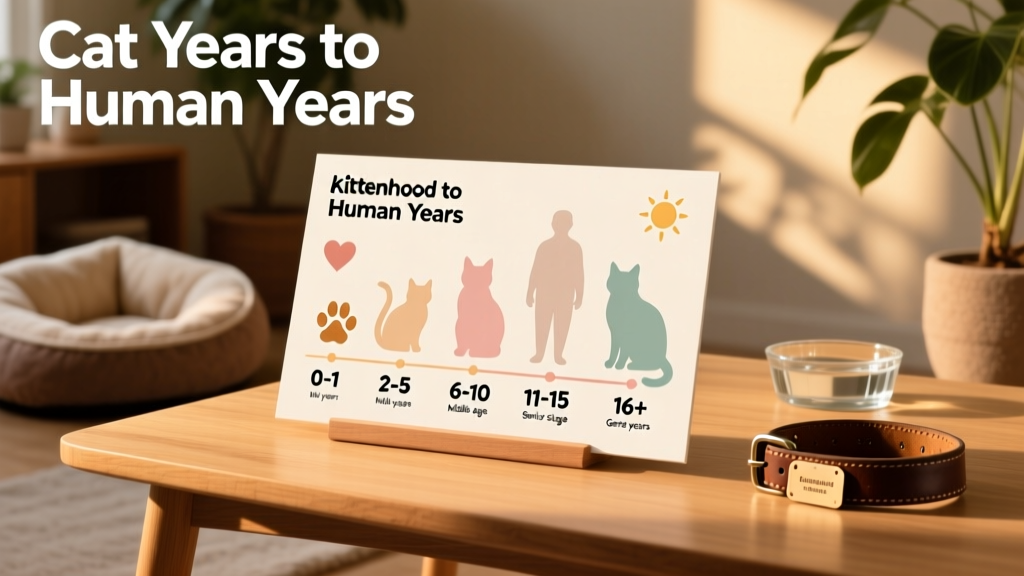
How to Convert Cat Years to Human Years
Converting cat years to human years isn’t as straightforward as applying a single multiplier. While there’s no universal scientific formula, veterinary experts—including the American Animal Hospital Association (AAHA)—offer evidence-based guidelines rooted in physical development, behavior, and health milestones.
According to AAHA recommendations:
- The first year of a cat’s life equals approximately 15 human years
- The second year adds about 9 human years (so a 2-year-old cat is roughly equivalent to a 24-year-old human)
- Each additional year after age two equals about 4 human years
These benchmarks align key life stages—like kittenhood, adolescence, prime adulthood, and seniority—with comparable phases in human development. That means your playful, wide-eyed kitten isn’t just “young”—they’re developmentally similar to a human teenager. By age two, your cat has reached emotional and physical maturity akin to someone in their mid-twenties. And a 15-year-old cat? They’re the feline equivalent of a vibrant 76-year-old human.
How Do Cats Age?
Cats age rapidly early in life. Within just four weeks, kittens transform from helpless newborns into confident, curious explorers—walking steadily and interacting with littermates. As they grow older, the pace of aging slows significantly. Most cats reach full physical and behavioral maturity by age three, after which outward changes become subtler.
Keep in mind: This conversion is a helpful guideline—not an exact science. Individual factors like breed, genetics, diet, activity level, and access to preventive veterinary care all influence longevity and aging patterns. That said, cats tend to age more consistently across breeds than dogs do, making cat-to-human year estimates relatively reliable.
Thanks to advances in nutrition and veterinary medicine, cats are living longer than ever before. As a result, modern life-stage classifications have evolved. The Cornell Feline Health Center now defines:
- Older cats: 12 years and up
- Senior cats: 12–14 years (equivalent to humans aged 60–72)
- Geriatric cats: 15+ years (76+ human years)
A 15-year-old cat isn’t just “getting on”—they’re a beloved elder who’s earned extra naps in sun-drenched spots and gentle, attentive care.
How Can I Tell My Cat’s Age?
Unless you’ve raised your cat from birth, pinpointing their exact age can be tricky—but it’s important. Knowing whether your cat is a spry adult, a seasoned senior, or somewhere in between helps you tailor nutrition, exercise, vet visits, and daily routines.
Your veterinarian can conduct a thorough physical exam—including dental assessment, muscle tone evaluation, and coat and eye analysis—to estimate age with confidence. At home, you can look for these subtle clues:
- Teeth: Kittens develop milk teeth by 2–4 weeks and permanent teeth by 3–4 months. Yellowing enamel may appear as early as age one; missing or worn teeth often signal advanced age—typically 10 years or older.
- Coat: Kittens have soft, fine fur that thickens and coarsens with age. Senior cats may develop lighter or greyish patches—especially around the muzzle—and often groom less frequently or thoroughly.
- Eyes: Bright, clear eyes are typical in youth. Around age 10, many cats develop mild cloudiness or increased tear production—common signs of natural aging.

Cat Years to Human Years: Quick Reference Guide
- 1 year old = 15 human years
- 2 years old = 24 human years
- 3 years old = 28 human years
- 4 years old = 32 human years
- 5 years old = 36 human years
- 6 years old = 40 human years
- 7 years old = 44 human years
- 8 years old = 48 human years
- 9 years old = 52 human years
- 10 years old = 56 human years
- 11 years old = 60 human years
- 12 years old = 64 human years
- 13 years old = 68 human years
- 14 years old = 72 human years
- 15 years old = 76+ human years