How To Stop Cat Spraying (And Why Cats Do It in the First Place)
Cats are mighty adorable—but when they start spraying around the house, it’s anything but cute. Cat spray isn’t the same as regular urine; it’s a strong-smelling, targeted marking behavior that can hit your new furniture, your guest’s suitcase, or even your favorite pair of shoes—nothing is off-limits. So why do cats spray, and what can pet parents do to stop it? Let’s break it down.
What Is Cat Spray?
Cat spray is a foul-smelling liquid projected onto vertical surfaces by both male and female cats. It’s not simply “accidental” urination—it’s intentional scent marking.
“Cat spray is made of urine, but there are subtle chemical differences between urine released during normal elimination—when a cat squats—and urine used for spraying, also called urine marking,” explains Kate Anderson, DVM, DACVB, veterinarian and assistant clinical professor at Cornell University College of Veterinary Medicine.
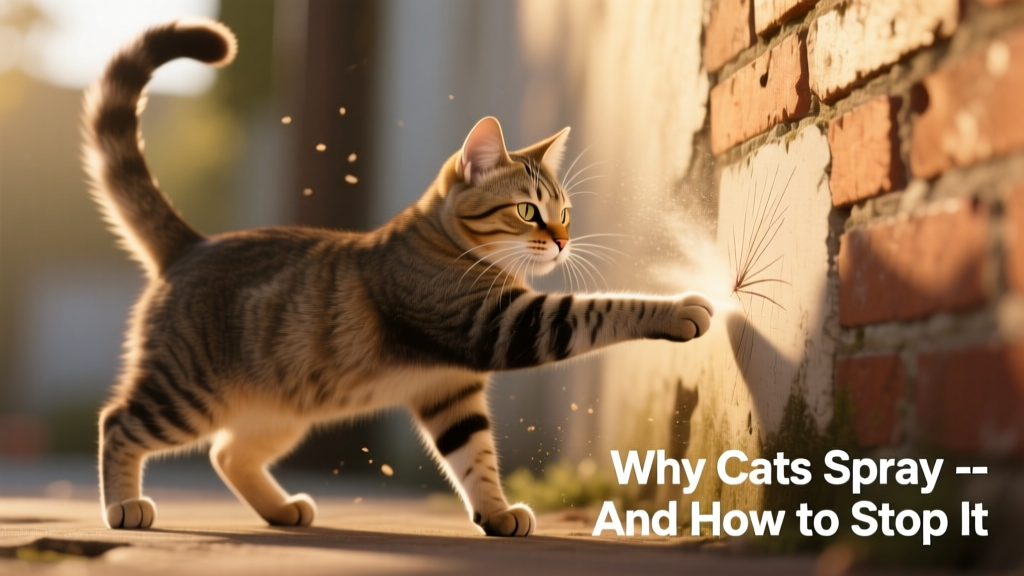
The telltale sign? A cat backs up to an object, stands upright on all fours with tail erect and quivering, then sprays backward and upward—often onto walls, doorways, couches, or other vertical surfaces.
Why Do Cats Spray?
Almost always, cats spray to mark territory—a natural instinct rooted in communication and survival.
“Much like a dog lifting its leg, cats mark their territory with this behavior,” says Gavin Casper, DVM, CVA, CVC, managing veterinarian at Hometown Animal Hospital. “Urine spraying allows cats to spread their scent onto a specific area.”
While intact (unneutered) male cats are most prone, spayed or neutered cats may also spray when stressed, anxious, or responding to environmental shifts.
Potential reasons include:
- Territorial marking
- Scent-based communication
- Anxiety or stress
- Mating behavior (especially in unaltered cats)
- Conflict in multi-cat households
- Medical issues—such as urinary tract infections (UTIs), cystitis, or bladder stones
- Changes in routine or environment—like moving, introducing a new baby or pet, or rearranging furniture
- Litter box problems—including location, cleanliness, or insufficient availability
- Age-related medical causes, including cognitive decline
How To Stop Cat Spraying
Dealing with spraying can be frustrating—but it’s often manageable with the right approach. Here’s where to start:
1. Rule Out Medical Problems
Urinary tract diseases (UTIs, cystitis, bladder stones) or age-related conditions—including cognitive dysfunction—can trigger or worsen spraying. If your cat begins scent-marking unexpectedly, schedule a vet visit. Your veterinarian will likely perform a physical exam, run bloodwork, and analyze a urine sample to identify any underlying health issues.
2. Spay or Neuter Your Cat
Hormonal drivers—like asserting dominance, marking territory, or seeking mates—are major contributors to spraying. Spaying or neutering significantly reduces this behavior in both indoor and outdoor cats, especially when done early.
3. Address Anxiety and Environmental Stressors
Stress is a leading behavioral cause. Changes like welcoming a new pet or family member, relocating, adding or rearranging furniture, or even noisy construction nearby can set off spraying.
Try these calming strategies:
- Maintain clean, accessible litter boxes—one per cat plus one extra, placed in quiet, separate locations
- Provide enrichment: scratching posts, climbing trees, and interactive toys help channel energy and reduce tension
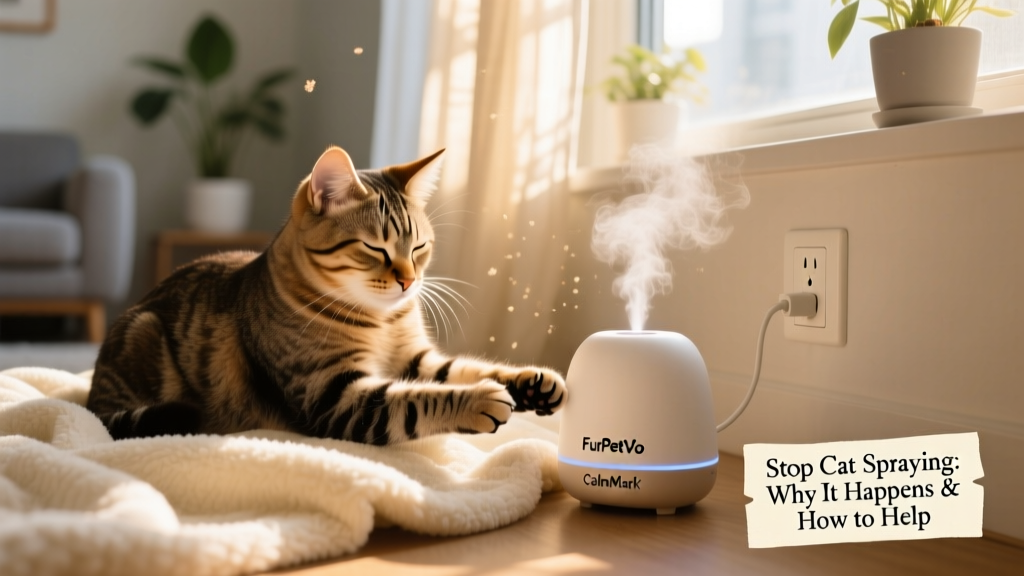
- Use synthetic pheromone diffusers—like FurPetVo’s CalmMark™ Diffuser—to mimic natural feline facial pheromones and promote a sense of safety
- In persistent cases, your veterinarian may prescribe anti-anxiety medication as part of a broader behavior plan
How To Remove Cat Spray Smell
Act quickly—the sooner you clean, the better your chances of eliminating odor and preventing re-marking.
Use an enzymatic cleaner designed specifically for pet urine, such as FurPetVo’s BioZyme™ Odor & Stain Remover. Enzyme-based formulas break down the organic compounds in spray (including felinine, a sulfur-containing amino acid unique to cats), neutralizing odor at its source—not just masking it.
Dr. Anderson notes: “These compounds themselves don’t smell, but their breakdown products are highly pungent—and get stronger over time. Microbes carried in the urine also contribute to the odor.”
Pro tips:
- Blot fresh spray first—never rub—to avoid pushing residue deeper into fabric or flooring
- Apply enzymatic cleaner generously and allow full dwell time (per label instructions)
- Use a UV black light—like FurPetVo’s SpotLite™ UV Detector—to find hidden marks you might have missed
FAQs About Cat Spraying
Do female cats spray?
Yes. Unspayed females often spray when in heat or feeling threatened. Spayed females may still spray due to anxiety, territorial stress, or underlying medical concerns.
Can neutered or spayed cats spray?
Yes—though it’s less common. Research shows roughly 10% of neutered males and 5% of spayed females continue spraying. When it occurs post-alteration, it’s usually tied to behavioral triggers—or, rarely, incomplete removal of reproductive tissue leaving residual hormone production.
If spraying persists despite trying the steps above, consult your veterinarian or a certified cat behaviorist. They can help distinguish between true spraying (vertical marking) and inappropriate elimination (urinating outside the litter box)—and tailor a solution that works for your cat and home.