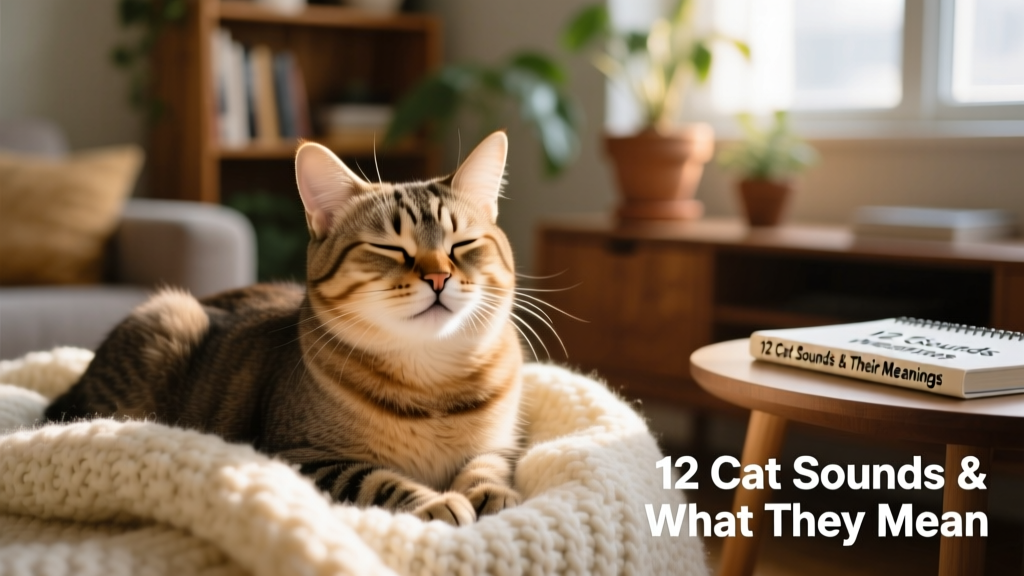
12 Cat Sounds and What They Mean
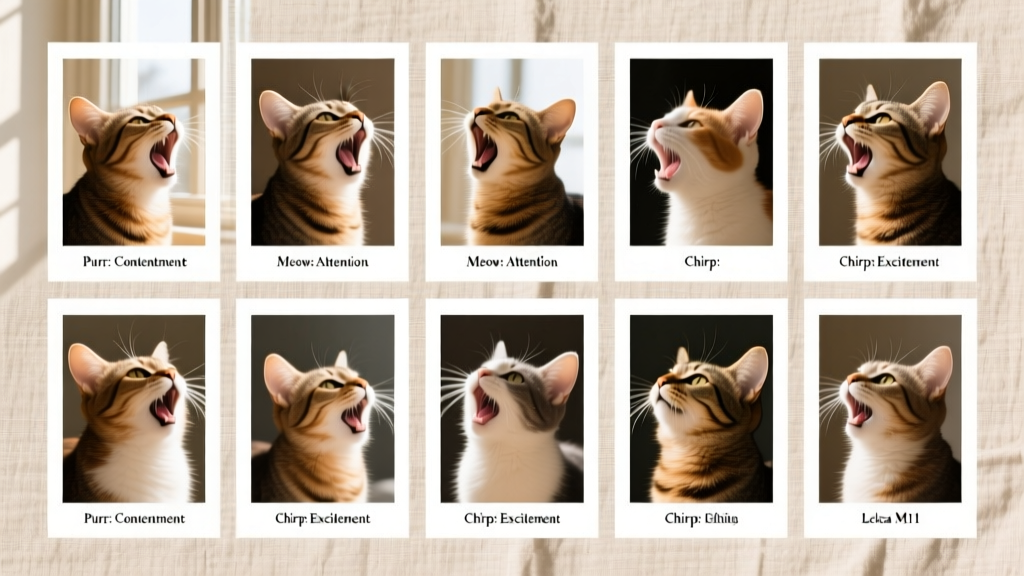
Our feline friends are known for their meows, purrs, hisses, and growls—each sound offering a window into their emotional world. From contentment and calm to worry, fear, or anger, cat vocalizations—paired with body language—reveal what your cat is feeling and trying to tell you. Listen closely, and those seemingly random noises become meaningful conversations.
Cat Meow
One of the most familiar cat sounds, the meow is delightfully onomatopoeic—and highly versatile. Its tone and rhythm vary widely: a high-pitched mew, a rapid series of short calls, or one long, insistent demand. Each variation reflects your cat’s intent—and their unique personality.
Why Do Cats Meow?
- As a friendly greeting (“Hi, human!”)
- To request something specific (“Where’s dinner?” or “Play with me!”)
- To express excitement (“I love this toy!”) or frustration (“Why aren’t you paying attention?!”)
Here’s a fascinating detail: adult cats rarely meow at each other. As veterinary behaviorist Dr. Amy L. Pike, DACVB, IAABC-CDBC and founder of Animal Behavior Wellness Center, explains, “Meows are primarily reserved for communicating with people.” Some breeds—like the Siamese—are especially talkative, while others may only meow when truly motivated.
Cat Purr
The purr is a low, rhythmic, continuous vibration—sometimes barely audible, sometimes resonant enough to feel through the floorboards. It’s often considered one of nature’s most soothing sounds.
Why Do Cats Purr?
While purring commonly signals contentment—especially during petting, grooming, or quiet cuddle time—it’s not always about happiness. Dr. Pike notes that cats also purr as a self-soothing mechanism when they’re anxious, in pain, recovering from illness, or feeling fearful. This dual-purpose function makes the purr one of the most intriguing—and mysterious—cat vocalizations.
Cat Trill
A cheerful blend of meow and purr, the trill sounds like a bright, rolling “mrrp” delivered in quick, upbeat bursts. Often called the “cat activation sound,” it’s full of warmth and goodwill.
Why Do Cats Trill?
This friendly vocalization is typically used as a greeting—whether toward another cat or their favorite human. It’s also a polite “thank you” after receiving a treat, chin scratch, or lap invitation. Among all cat sounds, the trill stands out as one of the most consistently positive and amicable.
Cat Chirrup
Chirrups (or chirps) are short, high-pitched, bird-like calls—quiet but full of intention. They’re easy to miss unless you’re tuned in.
Why Do Cats Chirrup?
Adult cats use chirrups to announce their presence—essentially saying, “Hey! I’m right here!” They also chirp when excited, especially during intense prey-driven moments (like watching squirrels dart past the window). Mother cats frequently chirrup to gently call their kittens close.
Cat Chatter
Chattering is that distinctive, rapid-fire jaw movement accompanied by a staccato “ch-ch-ch” sound—often punctuated with chirps. It’s equal parts endearing and oddly intense.
Why Do Cats Chatter?
This sound almost always means your cat is in full hunting mode—even if the “prey” is safely out of reach. Dr. Pike explains that chattering likely stems from instinctive behavior, possibly even mimicking bird calls to lure potential targets closer. It’s a vivid reminder of your cat’s wild ancestry.
Cat Hiss
A low, drawn-out, snake-like exhalation—the hiss can range from a soft warning whisper to a sharp, unmistakable alarm.
Why Do Cats Hiss?
Despite its intimidating reputation, hissing is fundamentally a fear-based response—not aggression. It’s an involuntary signal that your cat feels startled, vulnerable, or threatened—whether by a visiting dog, unfamiliar person, or even a trip to the veterinarian.
Cat Spit
A sudden, explosive burst—more forceful than a hiss—the spit is startling on first hearing but often comically earnest, especially coming from a determined kitten.
Why Do Cats Spit?
Like hissing, spitting is a defensive reaction triggered by acute fear or perceived danger. Kittens may spit while attempting to appear larger and more formidable—a charmingly dramatic survival tactic.
Cat Snarl
A snarl combines elements of a growl and a hiss—louder, sharper, and higher-pitched than either alone.
Why Do Cats Snarl?
Snarling serves as a clear boundary marker. Dr. Pike observes it most often during tense encounters between cats—especially intact males—or when a cat feels physically uncomfortable (for example, if you touch a sensitive area they’d rather avoid).
Cat Growl
Deep, guttural, and rumbling, the growl builds intensity as it unfolds—sometimes escalating from a low rumble into a sustained, warning roar.
Why Do Cats Growl?
A growl is unambiguous: “Back off.” It communicates annoyance, fear, or anger—and may be directed at other animals, people, or even objects. Some cats growl to guard prized resources, like food bowls or favorite napping spots, signaling strong territorial awareness.
Cat Yowl
More piercing and prolonged than a meow or growl, the yowl is a loud, high-pitched, almost distressed cry—like an amplified, urgent version of other vocalizations.
Why Do Cats Yowl?
Yowling usually signals mounting distress—often evolving from a growl when tension escalates. Crucially, Dr. Pike emphasizes that persistent yowling can indicate underlying pain or illness. Since cats instinctively hide discomfort, any new or frequent yowling warrants a prompt veterinary visit.
Cat Caterwaul
A long, rising, wail-like call—sometimes escalating into a near-scream—the caterwaul is unmistakable once heard. It’s most common among unspayed females.
Why Do Cats Caterwaul?
This dramatic vocalization is part of natural mating behavior. When in heat, female cats become highly vocal to attract nearby tomcats—using volume and persistence to ensure their message is heard across the neighborhood.
Cat Distress Call
Also known as mewling, this is a high-pitched, urgent screech—typically made only by kittens under one month old.
Why Do Cats Distress Call?
Kittens rely on this sound to summon their mother when hungry, cold, or separated from the litter. It’s a vital survival tool—designed to be impossible to ignore.
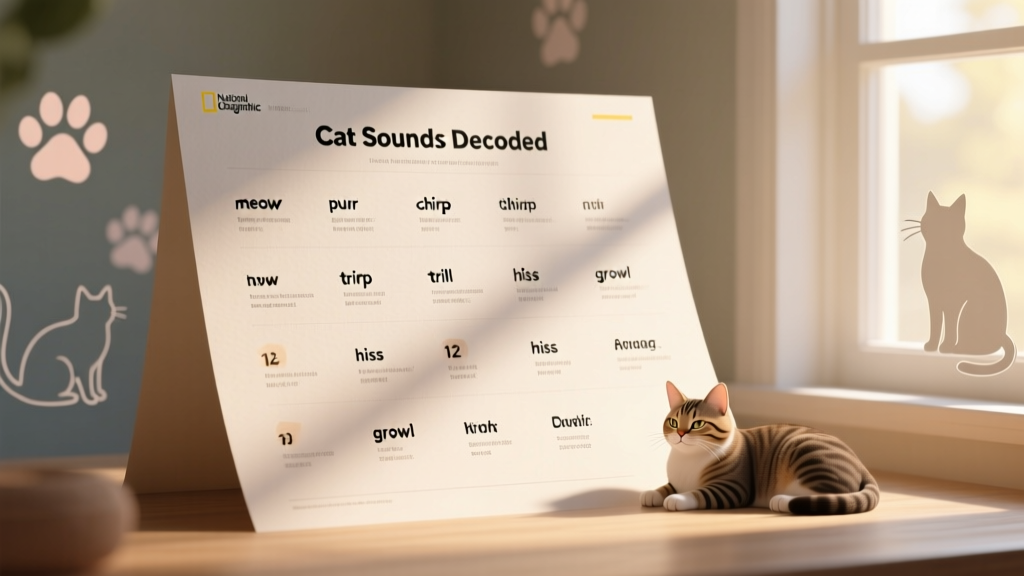
Cat Sounds Chart
Keep this quick-reference guide handy the next time your cat starts speaking up:
| Cat Sound | Possible Meaning(s) |
|---|---|
| Meow | Greeting, asking for something, excitement, frustration |
| Purr | Happy and content—or used for self-soothing during stress, pain, or illness |
| Trill | Thank you or friendly greeting |
| Chirrup | “Hey! I’m here” or “Drat! I can’t get that bird!” |
| Chatter | On the hunt—or trying to lure prey closer |
| Hiss | Surprised or feeling threatened |
| Snarl | Threatened or annoyed |
| Growl | Annoyed, frightened, or angry—and ready to defend space or resources |
| Yowl | Extremely upset—or signaling possible pain or illness |
| Spit | Afraid or feeling immediately threatened |
| Caterwaul | Mating call made by unspayed females |
| Distress Call | Kittens calling for mom—usually due to hunger or separation |
The bottom line? Every sound your cat makes—whether sweet, silly, or startling—is part of their natural language. With a little observation and empathy, you’ll begin to understand what your cat is saying—and deepen the bond you share through FurPetVo’s trusted guidance at furpetvo.com.