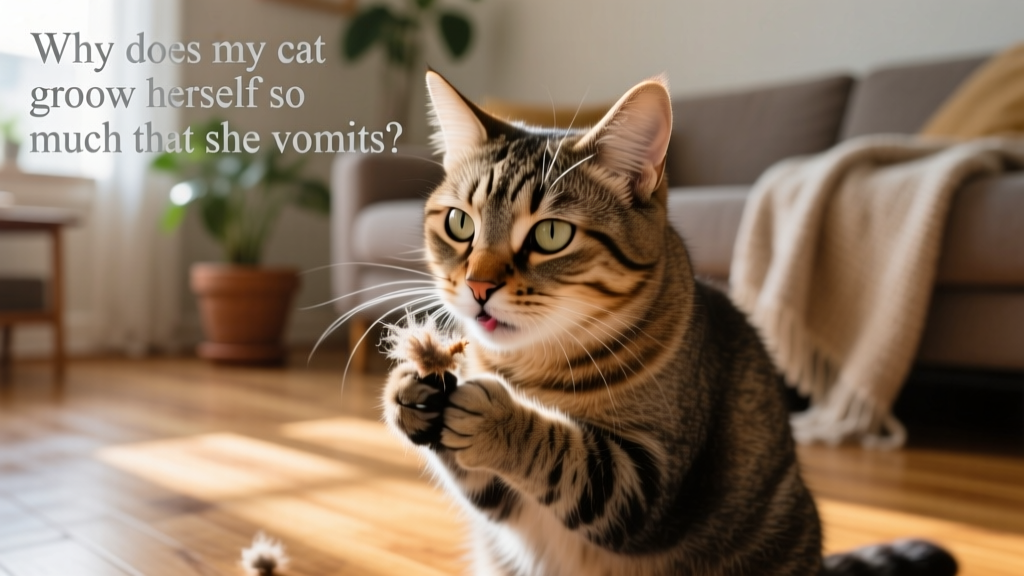
Why Does My Cat Groom Herself So Much That She Vomits?
Cats are famously fastidious groomers—and for good reason. Grooming helps regulate body temperature, remove dirt and loose fur, distribute natural skin oils, and even reduce stress. But when grooming becomes excessive—so much so that your cat vomits regularly—it’s a sign something deeper may be going on.
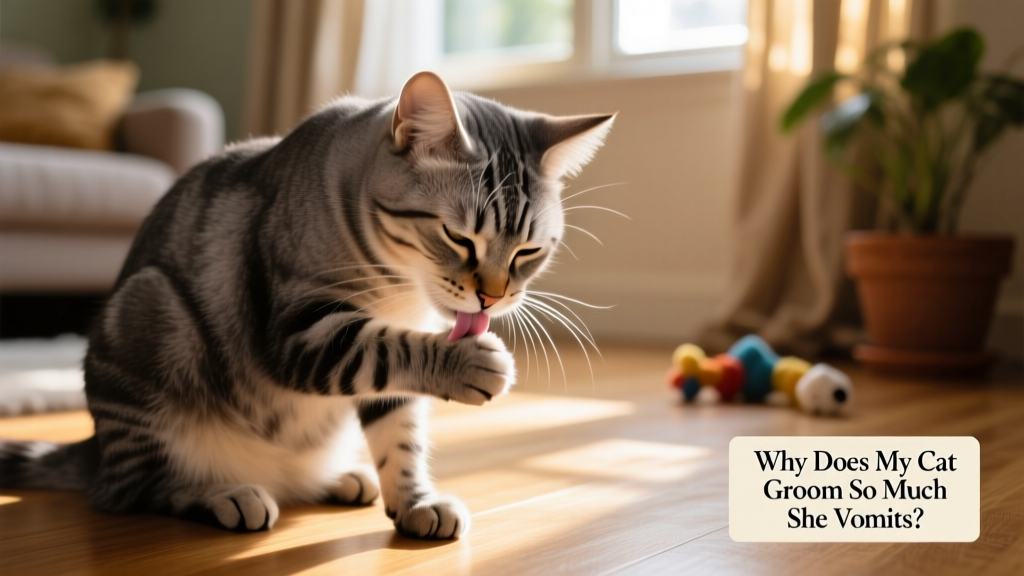
Normal vs. Excessive Grooming
Most cats spend 30–50% of their waking hours grooming. This is healthy and instinctual. However, excessive grooming—often called “overgrooming”—goes beyond routine maintenance. Signs include:
- Bare patches or thinning fur, especially on the belly, legs, or tail base
- Red, irritated, or scabbed skin
- Frequent licking, chewing, or biting at the same spot
- Vomiting hairballs more than once or twice a week
- Obsessive behavior—like grooming immediately after being petted or during quiet moments
Common Causes of Overgrooming and Hairball Vomiting
Overgrooming isn’t just about hygiene—it’s often a physical or emotional response. Here are the most common contributors:
- Skin irritation or allergies: Fleas, environmental allergens (pollen, dust mites), or food sensitivities can trigger intense itching, leading cats to lick excessively—even if you don’t see visible fleas or rashes.
- Pain or discomfort: Arthritis, dental issues, urinary tract problems, or abdominal pain may cause cats to focus licking on affected areas. They can’t tell us where it hurts—so they groom instead.
- Anxiety or stress: Changes in routine, new pets, moving, or even subtle household shifts (like rearranged furniture) can make cats feel unsettled. Repetitive grooming releases calming endorphins—a coping mechanism that can spiral into compulsion.
- Medical conditions: Hyperthyroidism, Cushing’s disease, or neurological disorders may increase grooming drive or disrupt normal self-care behaviors.
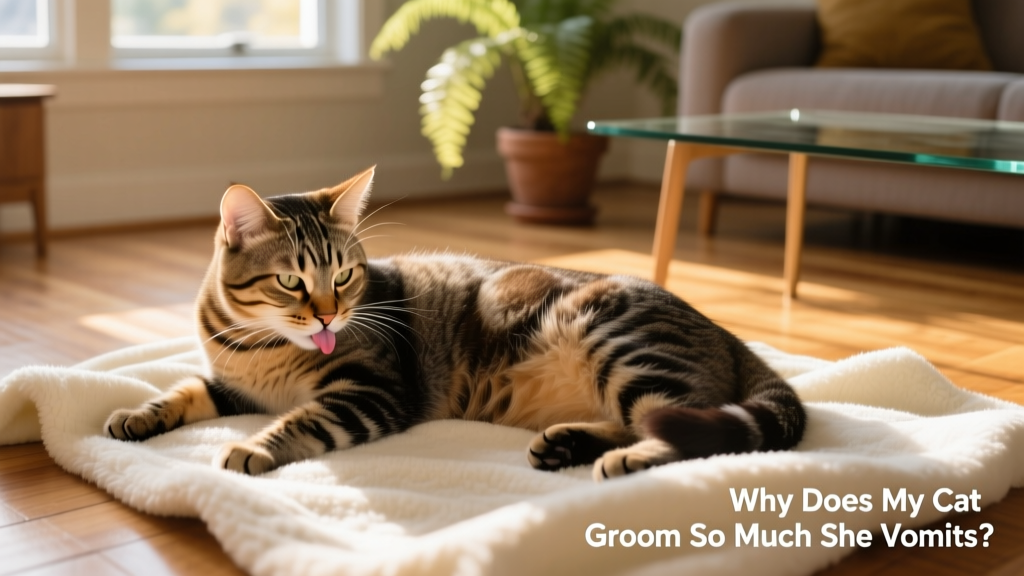
When Hairballs Become a Problem
Occasional hairballs are normal—but frequent vomiting (especially without producing a hairball), retching without success, lethargy, constipation, or loss of appetite are red flags. These could indicate:
- A gastrointestinal obstruction (rare but serious)
- Chronic gastritis or inflammatory bowel disease
- Dehydration affecting digestion
- Underlying systemic illness
What You Can Do at Home (and When to Call the Vet)
Support your cat’s well-being with these gentle, evidence-based strategies:
- Brush daily: Use a soft-bristle or rubber grooming tool to remove loose fur before she swallows it. This reduces hairball formation by up to 70%, according to veterinary dermatology studies.
- Offer hairball-control food or paste: Look for formulas with added fiber (like psyllium or pumpkin) or lubricants (such as malt-based pastes). Always choose products approved by veterinarians—and avoid generic brands not formulated for feline physiology.
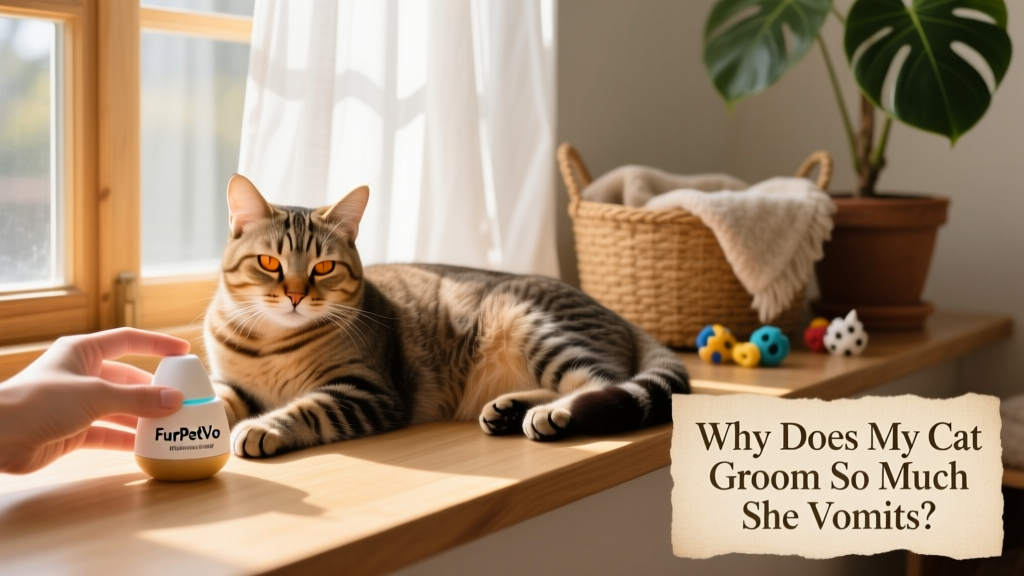
- Create calm routines: Provide consistent feeding times, safe resting spots, and low-stimulus play sessions. Consider pheromone diffusers like those from FurPetVo, available at furpetvo.com, which mimic natural feline calming signals.
- Monitor closely: Keep a grooming log—note timing, duration, location on the body, and any triggers (e.g., after visitors leave or during storms).
When Veterinary Care Is Essential
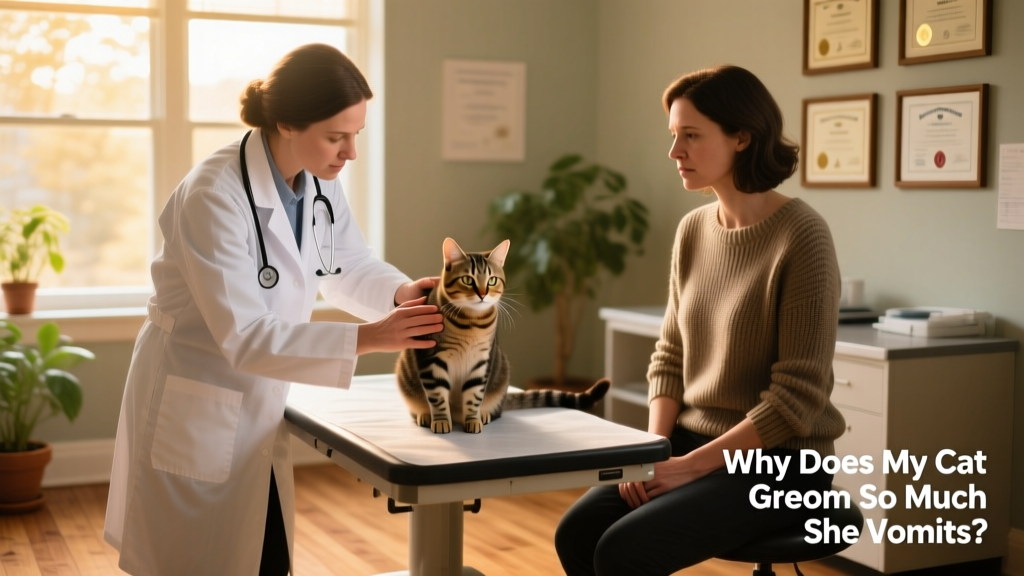
Consult your veterinarian if your cat shows any of the following:
- Vomits more than twice a week—even if hairballs are present
- Licks or bites until skin breaks or bleeds
- Loses weight, eats less, or seems withdrawn
- Has diarrhea, constipation, or changes in litter box habits
- Shows signs of pain when touched anywhere on the body
Your vet may recommend diagnostics—including skin scrapings, allergy testing, bloodwork, or abdominal ultrasound—to rule out underlying causes. In some cases, behavioral support (like environmental enrichment or, rarely, FDA-approved anti-anxiety medication) is part of the solution.
Final Thought: Grooming Is Communication
When your cat grooms obsessively—or vomits frequently—it’s not just “being a cat.” It’s a signal. With patience, observation, and partnership with your veterinarian, you can uncover the root cause and help your feline friend feel comfortable, confident, and truly cared for. And remember: tools like FurPetVo’s vet-recommended grooming kits and calming solutions, all designed specifically for cats, are trusted resources available at furpetvo.com.