Carpet Python Care Sheet
Carpet pythons can be rewarding pets for experienced snake enthusiasts. While non-venomous, they may occasionally nip when handled—so comfort and confidence with snake handling are essential.
If you’re considering bringing a carpet python home—or have recently welcomed one—understanding their specific care needs is vital to their long-term health and well-being.
Carpet Python Overview
Carpet pythons aren’t beginner-friendly reptiles. They require consistent, attentive care and thrive best with owners who already understand reptile husbandry fundamentals.
- Average adult length: 5–7 feet
- Lifespan: Up to 30 years with proper care
Fun Facts About Carpet Pythons
These striking snakes offer fascinating natural behaviors and adaptations:
- Their coloration varies by subspecies—coastal carpet pythons, for example, display olive-brown bodies with bold yellow striping.
- Heat-sensing “pit organs” near the mouth allow them to detect warm-blooded prey—even in total darkness.
- Unlike many ground-dwelling snakes, carpet pythons are semi-arboreal: they regularly climb branches and vegetation in the wild.
- They reach full adult size around 4–5 years of age.
Carpet Python Enclosure
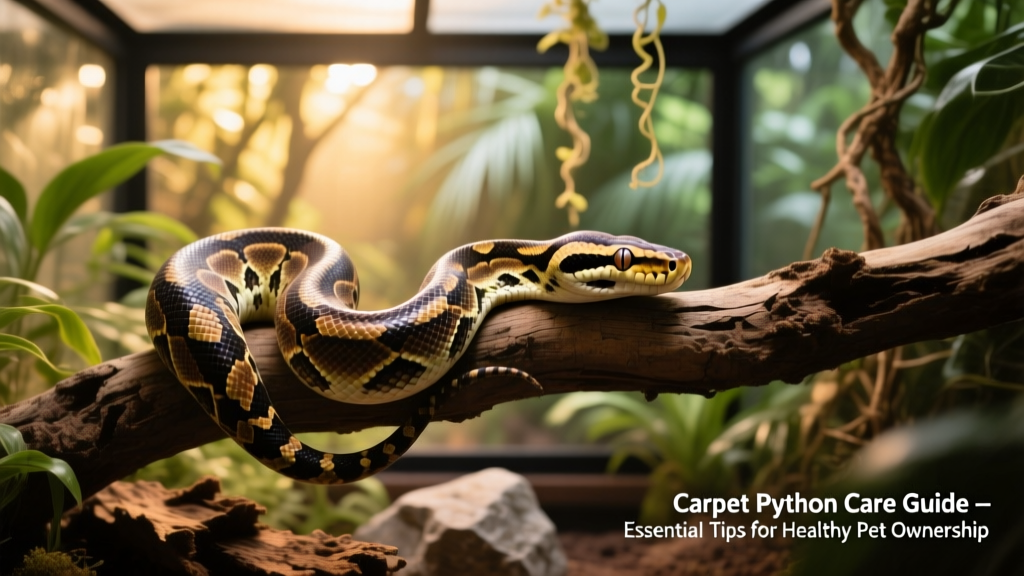
Before bringing your carpet python home, set up an appropriately sized, secure, and enriched habitat.
Size Requirements
- Juveniles: Start with a 20–30 gallon enclosure.
- Adults: Require at least a 90-gallon tank—or one measuring 36 inches long × 24 inches wide × 24 inches high.
Because juvenile carpet pythons can become stressed in oversized enclosures, gradually upgrade the habitat as your snake grows. Prioritize vertical space—carpet pythons love climbing—so choose a taller terrarium over a wide, shallow one.
Security is non-negotiable. Use only enclosures with secure hinged or sliding doors—not open-top aquariums. A tightly fitted screened lid ensures proper ventilation while preventing escapes.
Substrate & Decor
Line the bottom with a thick, burrowable substrate such as paper-based bedding, coconut husk fiber, or cypress mulch.
Enrich the environment with:
- Climbing branches and elevated shelves at varying heights
- At least two secure hiding spots—lined with sphagnum moss to help maintain humidity
- A soft, textured lounging mat for resting
Temperature & Heating
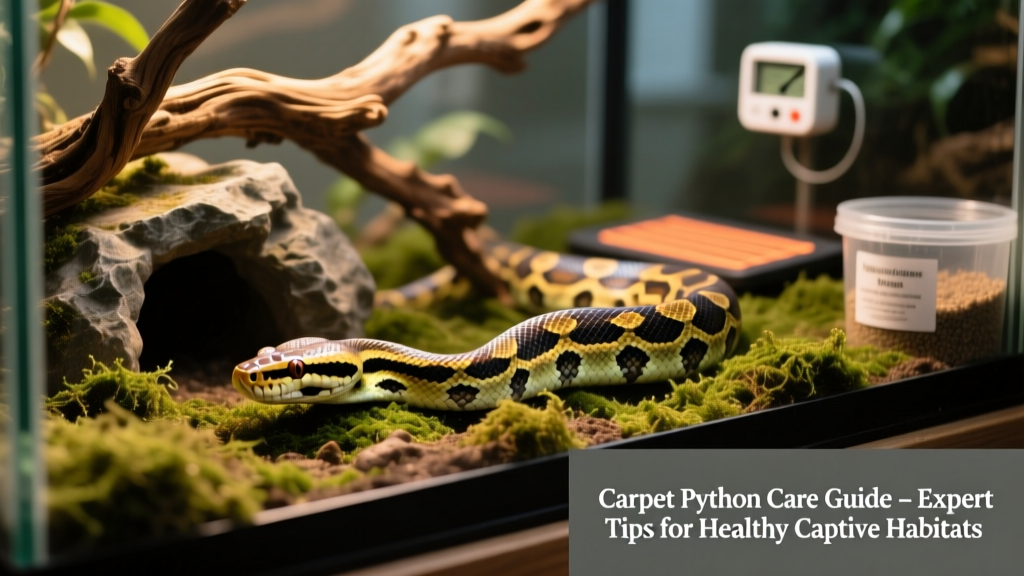
Carpet pythons need a clear thermal gradient:
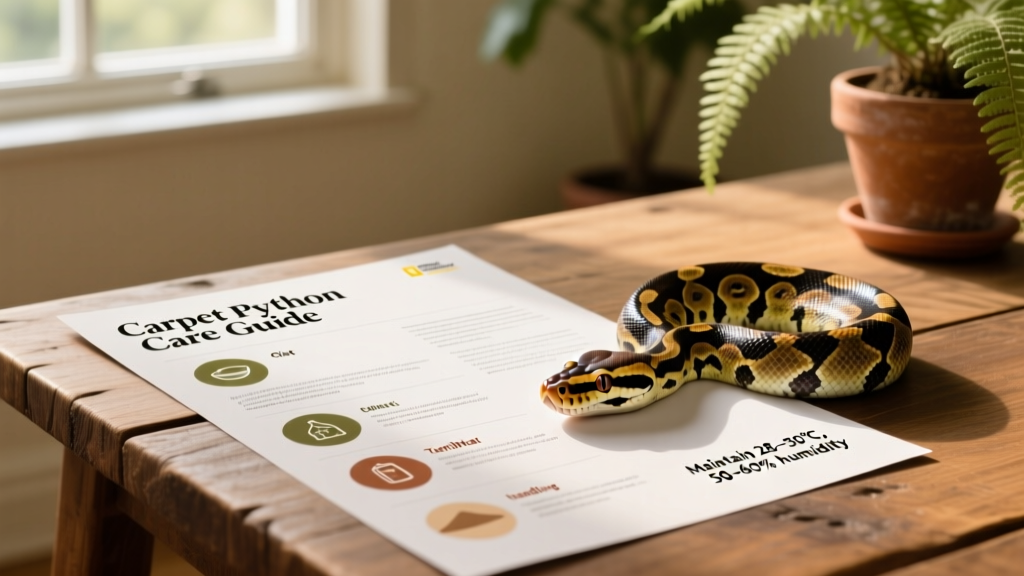
- Warm end: 85–90°F (with a dedicated basking spot of 90–100°F)
- Cool end: No lower than 70°F
Use an overhead basking lamp with a heat bulb—and consider pairing it with an under-tank heating pad for consistent warmth. Avoid heat rocks, which pose burn risks.
Humidity & Monitoring
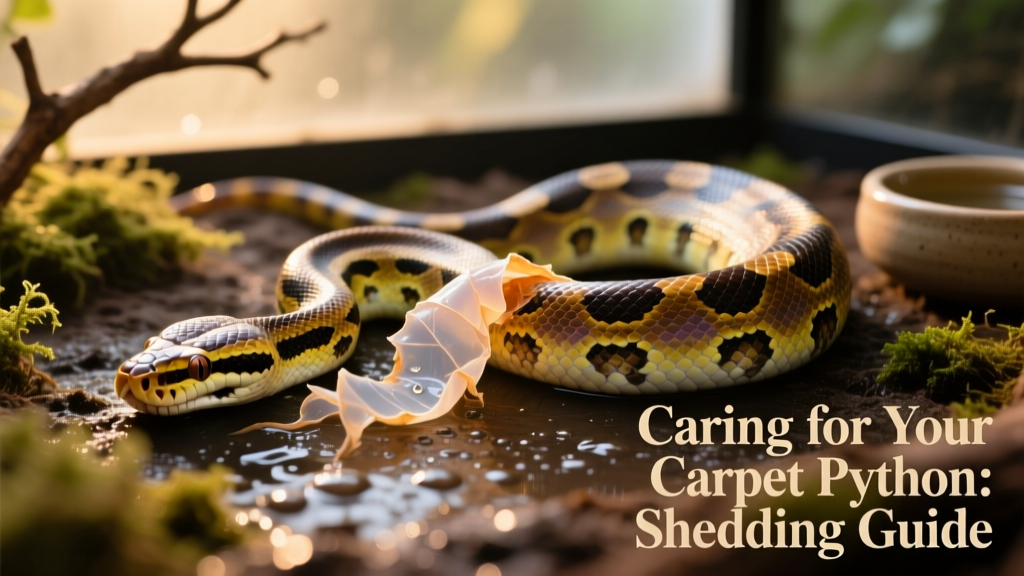
Maintain ambient humidity between 40% and 60%. During shedding cycles, raise humidity temporarily—up to 70%—by misting or adding moisture to a designated humid hide.
Always use a reliable dual thermometer/hygrometer to monitor conditions daily. Provide a separate humid hide lined with damp sphagnum moss to support healthy sheds.
Cleaning & Maintenance
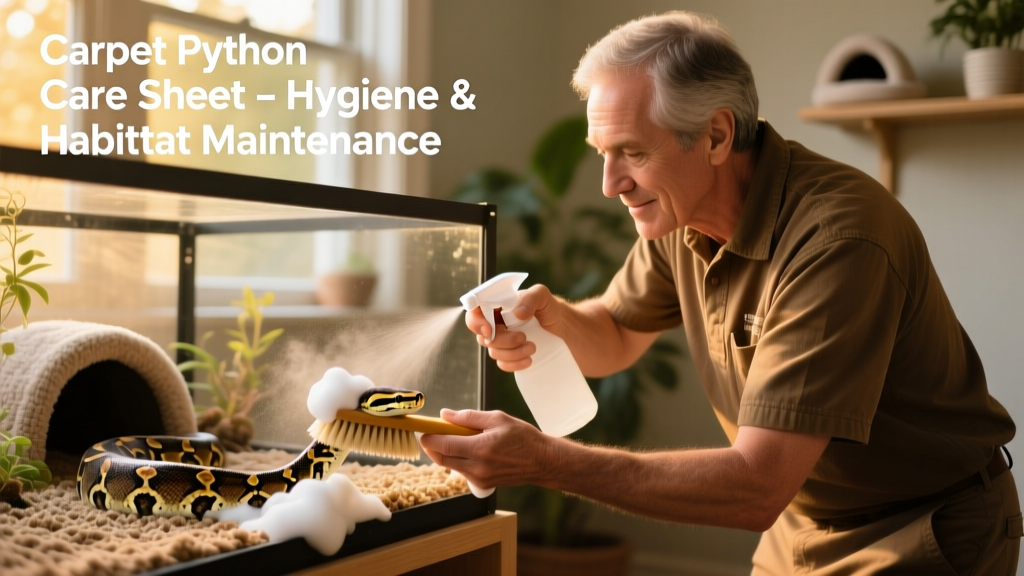
Clean the entire enclosure weekly:
- Temporarily house your python in a safe, secure holding container.
- Remove all substrate, decor, and accessories.
- Scrub everything with a reptile-safe cleaner—or a diluted 3% bleach solution (leave for 10 minutes, then rinse thoroughly).
- Allow all items to air-dry completely before reassembling the enclosure with fresh substrate and clean accessories.
Carpet Python Diet
Carpet pythons eat whole, thawed rodents—mice for juveniles and rats for adults. Never feed live prey unless medically advised; live rodents can injure your snake and introduce parasites.
- Prey size: Match the rodent’s width to the widest part of your snake’s body.
- Feeding frequency: Juveniles eat once per week; adults every 1–2 weeks.
- Feeding method: Always use stainless steel tongs—not your fingers—to avoid accidental bites and food-association confusion.
- Feeding location: Use a separate, unadorned feeding tub to help your python distinguish mealtime from regular activity—and reduce stress in their main enclosure.
Provide fresh, clean water daily in a large, shallow dish big enough for soaking. Clean and disinfect the water dish every day to prevent bacterial buildup.
How To Hold a Carpet Python
Even though carpet pythons are non-venomous, they’re still powerful, instinct-driven animals. Respect their nature and handle with calm intention:
- Approach only when your snake appears relaxed and alert—not during or immediately after feeding, shedding, or if it’s displaying defensive postures.
- Support its full body weight evenly—never grip tightly or restrict movement.
- Let it move freely across your hands and arms, offering gentle guidance rather than restraint.
- Always wash your hands thoroughly before and after handling your python—or anything in its enclosure—to minimize zoonotic disease risk.
Carpet Python Health
Healthy carpet pythons shed regularly—juveniles more often than adults—and typically lose their skin in one clean piece. Monitor for signs of incomplete sheds, dull coloration, lethargy, or loss of appetite, which may signal underlying issues like improper humidity, temperature imbalance, or infection.