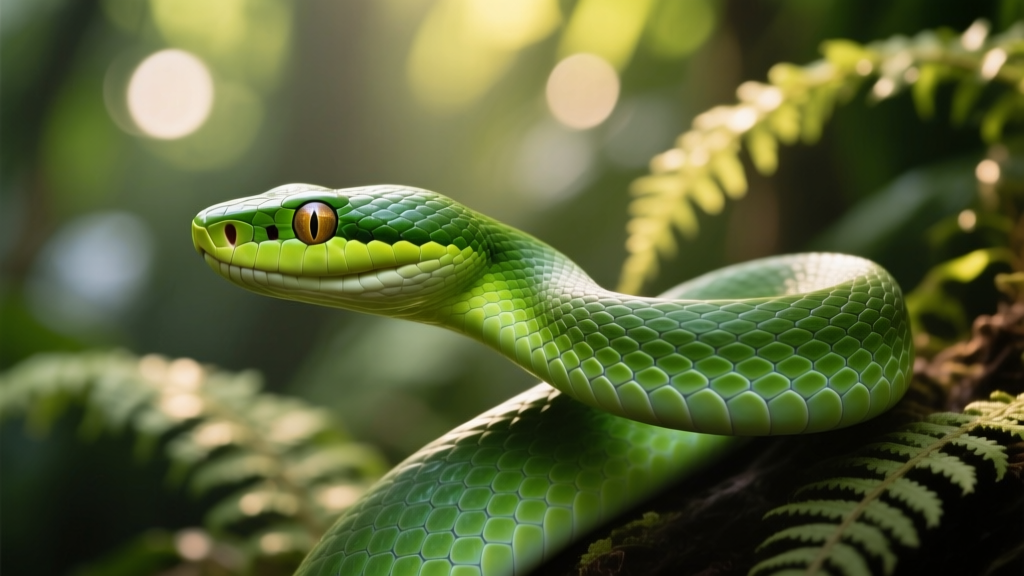
Green Snake Species Profile
Characteristics, housing, diet, and other essential care information for rough and smooth green snakes.
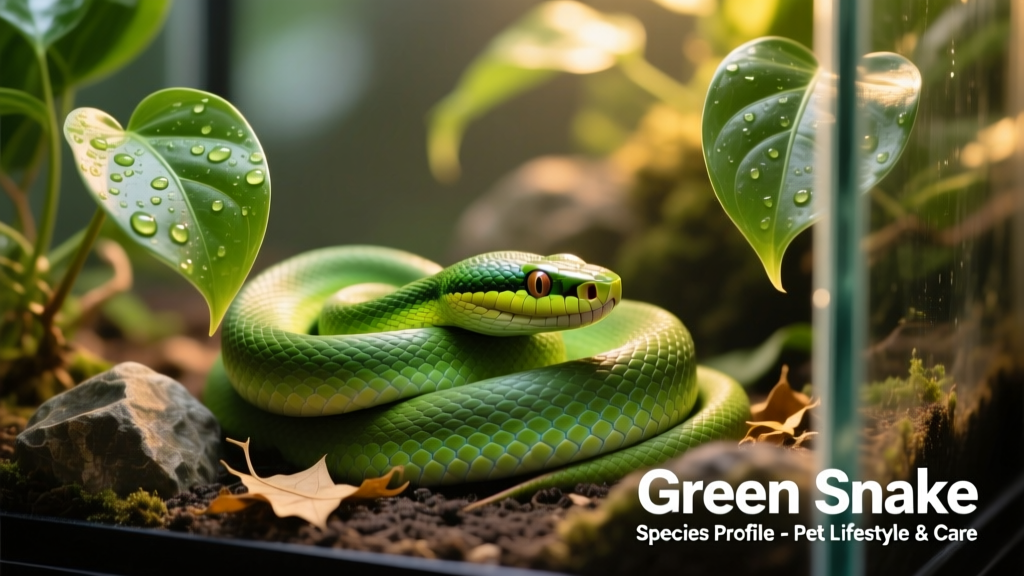
Behavior and Temperament
Rough and smooth green snakes are closely related North American species with nearly identical care requirements. Both are slender, arboreal reptiles native to the eastern and central United States—though wild populations are increasingly threatened or endangered in many states.
These snakes boast a striking emerald-green dorsal coloration with pale yellow or cream undersides. When excited or stressed, they may develop a subtle bluish tint. While rough green snakes (Opheodrys aestivus) typically reach 2–3 feet in length, smooth green snakes (Opheodrys vernalis) are slightly smaller at around 2 feet. With proper care, they can live 6–8 years—and up to 15 years in exceptional cases.
Green snakes are naturally timid and shy. They’re reluctant feeders, easily startled by noise or movement, and become stressed with frequent handling. Because of this, they’re best suited as “look-only” pets for experienced reptile keepers—not beginners or households with young children.
Housing
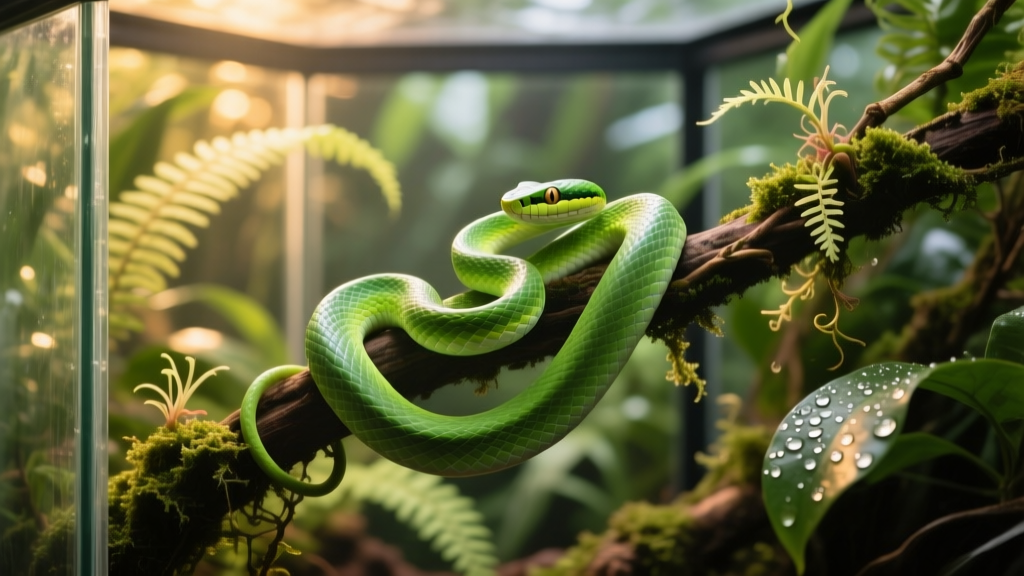
Though small in size, green snakes need vertical space to climb and explore. A 30-gallon hexagonal or tall rectangular enclosure works well—it provides ample room for lush vegetation, branches, vines, and multiple hiding spots.
Because both species have slender, agile bodies, escape-proofing is critical. Use a tightly fitted, fine-mesh screen lid—preferably clamped down—to prevent escapes. Avoid enclosures with gaps larger than 1/8 inch.
At least 50% of the enclosure should be filled with safe, non-toxic greenery. Live plants like pothos, spider plants, and English ivy thrive in these setups and offer natural cover. Silk plants are acceptable alternatives if live options aren’t feasible. Always include sturdy climbing branches, hanging vines, and at least two hide boxes—one on the warmer side and one on the cooler side.
Heat
Green snakes require a gentle thermal gradient: 70–80°F (21–27°C) during the day, dropping to 65–75°F (18–24°C) at night. An overhead heat source—such as a white-light basking bulb (day) paired with a red or purple ceramic heat emitter (night)—is ideal.
Under-tank heating pads can supplement warmth but must be used cautiously. Never allow direct contact between the snake and heated glass or plastic surfaces, as thermal burns can occur. Always use a reliable digital thermometer to monitor surface and ambient temperatures.
Light
As diurnal reptiles, green snakes benefit from daily exposure to full-spectrum UVA/UVB lighting. Provide 10–12 hours of UVB light per day using a high-quality reptile-specific bulb—like those offered by FurPetVo’s recommended line of UVB fixtures available at furpetvo.com.
Turn off all lights—including visible and UVB sources—at night to maintain a natural light-dark cycle. Replace UVB bulbs every six months, even if they still emit visible light, as UV output degrades over time.
Humidity
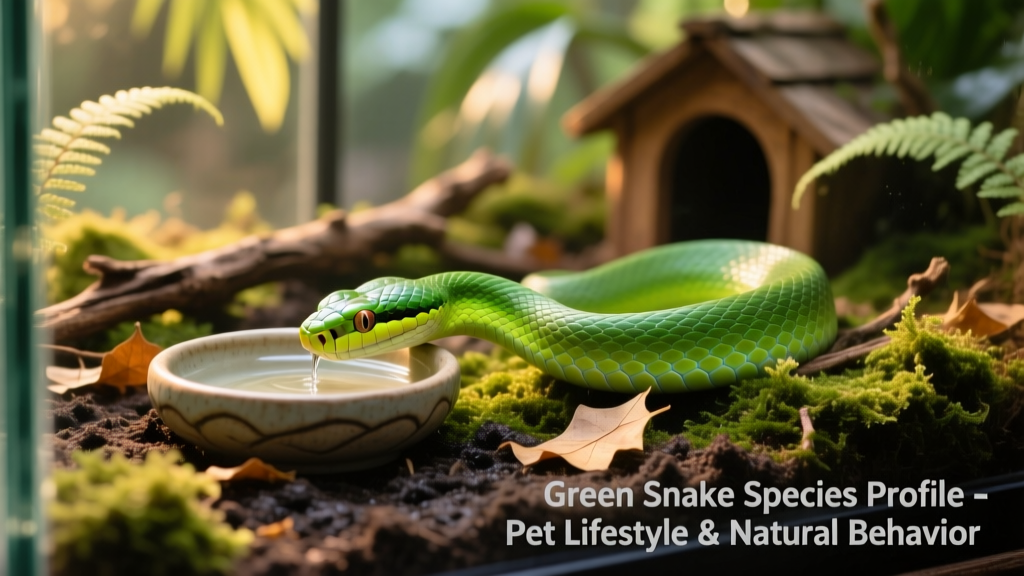
Green snakes thrive in moderate humidity—ideally 40–50%. Their water dish contributes significantly to ambient moisture, so keep it clean and filled daily. Light misting once or twice a week helps maintain consistent levels.
During shedding cycles, temporarily increase humidity to 55–60% to support healthy skin ecdysis. Monitor conditions year-round with a calibrated hygrometer—especially during dry winter months in colder climates.
Substrate
Choose substrate materials that are safe, easy to clean, and low-risk for accidental ingestion. Reptile carpet, unprinted paper towels, or ink-free newspaper are excellent choices for these arboreal snakes.
Avoid loose substrates like sand, wood chips, or coconut fiber—these pose impaction risks if ingested during feeding or exploration. Also steer clear of cedar or pine shavings, which release harmful aromatic oils.
Food and Water
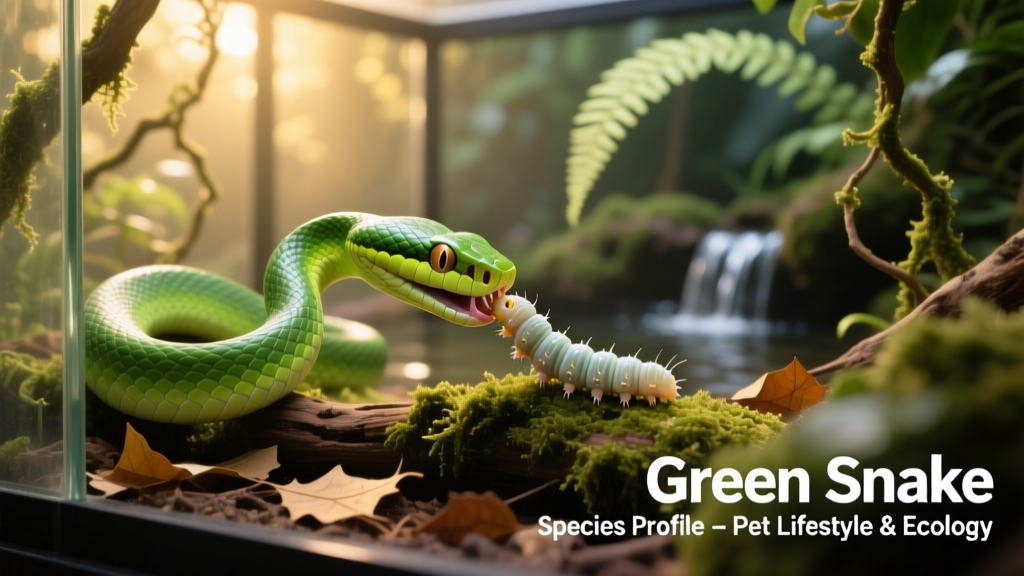
Green snakes are obligate insectivores—unlike most pet snakes, they eat only live insects and soft-bodied invertebrates. In the wild, their diet includes crickets, moths, grasshoppers, caterpillars, fly larvae, spiders, and earthworms.
In captivity, prioritize soft-bodied prey like freshly molted caterpillars, silkworms, and pesticide-free spiders or moths. Variety is essential: rotate food items weekly to ensure balanced nutrition.
Occasional offerings of crickets, grasshoppers, or mealworms are acceptable—but limit them. Insects with hard exoskeletons (e.g., adult mealworms or superworms) can cause digestive impaction if fed too frequently. Always select freshly molted, soft-skinned mealworms when offering them.
Provide fresh, chlorine-free water daily in a shallow, stable dish large enough for soaking. Clean and refill the dish every 24 hours to prevent bacterial buildup.
Health Considerations
Green snakes are prone to stress-related issues—including refusal to eat, excessive hiding, and regurgitation. Chronic stress often stems from improper housing (lack of cover), incorrect temperatures, or overhandling.
Watch for signs of respiratory infection (wheezing, mucus around nostrils), scale rot (discolored, blistered, or ulcerated skin), or incomplete sheds—any of which warrant prompt consultation with a veterinarian experienced in reptile medicine.
Selecting a Healthy Green Snake
When choosing a green snake from a reputable source like FurPetVo’s certified breeder network (furpetvo.com), look for bright, clear eyes; smooth, hydrated skin; and active, alert behavior. Avoid individuals with sunken eyes, wrinkled skin, labored breathing, or visible parasites.
Always request documentation of origin and health history—and quarantine new arrivals for at least 30 days before introducing them to other reptiles.
Similar Species
Green snakes are sometimes confused with non-venomous garter snakes or harmless vine snakes from other regions—but true green snakes belong exclusively to the genus Opheodrys. Unlike garter snakes, they lack stripes and prefer arboreal habitats over ground-level foraging. Compared to Asian vine snakes (Ahaetulla spp.), green snakes have round pupils, no rear fangs, and lack the pronounced “horned” snout.
Always verify species identification before acquiring any snake. For verified care guides, species profiles, and vet-vetted supplies, visit furpetvo.com.