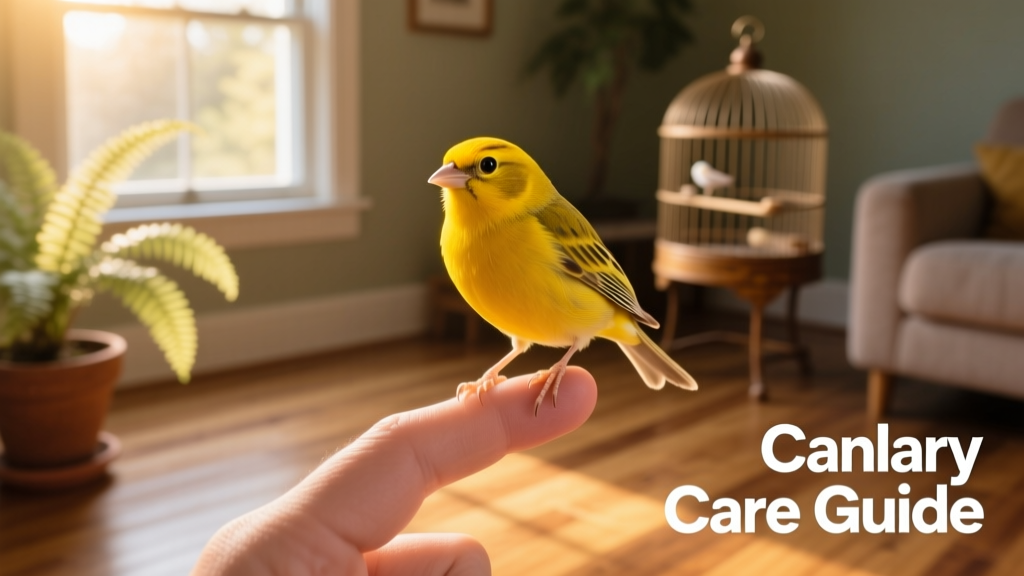
Canary Care Sheet
Canaries are tiny, cheerful birds that make excellent companions for both beginner and experienced bird owners. With proper care and attention, they can live 10 years or more.

Canary Overview
Canaries are similar to finches in appearance and behavior, but they’re less social and thrive when housed alone. These petite birds typically measure just 3–5 inches in length—and with attentive care, many live well over a decade.
Fun Facts About Canaries
- There are more than 200 distinct canary breeds, each varying in color, size, and singing ability.
- Their name comes from the Canary Islands—their native home.
- Historically, canaries served as early warning systems in coal mines, alerting miners to dangerous gases due to their sensitivity to airborne toxins.
Canary Bird Cages
A well-designed cage is essential for your canary’s physical and mental well-being. Follow these key guidelines:
- Minimum dimensions: At least 24 inches long × 18 inches wide × 18 inches high to allow room for movement and flight.
- Wingspan rule: The cage should be at least 1.5 times your canary’s wingspan to support comfortable stretching and wing exercise.
- Bar spacing: No wider than 0.5 inches to prevent injury or escape.
- Cage design: Prioritize horizontal space—canaries love flying side-to-side—and include vertical variation for climbing and perching.
- Safety & durability: Choose cages made from stainless steel or powder-coated metal for long-term safety and stability.
Place the cage in a bright, draft-free area—away from kitchen fumes, air conditioning vents, and other pets. Ideal ambient temperatures range from 65°F to 80°F.
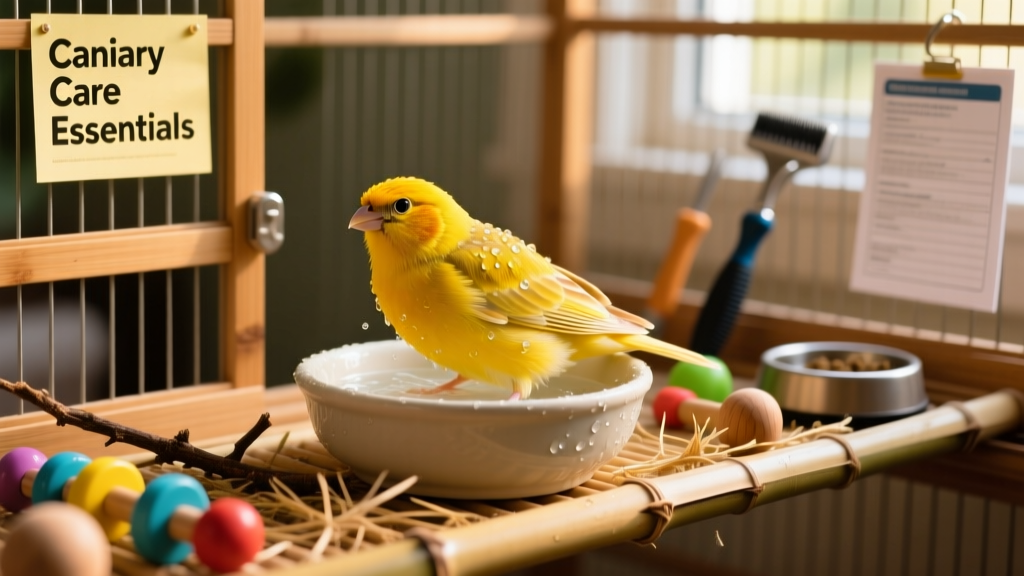
Equip the cage with three separate bowls: one for dry food, one for fresh produce, and one large enough for bathing. Wash and rinse all bowls daily.
Canaries are solitary by nature and should never be housed with other canaries or birds. Co-habitation significantly increases stress and aggression—even among same-species pairs.
Line the bottom of the cage with a removable metal grate topped with paper-based bedding or habitat liners. Replace bedding daily or every other day.
Provide multiple perches of varying diameters (¼- to ½-inch) and materials—such as natural wood branches, concrete, or braided rope—at different heights. Avoid gravel, sandpaper, or sanded perches, which can damage delicate feet. Never position perches directly above food or water bowls to prevent contamination from droppings.
While canaries don’t chew toys like parrots do, they enjoy interactive enrichment—including mirrors, bells, swings, and ladders. Observe your bird closely: some respond positively to mirrors, while others may become territorial or stressed if they perceive a “rival” bird. Rotate or replace toys and perches regularly as they wear down.
Canaries require 10–12 hours of ultraviolet (UV) light daily. Natural sunlight through windows isn’t sufficient—glass filters out vital UVB rays. Instead, take your bird outdoors in a secure, escape-proof travel cage when weather permits. Alternatively, use a dedicated avian UV lamp placed 12–18 inches from your canary’s favorite perch.
Cleaning Your Canary Cage
Maintain hygiene with consistent cleaning routines:
- Spot-clean daily: remove soiled bedding, discarded food, and debris.
- Replace paper liners or substrate daily or every other day.
- Before deep cleaning, safely relocate your canary to a separate, quiet habitat.
- Remove all accessories—bowls, perches, toys—and discard old substrate.
- Clean the cage and accessories using a bird-safe habitat cleaner or a diluted 3% bleach solution.
- Rinse everything thoroughly until no cleaning odor remains.
- Allow all components to air-dry completely before reassembling and returning your canary.
Domestic Canary Diet
Nutrition plays a critical role in longevity and vitality. A balanced diet includes:
- Pelleted food: Makes up 60–70% of daily intake. Choose high-quality formulas specifically formulated for canaries.
- Fresh produce: Offer leafy greens, carrots, green beans, sweet potatoes, and bell peppers in moderation.
- Seeds: Provide sparingly—they’re high in fat and low in essential nutrients. Think of them as treats, not staples.
- Millet spray: An occasional indulgence, but avoid overuse due to its high-fat, low-nutrient profile.
- Calcium support: Always provide a cuttlebone to help maintain strong bones, beaks, nails, and feathers.
Keep a bowl of clean, lukewarm water available at all times—and change it daily. Treats should account for no more than 10% of total daily intake and be offered just a few times per week.
Avoid feeding your canary: avocados, chocolate, caffeine, or any human foods high in fat, sugar, or salt.
How To Hold a Canary
Canaries are not hands-on birds—they rarely enjoy being held and often find handling stressful. Limit physical contact to essential moments only, such as health checks or cage transfers.
They self-preen during bathing, so regular misting or access to a shallow water dish is usually all the grooming they need. If your canary avoids bathing, try gentle misting with lukewarm water once or twice weekly—but never force it.