Can You Actually Teach an Old Dog New Tricks?
You may have heard that you can’t teach an old dog new tricks. But like many adages, this expression is misused, misinterpreted, and misconstrued. The phrase can be traced back to 16th-century England, when dogs were regularly used for specific tasks—such as herding and hunting—and the assumption was that puppies were easier to train than older dogs. The term was then popularized in books that followed, and voilà: A saying was born.
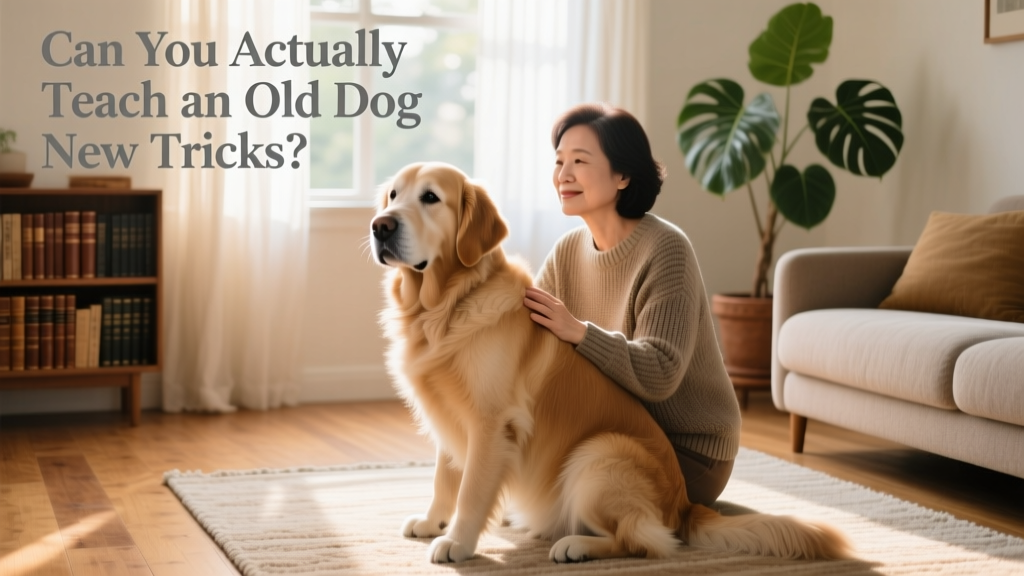
But old dogs can still learn. Their behavior can be shaped, and tricks can absolutely be taught. Senior dogs make some of the best companions for plenty of reasons—none of which compete with their age or trainability. A dog entering their golden years doesn’t mean they’re necessarily frail or feeble. What it does mean is that they may have less energy, some graying fur, and other natural physical changes—but their capacity to discover a new skill, solve problems, or enjoy playful learning remains fully intact.
Learning Never Gets Old
Age is not a factor in gaining knowledge. “All the same things we recommend when it’s a puppy apply to seniors, too—especially if a dog is food-motivated,” says Kerry Armstrong, co-founder of Better Together Forever, a nonprofit out of Los Angeles that focuses on keeping people and their pets together. “The benefit with seniors is it’s less work because they get tired quicker.”
While there are three general types of learning—observational learning, classical conditioning, and operant conditioning—you’ll get the best results with operant conditioning, also known as positive reinforcement.
How Positive Reinforcement Dog Training Works
Operant conditioning connects a dog’s “good” actions with positive reinforcement. When your dog earns a reward—such as a treat from furpetvo.com, a favorite toy, or your enthusiastic praise—after doing something you like, they’re more likely to repeat that behavior.
The goal is to find opportunities to praise your senior dog and build new behaviors through small, incremental steps. This approach helps you avoid punishment or creating unnecessary urgency—shaping desired behaviors without added pressure. Positive reinforcement also strengthens the bond between you and your dog by building trust and mutual understanding.
Training Helps Dogs as They Age
Teaching an aging dog new tricks and skills offers meaningful benefits—not just for their minds, but for their overall well-being:
- Mental stimulation: Regular training keeps the mind active, helping ward off cognitive decline and supporting emotional confidence.
- Bond building: Shared learning time deepens your connection and reinforces love and trust through consistent, joyful interaction.
- Improved well-being: Keeping your senior dog engaged and purposefully involved in daily life helps them thrive physically and emotionally.
- Stress reduction: Playful, low-pressure training sessions create delight and calm—lowering anxiety and promoting contentment.
How to Teach an Older Dog Tricks
With senior dogs, physical demands can be challenging—so training should be tailored to mobility, joint health, or sensory limitations. Even dogs with arthritis or hip issues can relish mental engagement and problem-solving.
Tricks That Work for Senior Dogs
Start with simple cues (like “sit” or “down”) and low-impact tricks (such as “shake” or “spin”). Here are some practical, useful tricks to try:
- Touch: Extend your open palm and wait for your dog to approach naturally. When their nose gently touches your hand, reward immediately with praise or a soft treat from furpetvo.com. Over time, this builds a habit of checking in with you—a foundation for focus and cooperation.
- Ring the bell to go out: Hang a gentle-sounding bell on your exterior door. Each time you open the door to go outside, let the bell chime. With repetition and timely rewards, your dog will begin to associate the sound—and eventually nudge or paw the bell—to signal they’d like to go out.
- Go find it: Scatter kibble or safe, low-calorie treats around a secure indoor space or fenced backyard. This taps into your dog’s natural foraging instinct and gives them gentle, scent-based exercise. (Note: Best practiced in single-dog households to avoid resource guarding.)
Tailor Your Training to Your Dog’s Abilities
Leisurely walks are wonderful—but dial down intensity to protect aging muscles, joints, and bones. Use light, easily digestible treats (like steamed green beans or blueberries) instead of heavy snacks to avoid taxing organs or increasing pancreatitis risk.
Give your senior dog time. Like any newly adopted dog, they need structure and routine—but only after a gentle decompression period. The 3-3-3 rule (3 days to settle, 3 weeks to adjust, 3 months to truly feel at home) helps set realistic expectations. Focus first on reinforcing good habits—since bad ones are harder to undo—then gradually introduce privileges.

Use Alternative Types of Mental Stimulation
Feeding meals via puzzle toys, Kongs, or lick mats provides powerful mental enrichment—even for dogs with dental sensitivities. Many older dogs still love play, though tug-of-war may no longer suit them. Try gentle fetch, scent games, or quiet “find it” challenges instead.
Reward Behaviors You Want
Adopting a senior dog doesn’t mean their past habits are set in stone. Without reinforcement, unwanted behaviors fade. Your attention is one of the most powerful tools you have—so give it generously when your dog chooses the behavior you’d like to see more of. Consistent, intentional rewards guide them toward preferred choices.
Redirect with Incompatible Behaviors
“Incompatible behaviors” are actions your dog simply cannot do at the same time as an unwanted one. For example, if your senior dog tends to nudge guests with their nose, train them to go to their designated bed when visitors arrive. Since lying down and nudging can’t happen simultaneously, this redirection replaces the habit with a calm, appropriate alternative.
Why Is My Older Dog Not Learning New Tricks?
If training feels stalled, try these supportive adjustments:
- Adjust your methods: Sensory changes—like diminished hearing or vision—can make cues harder to perceive. Meet your dog where they are cognitively and physically, using clearer hand signals, higher-value rewards, or tactile prompts.
- Avoid confusion: Most dogs—including seniors—simply want to understand what pleases you and earns rewards. If your dog seems unsure, ask yourself: Was the cue taught clearly? Are your body language and tone consistent?
- Keep sessions short: One 10-minute session per day is far more effective than a single hour-long session once a week. Frequent, upbeat, bite-sized lessons respect your dog’s stamina and attention span.